Polio
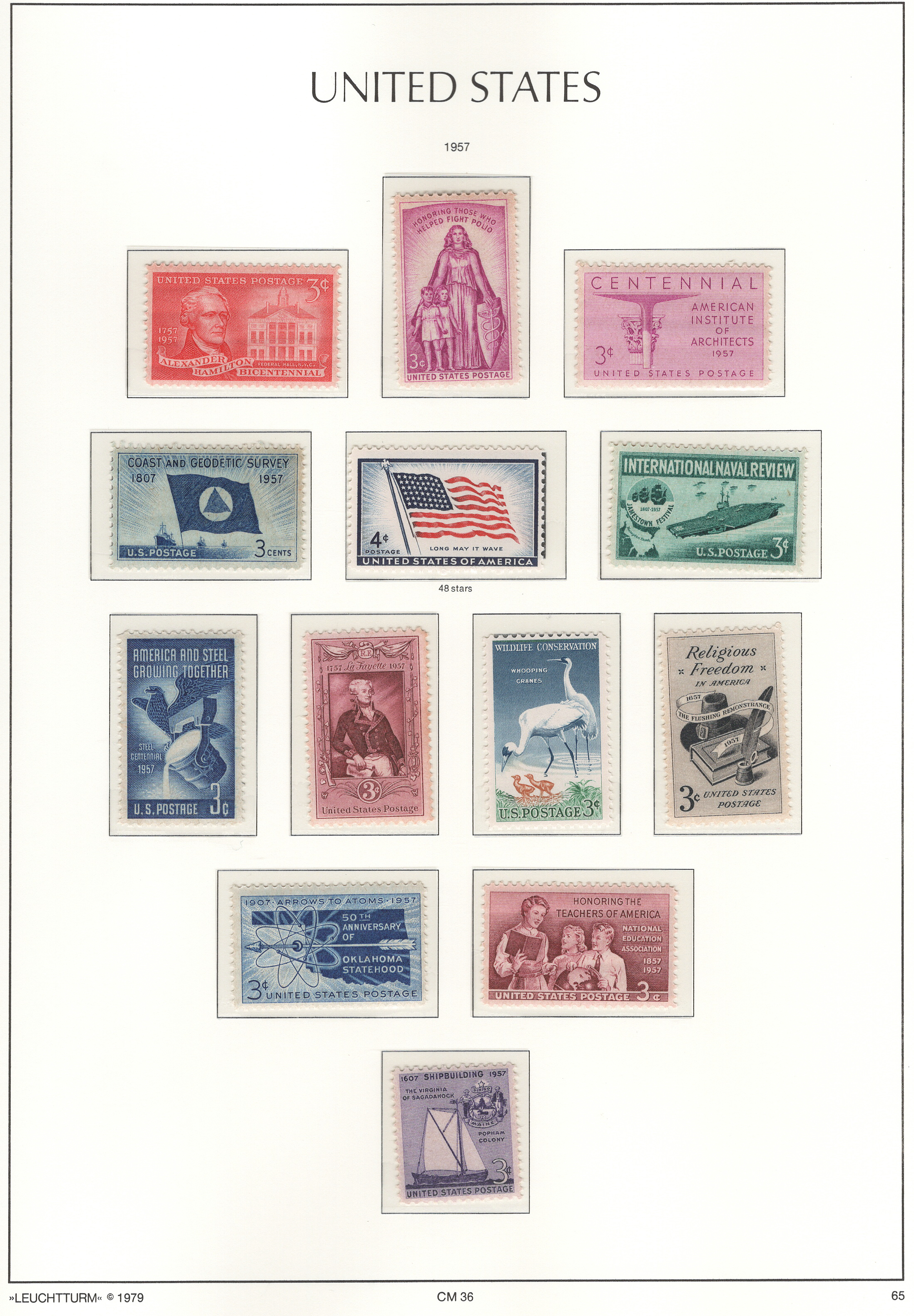
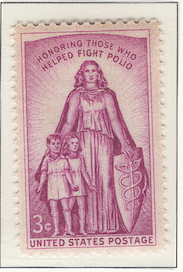
President Franklin Roosevelt contracted polio in 1921 causing the paralyzing of his legs. During that time, there was an epidemic of polio in the country and the world. To help fund research into a cure, as well as to educate the public in its prevention, and to assist children with polio, as well as their mothers, Roosevelt helped to start the National Foundation for Infantile Paralysis.
The foundation would later be called the March of Dimes because their requests initially to the public was to donate at least a dime, a ten-cent piece each – and also because it was a play on the name of the newsreels shown in theaters, the March of Time. Incidentally, because of that name, after Roosevelt died, a new dime was designed and minted with the image of Roosevelt in honor of him in general, but specifically because of his work in helping to cure polio.
The results of the foundation was the development of two vaccines for polio in 1955: one by Jonas Salk and another by Albert Savin. The Salk vaccine was the preferred one by the foundation, but in time the Savin vaccine was proven better and safer. It’s the one we use today.
Over the decades, the organization has expanded its mission into more work related to the prevention infant deaths and birth defects, as well as premature births. It does this in five ways: by funding medical research; educating pregnant women; assisting pregnant women and mothers in a variety of ways; organzing and supporting many related community programs; and through government advocacy.
Note
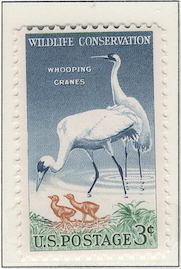
You may notice that one of the stamps on this page was printed with more than two colors of ink: the one depicting whooping cranes on the third row. It was made with blue, green, and a little bit of burnt sienna. This is the start of more colorful stamps. The next section has mostly multiple color stamps: it was a new era in stamp printing.
Contains 13 spots: own 13 – 13 unused, 0 used.
Page is finished.
Album or Web Page Last changed Apr 4, 2025
Stamp Details
The table below lists information about the stamps shown on this page of Lighthouse’s stamp album. For more details about a particular stamp, click on its description. That will take you to the related web page of Colnect.
spot |
own |
catalog |
subject |
description |
comment |
|---|---|---|---|---|---|
✓ |
1086 |
3c (jan 1957) |
|||
✓ |
1087 |
Fight Against Polio |
3c (jan 1957) |
||
✓ |
1089 |
3c (feb 1957) |
|||
✓ |
1088 |
3c (feb 1957) |
|||
✓ |
1094 |
4c (jul 1957) |
|||
✓ |
1091 |
3c (jun 1957) |
|||
✓ |
1090 |
3c (may 1957) |
|||
✓ |
1097 |
3c (sep 1957) |
|||
✓ |
1098 |
Whooping Crane |
3c (nov 1957) |
||
✓ |
1099 |
3c (dec 1957) |
|||
✓ |
1092 |
3c (jun 1957) |
|||
✓ |
1093 |
3c (jul 1957) |
|||
✓ |
1095 |
3c (aug 1957) |


Footnotes
Spot refers to the postion of the stamp on the album page (e.g., 3.2 indicates row 3, position 2).
Amt. is an abbreviation for the face amount of the stamp.
Own indicates the stamp status: ✓ for unused; ✗ for used or canceled; ⭑ signifies I ordered one; ; ✨ indicates it was bought recently; ✠ means an auction bid is pending; and ◎ is used, and it costs too much for unused.
To search by catalog number, go to the search box and enter it in the catalog number box. However, it’s a bit broken; I need to fix it.












