Berries
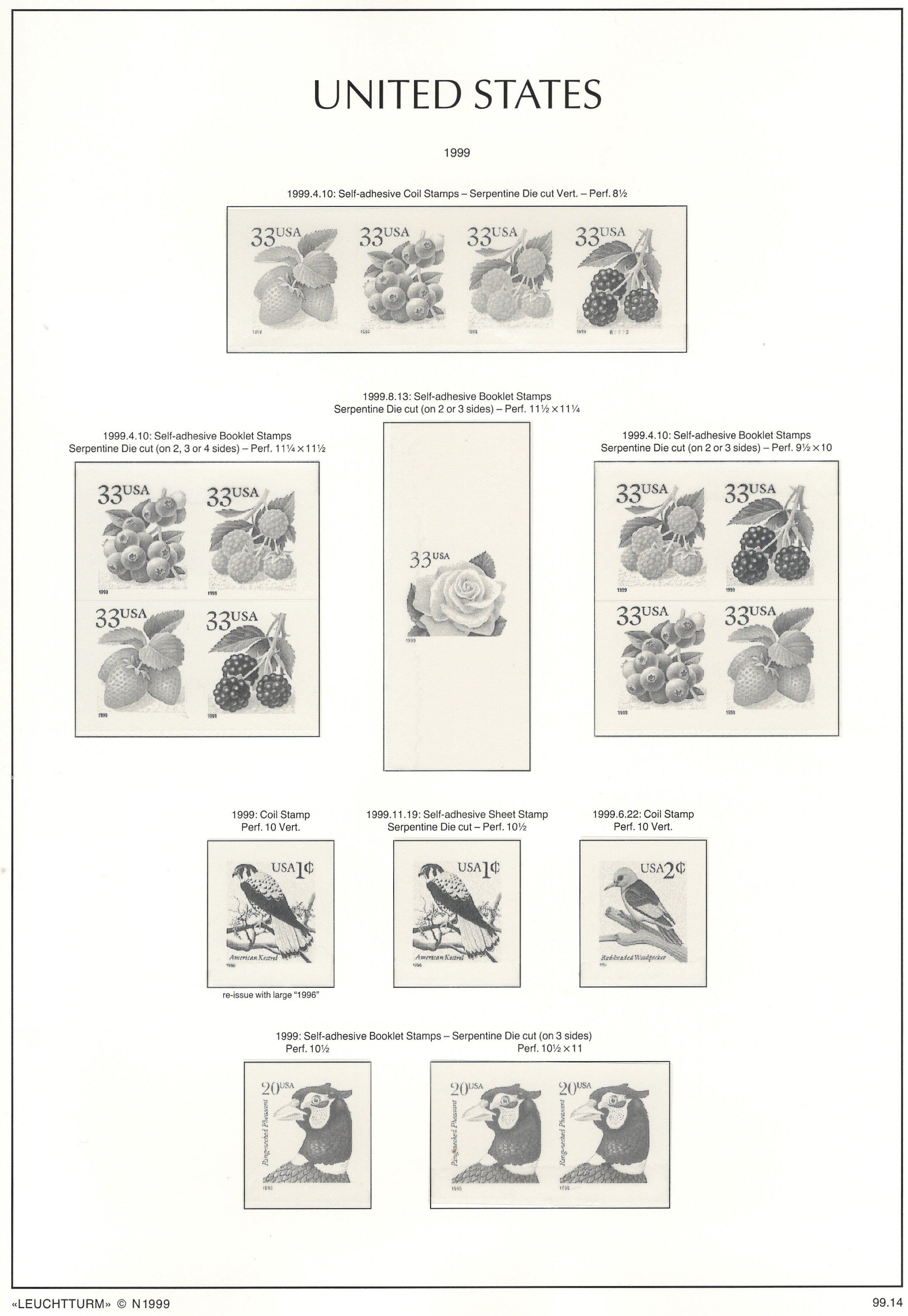
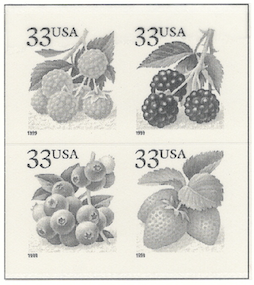
Strawberry
The strawberry is not a true berry. Botanically, it’s an aggregate accessory fruit, and each apparent “seed” on the outside is an achene, a small fruit with a seed inside it. The garden strawberry was first bred in Brittany, France, in the 1750s, by crossing a species from eastern North America with one that Amédée-François Frézier had brought from Chile in 1714. In 2024 the world produced 10.7 million tonnes, and China grew 38% of them.
Blueberry
The blueberry is a true berry in the genus Vaccinium, and all the commercial kinds are native to North America. They fall into two groups, the small “lowbush” blueberries that are managed in the wild and the larger “highbush” ones that are cultivated. Highbush blueberries were first cultivated in New Jersey around the start of the 20th century, after Frederick Coville and Elizabeth White began their work together in 1911. They reached Europe in the 1930s, and in 2024 the United States grew 29% of the world’s crop, followed by Peru with 25%.
Raspberry
The raspberry is an aggregate fruit made up of around 100 tiny drupelets, each with its own seed. What separates it from the blackberry is that the torus (the stem the fruit sits on) stays on the plant when it is picked, which leaves a hollow core. The name was first in print in 1602, and “rasp” probably comes from raspise, a sweet rose-colored wine. In 2023 the world produced 940,979 tonnes, and Russia led with 23% of the total.
Blackberry
The blackberry is also an aggregate fruit of drupelets, but the torus stays with the fruit when it is picked. In 1880 James Harvey Logan developed the loganberry, a blackberry-raspberry hybrid, in Santa Cruz, California. Mexico is now the leading producer, though the Himalayan blackberry is a noxious weed in parts of the Pacific Northwest. Folklore in the United Kingdom and Ireland says not to pick them after Old Michaelmas Day, October 11, because the devil has spoiled them.
Note
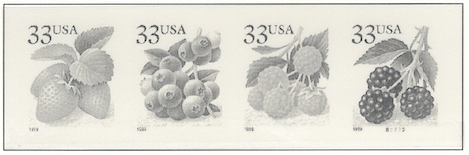
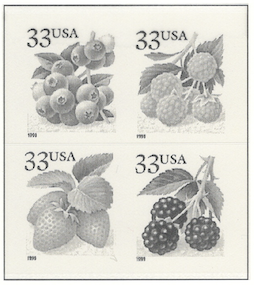
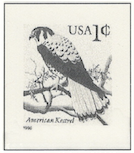
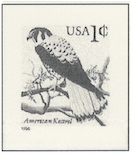
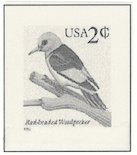
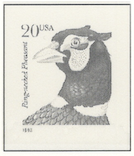
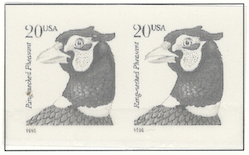
I have mixed feelings about stamps like these. I like the design of the berry stamps and I like that they come in different formats. But I dislike having to buy three sets (i.e., a coil set, and two booklet sets with different perforations) to complete my collection. I don’t like the designs of the birds and find the deviations in perforations for them particularly tiresome.
Contains 9 spots: own 0 – 0 unused, 0 used.
Stamp Details
The table below lists information about the stamps shown on this page of Lighthouse’s stamp album. For more details about a particular stamp, click on its description. That will take you to the related web page of Colnect.
spot |
own |
catalog |
subject |
description |
comment |
|---|---|---|---|---|---|
3305a |
33¢ (apr 1999) |
||||
3297b |
33¢ (apr 1999) |
||||
3052 |
33¢ (aug 1999) |
||||
3301c |
33¢ (apr 1999) |
||||
3044 |
1¢ (jan 1996) |
||||
3031 |
1¢ (nov 1999) |
||||
3045 |
2¢ (jun 1999) |
||||
3051A |
20¢ (jul 1999) |
||||
3051 |
20¢ (jul 1999) |
Footnotes
Spot refers to the postion of the stamp on the album page (e.g., 3.2 indicates row 3, position 2).
Amt. is an abbreviation for the face amount of the stamp.
Own indicates the stamp status: ✓ for unused; ✗ for used or canceled; ⭑ signifies I ordered one; ; ✨ indicates it was bought recently; ✠ means an auction bid is pending; and ◎ is used, and it costs too much for unused.
To search by catalog number, go to the search box and enter it in the catalog number box. However, it’s a bit broken; I need to fix it.








