Pre-Canceled Pairs
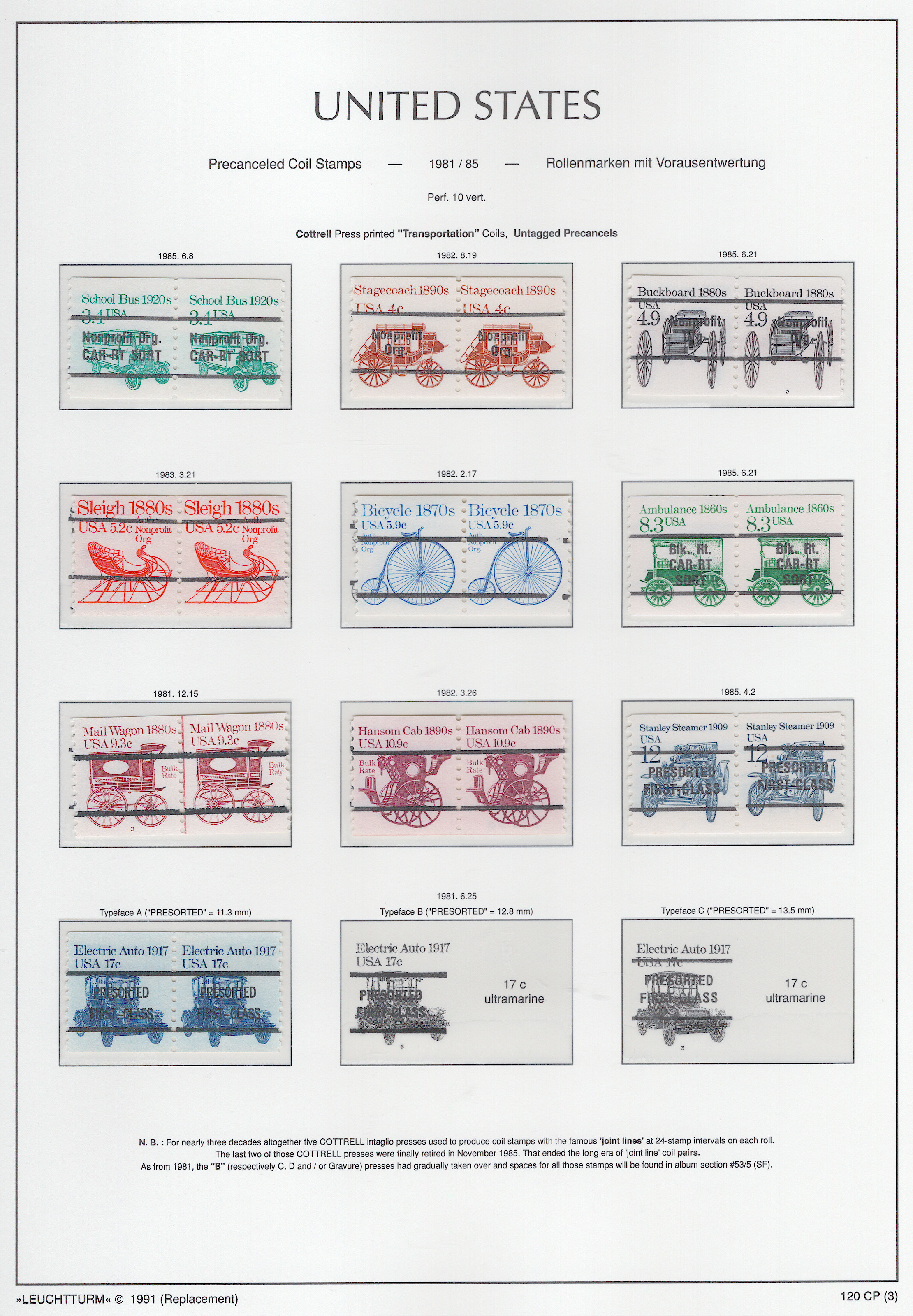
When a letter is mailed in the U.S., the sender will buy a stamp from the post office and affix it to the top right corner of the envelope containing the letter. They will also put the destination address in the middle to right portion of the envelope, and their return address at the top left corner, usually written smaller. At the post office, first they mark the stamp, they cancel it to indicate it was checked as to being a new stamp and the correct postage. Then the destination address is read and the envelope directed accordingly.
Pre-canceled stamps are stamps that are sold with the stamps already canceled. This eliminates one of the steps described above, thereby saving the post office time – and labor costs. Organizations that do mass mailings, that can be trusted and qualify for their use, buy these stamps at a discount from the normal rate.
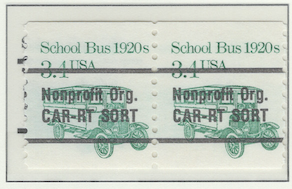
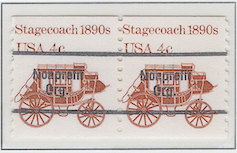
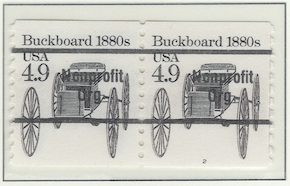
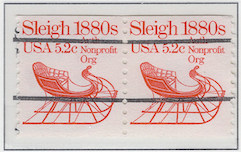
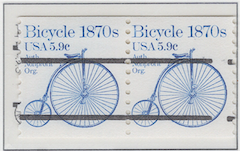
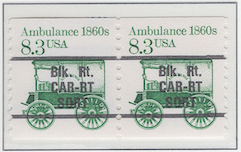
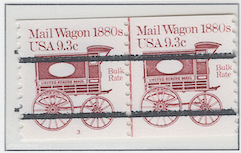
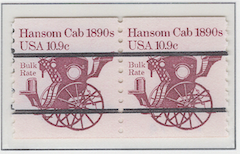
You can see on the stamps on this page that they all have fractional face amounts – amounts less than the normal rate for a post card or an envelope on which they would be used. Some are overprinted with cancelation lines and text describing their intended use – some have their usage as part of the stamp’s design.
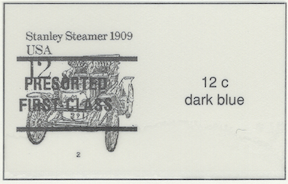
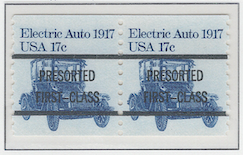
Non-profit organizations are permitted an even lower rate. The first five stamps here are for them – the first row and the first two stamps on the second row. For organizations that do a huge amount of mailing, they’re given a bulk rate discount. See the next three stamps: last one on the second row, and first two on the third row. The last four stamps on this page are overprinted with the word, Presorted. That means that the mail is submitted in batches, with a batch for each postal zip code. That saves the post office more time on directing mail to its destination.
Note
The last two stamps have been difficult for me to find. I’m not sure of their Scott catalog number, or if they’re listed in the Scott catalog – the catalog used widely for U.S. stamps. There are listings in some of the European catalogs, but I haven’t had time to determine which are the ones for which Leuchtturm has allocated space on this page. Once I can identify them, I can add them to the table below and have a chance of finding them for sale somewhere.
This is the problem with using album pages made by a European publisher for U.S. stamps. Still, I like the quality of their work. It’s worth the effort and it becomes part of the adventure.
Contains 10 spots: own 10 – 10 unused, 0 used.
Page is finished.
Album or Web Page Last changed May 16, 2025
Stamp Details
The table below lists information about the stamps shown on this page of Lighthouse’s stamp album. For more details about a particular stamp, click on its description. That will take you to the related web page of Colnect.
spot |
own |
catalog |
subject |
description |
comment |
Transportation Definitives
✓ |
2123a |
3.40c (jun 1985) |
|||
✓ |
1898Ab |
4c (aug 1982) |
|||
✓ |
2124a |
4.90c (jun 1985) |
|||
✓ |
1900a |
5.20c (mar 1983) |
|||
✓ |
1901a |
5.90c (feb 1982) |
|||
✓ |
2128a |
8.30c (jun 1985) |
|||
✓ |
1903a |
9.30c (dec 1981) |
|||
✓ |
1904a |
10.90c (mar 1982) |
|||
✓ |
2132a |
12c (apr 1985) |
|||
✓ |
1906a |
17c (jun 1981) |
Footnotes
Spot refers to the postion of the stamp on the album page (e.g., 3.2 indicates row 3, position 2).
Amt. is an abbreviation for the face amount of the stamp.
Own indicates the stamp status: ✓ for unused; ✗ for used or canceled; ⭑ signifies I ordered one; ; ✨ indicates it was bought recently; ✠ means an auction bid is pending; and ◎ is used, and it costs too much for unused.
To search by catalog number, go to the search box and enter it in the catalog number box. However, it’s a bit broken; I need to fix it.









