Steam Boats
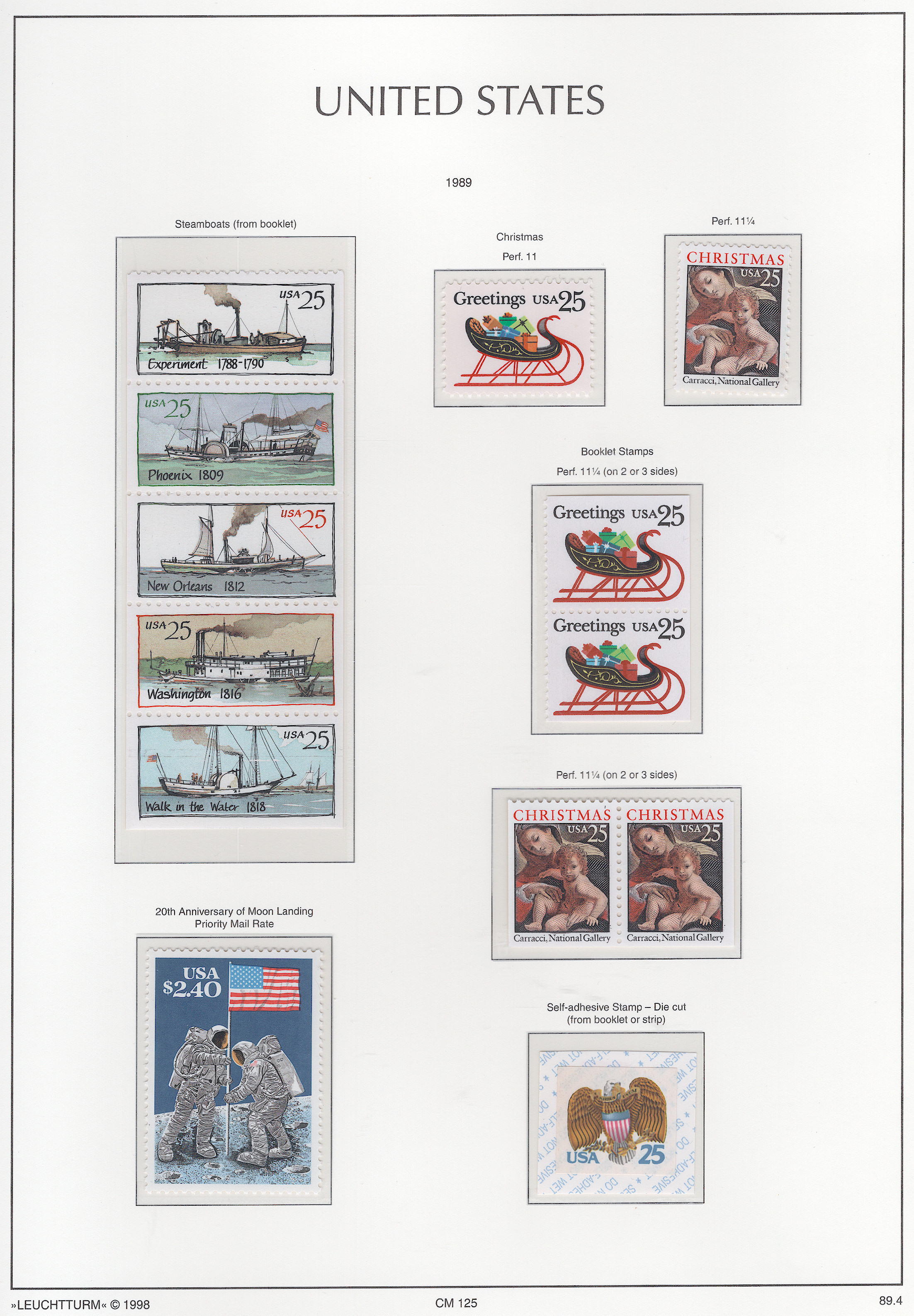
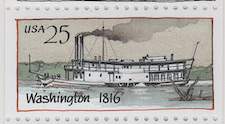
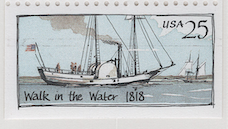
Steamboats are boats that are powered by steam engines, in conjunction with either a paddlewheel or a propeller for propulsion. They were made for use on rivers and small waterways. From them, steamships were developed for use on oceans and other large seas. The strip of booklet stamps on the left of this album page shows some famous, early steamboats.
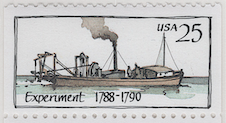
The Experiment was the first successful steamboat built in the late 1700s by Patrick Miller, with its first success run in 1790. It didn’t really have a name, but was called the experiment because it was just that, an experiment. However, my assumption may be wrong and that stamp may depict a different steamboat of the same name.
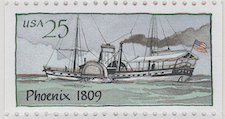
The Phoenix was built by John Stevens. It was fifty feet long with a side wheel and twenty-five cabins. In 1809, it was the first steamboat to sail on open ocean, sailing from New York to Philadelphia.
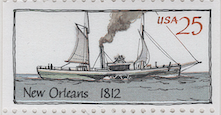
The New Orleans is depicted in the third stamp. It first sailed in 1812 from Pittsburg, Pennsylvanis down the Ohio River to the Mississippi River to New Orleans. It began the start of commercial use of steamboats for transporting cargo, including sugar and cotton to the North. It was owned and operated by Robert Fulton (engineer and designer of several steamboats), Robert Livingston (one of the drafters of the U.S. Constitution), and Nicholas Roosevelt (great-grand uncle of Theodore Roosevelt). I have stamps of Fulton and Livingston elsewhere in my collection.
The Washington was a steamboat used in the 1850s in California and Oregon. It sailed mostly in the Sacramento River, the Willamette River, and other rivers in the area, but sometimes it sailed in neighboring bays and in the Pacific Ocean along the coast. It was destroyed in a boiler explosion in 1857.
The Walk-in-the-Water was a steamboat that was used for cargo and passengers in the Great Lakes starting in 1818. It was forty meters long, and had a sidewheel and two masts for using sails when needed – in the event of engine failure or lack of fuel, I suppose. In 1821, it ran aground and wrecked in a storm on Lake Erie near Buffalo, New York.
Note
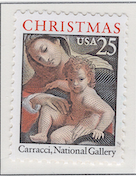
This is not an appealing layout for stamps, but I don’t know how Leuchtturn could have done much better. This the problems with issuing sets of stamps and so many deviations for definitives. By the way, I don’t like this Madonna & Child painting. The face of the baby is not right.
Contains 11 spots: own 11 – 11 unused, 0 used.
Page is finished.
Album or Web Page Last changed Jul 22, 2025
Stamp Details
The table below lists information about the stamps shown on this page of Lighthouse’s stamp album. For more details about a particular stamp, click on its description. That will take you to the related web page of Colnect.
spot |
own |
catalog |
subject |
description |
comment |
Boats & Ships
✓ |
2405 |
25c (mar 1989) |
|||
✓ |
2406 |
25c (mar 1989) |
|||
✓ |
2407 |
25c (mar 1989) |
|||
✓ |
2408 |
25c (mar 1989) |
|||
✓ |
2409 |
25c (mar 1989) |
Christmas & Holidays
✓ |
2428 |
25c (oct 1989) |
|||
✓ |
2427 |
25c (oct 1989) |
|||
✓ |
2429 |
25c (oct 1989) |
|||
✓ |
2427a |
Madonna & Child |
25c (oct 1989) |
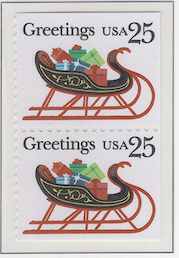
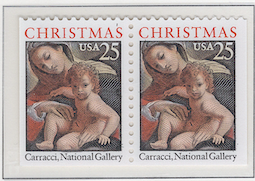
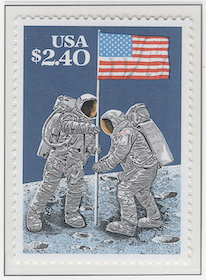
Space Exploration
✓ |
2419 |
$2.40 (jul 1989) |
Other
✓ |
2431 |
25c (nov 1989) |
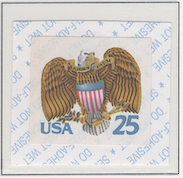
Footnotes
Spot refers to the postion of the stamp on the album page (e.g., 3.2 indicates row 3, position 2).
Amt. is an abbreviation for the face amount of the stamp.
Own indicates the stamp status: ✓ for unused; ✗ for used or canceled; ⭑ signifies I ordered one; ; ✨ indicates it was bought recently; ✠ means an auction bid is pending; and ◎ is used, and it costs too much for unused.
To search by catalog number, go to the search box and enter it in the catalog number box. However, it’s a bit broken; I need to fix it.










