Italo Balbo
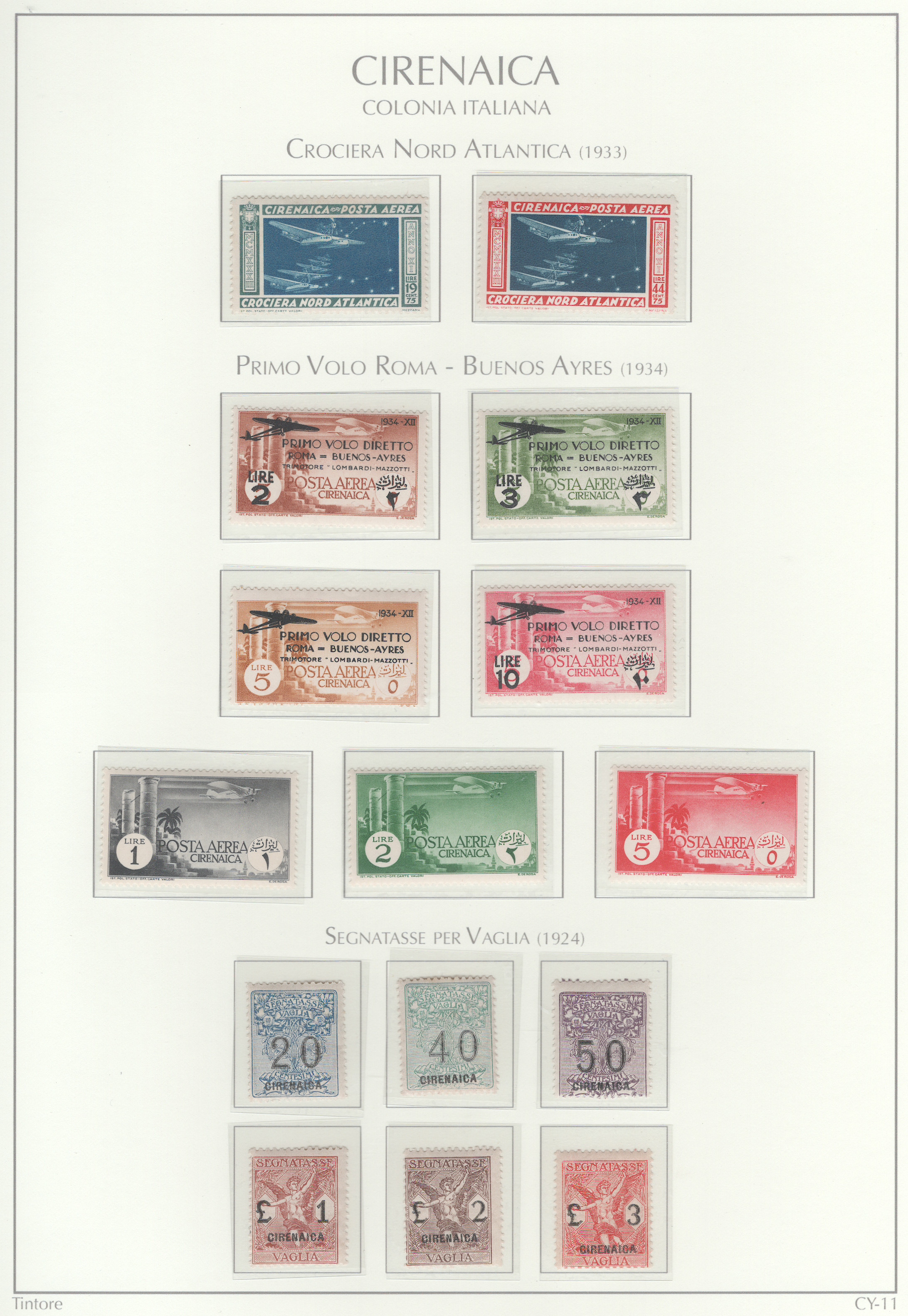
In 1933, the Italian Air Force, headed by General Italo Balbo – who was a Fascist leader – led a series of flights consisting of twenty-five seaplanes. At the time, the concept of making trans-Atlantic flights was new.
With a fleet of twenty-five seaplanes, they flew from Italy to Amsterdam, then to Derry, England. Next they went to Reykjavík, Iceland. They spent days in each location, between flights. Next they flew to North America, stopping first in Cartwright, located in Newfoundland and Labrador. After that, to Montréal and to Chicago. They then worked their way to New York, landing Jamaica Bay near Manhattan. Coming back, because Balbo’s popularity was rising so much, Mussolini made him skip his plans to go to London, Paris and Berlin. Instead, he was sent to the Azores and then to Lisbon, before returning to Rome.
It was a successful journey with millions of people greeting them at their various stops. They did lose two planes, one person from each plane – one in Amsterdam and another in the Azores. Nevertheless, the trip did wonders for Italy’s image around the world – of course, that would change when they would join with Germany in waging a world war.
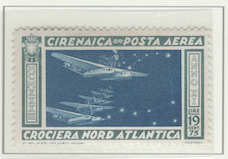
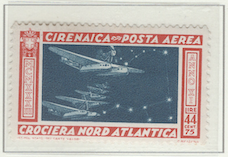
The two stamps on the top row of this album page are in commemoration of that expedition.
Note
This page is full. I described only the North Atlantic cruise of Italo Balbo and the Italian armada he led. I’ll describe the other stamps on other pages – in other colony albums. When I’ve done that, I’ll link to them here.
Contains 15 spots: own 15 – 15 unused, 0 used.
Page is finished.
Album or Web Page Last changed Feb 13, 2025
Stamp Details
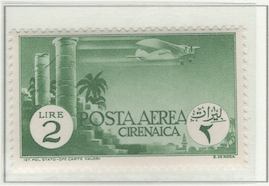
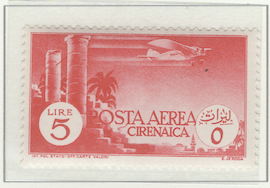
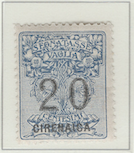
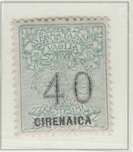
The table below lists information about the stamps shown on this page of Lighthouse’s stamp album. For more details about a particular stamp, click on its description. That will take you to the related web page of Colnect.
spot |
own |
catalog |
subject |
description |
comment |
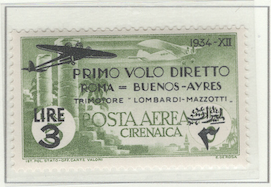
North Atlantic Flight of Italo Balbo
✓ |
A18 |
19.75₤ (jun 1933) |
|||
✓ |
A19 |
44.75₤ (jun 1933) |
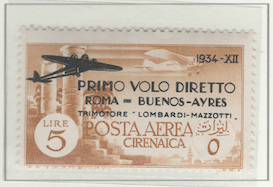
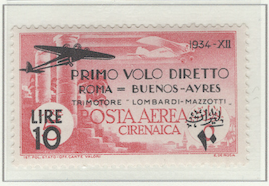
Rome - Buenos Aires Flights
✓ |
A20 |
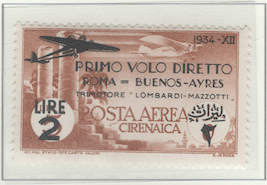
2₤ (jan 1934) |
|||
✓ |
A21 |
3₤ (jan 1934) |
|||
✓ |
A22 |
5₤ (jan 1934) |
|||
✓ |
A23 |
10₤ (jan 1934) |
|||
✓ |
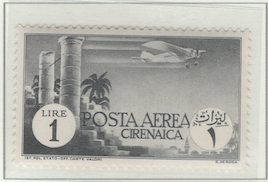
A9 |
1₤ (aug 1932) |
|||
✓ |
A10 |
2₤ (aug 1932) |
|||
✓ |
A11 |
5₤ (aug 1932) |
Money Order Stamps
✓ |
SV1 |
20c (jul 1924) |
|||
✓ |
SV2 |
40c (jul 1924) |
|||
✓ |
SV3 |
50c (jul 1924) |
|||
✓ |
SV4 |
1₤ (jul 1924) |
|||
✓ |
SV5 |
2₤ (jul 1924) |
|||
✓ |
SV6 |
3₤ (jul 1924) |
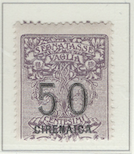
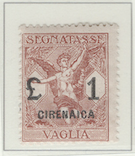
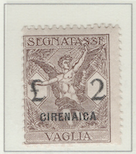
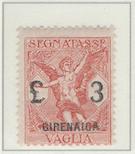
Footnotes
Spot refers to the postion of the stamp on the album page (e.g., 3.2 indicates row 3, position 2).
Amt. is an abbreviation for the face amount of the stamp.
Own indicates the stamp status: ✓ for unused; ✗ for used or canceled; ⭑ signifies I ordered one; ; ✨ indicates it was bought recently; ✠ means an auction bid is pending; and ◎ is used, and it costs too much for unused.
To search by catalog number, go to the search box and enter it in the catalog number box. However, it’s a bit broken; I need to fix it.














