Gronchi
Giovanni Gronchi was born on September 10, 1887, in Pontedera, Tuscany. He taught classics from 1911 to 1915, volunteered in World War I, and co-founded the Italian Popular Party in 1919. He was an under-secretary in Mussolini’s first government in 1922 and 1923, but he was expelled from Parliament in 1926. After that, he left teaching to avoid joining the Fascist Party and worked as a salesman and then an industrialist. In 1943, he co-founded the Christian Democrats and represented his party on the Resistance committee. He served as Minister of Industry and Trade from 1944 to 1946 and as President of the Chamber of Deputies from 1948 to 1955. On April 29, 1955, Parliament elected him President of Italy, and he served until May 11, 1962. His “opening to the left” met strong opposition. As a former president, he was a life senator until he died on October 17, 1978, at the age of 91.
The Gronchi Rosa
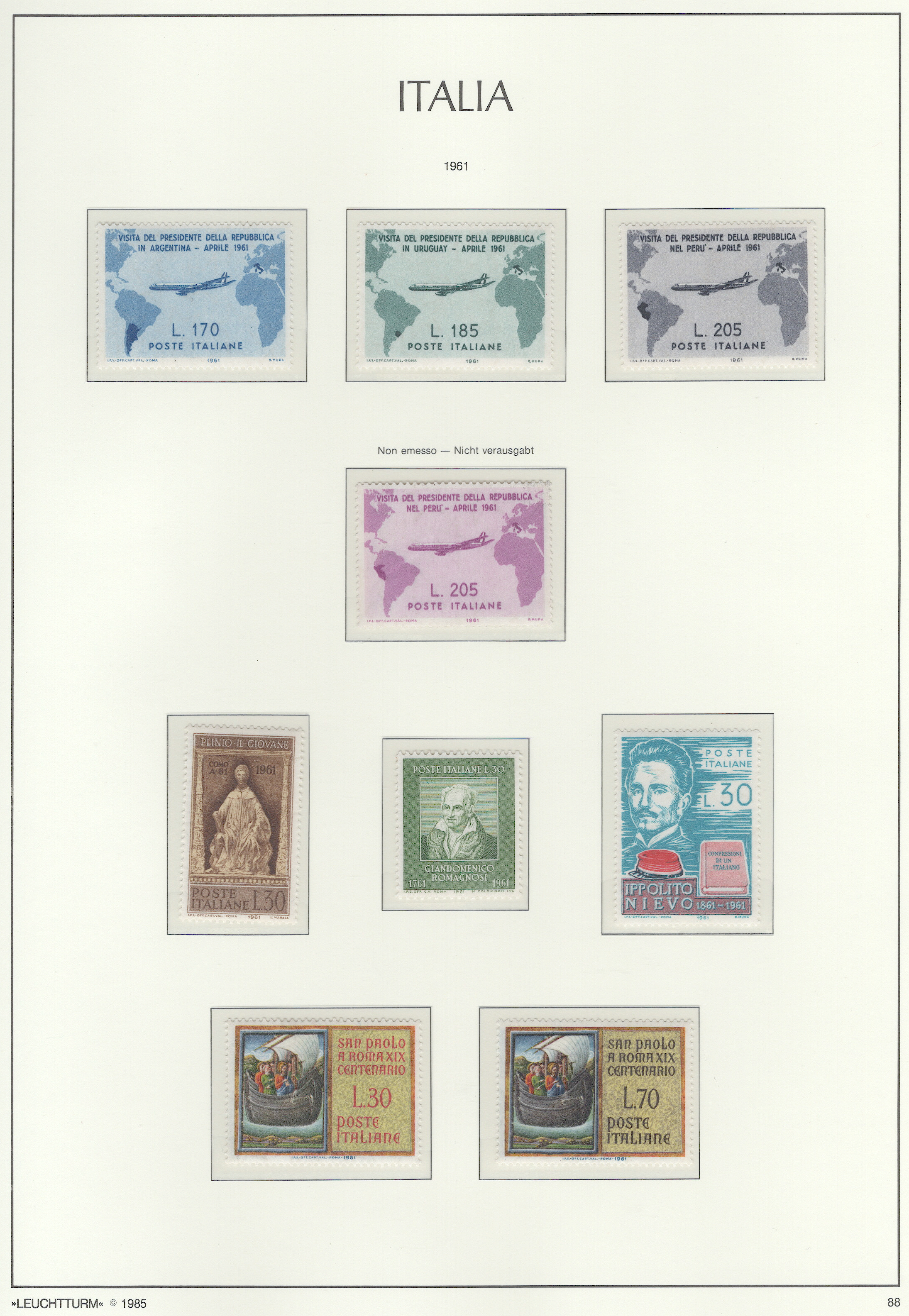
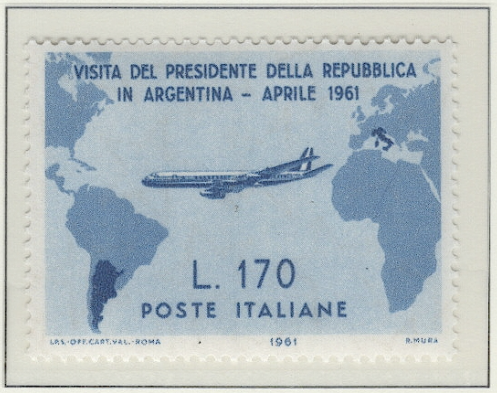
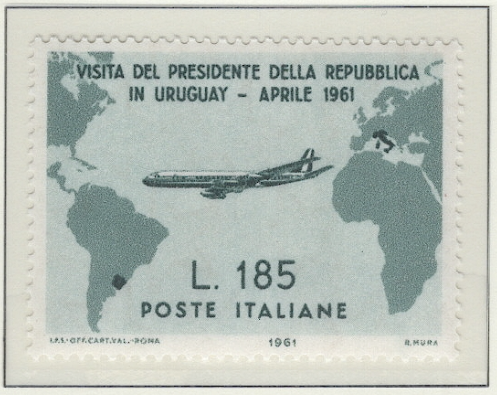
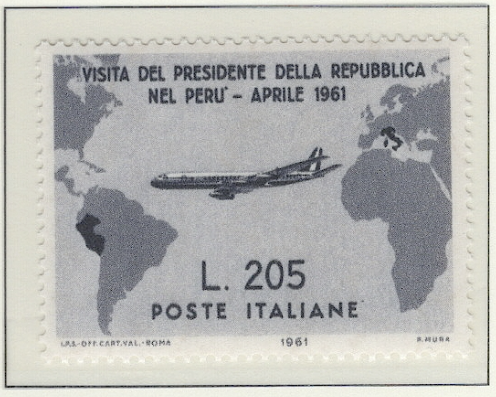
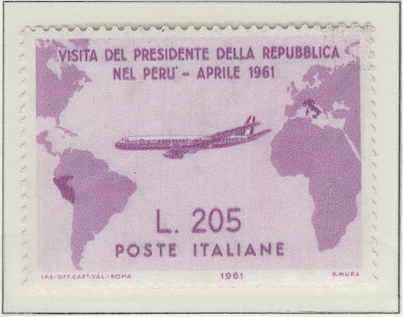
The Gronchi Rosa (rosa means pink in Italian) went on sale on April 3, 1961, to mark Gronchi’s state visit to Argentina, Uruguay and Peru. It was part of a set of three stamps, and each one paired a map of Europe with a map of the Americas, linked by the presidential aeroplane. The Peru stamp was 205 lire, the airmail rate for Peru, and the Argentina and Uruguay stamps were 170 lire and 185 lire. However, the Peru map showed the borders from before the 1941 to 1942 war with Ecuador. The draftsman, Renato Mura, had used an outdated atlas from 1939. As a result, the map left out Amazon territory that Peru gained after the war, and Peru’s ambassador protested.
Sales were halted, and the order to withdraw the stamp came on the morning of April 4. According to the sources, 79,625 complete sets had been sold by then. A grey version with corrected borders, the “Gronchi grigio,” replaced it. The Italian Post tried to intercept mail bearing the pink stamp, though some copies escaped. Estimates of how many survive conflict, and at least one forgery is known. In some cases, an error like this makes a stamp worth far less, but here it did the opposite. The Gronchi Rosa is the most sought-after stamp among Italian collectors.
Note
The rose lavender colored stamp commissioned by Gronchi is expensive. It usually sells for about €250, but I bought it for less at an auction. It’s in pretty good condition.
Contains 9 spots: own 9 – 9 unused, 0 used.
Page is finished.
Album or Web Page Last changed Jan 1, 2023
Stamp Details
The table below lists information about the stamps shown on this page of Lighthouse’s stamp album. For more details about a particular stamp, click on its description. That will take you to the related web page of Colnect.
spot |
own |
catalog |
subject |
description |
comment |
President Gronchi
✓ |
918 |
170₤ (apr 1961) |
|||
✓ |
919 |
185₤ (apr 1961) |
|||
✓ |
920 |
205₤ (apr 1961) |
|||
✓ |
921 |
205₤ (apr 1961) |
Famous Italians
✓ |
922 |
30₤ (may 1961) |
|||
✓ |
934 |
30₤ (nov 1961) |
|||
✓ |
923 |
30₤ (jun 1961) |
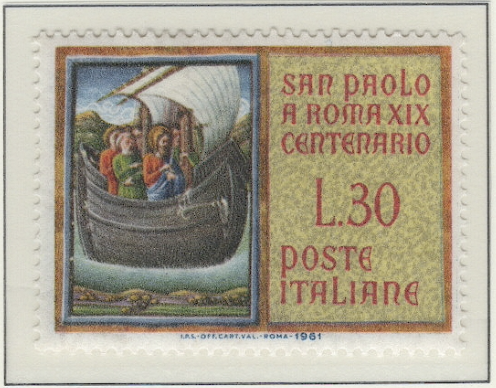
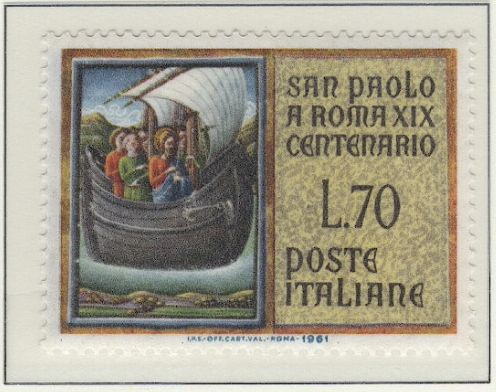
St Paul
✓ |
924 |
30₤ (jun 1961) |
|||
✓ |
925 |
70₤ (jun 1961) |
Footnotes
Spot refers to the postion of the stamp on the album page (e.g., 3.2 indicates row 3, position 2).
Amt. is an abbreviation for the face amount of the stamp.
Own indicates the stamp status: ✓ for unused; ✗ for used or canceled; ⭑ signifies I ordered one; ; ✨ indicates it was bought recently; ✠ means an auction bid is pending; and ◎ is used, and it costs too much for unused.
To search by catalog number, go to the search box and enter it in the catalog number box. However, it’s a bit broken; I need to fix it.








