First Flight
Wilbur Wright and Orville Wright, known as the Wright Brothers were born in the late 1800s and were primarily from Dayton, Ohio. By nature, they were engineers and industrious. Although they were four years apart and had a few siblings, the two of them were close given their mechanical acumen.
With the invention of the safety bicycle – a bicycle that used a drive chain – bicycles became very popular. The Wright brothers decided in 1892 to start a business designing and building bicycles. They were fairly successful for many years running the Wright Cycle Company.
In 1896, the French engineer, Octave Chanute, working with several other engineers, created gliders with some success. The Secretary of the Smithsonian Institute, Samuel Langley the same year designed a steam powered, unmanned glider. Most of all, the work of the German aeronautics engineer, Otto Lilienthal fascinated the Wright Brothers. However, when Lilienthal died that year while trying to fly a glider, they were moved to continue his work.
Using the money they were earning from their bicycle business, they began researching and experimenting to one day make a heavier-than-air, engine-powered manned aircraft – as opposed to a balloon, which is made lighter than normal air. They built several manned gliders, using Lilienthal’s designs and concepts as a starting point. They experimented with different materials, various wing designs, several ideas for small engines and propellers, various rudders and controls – using what they learned from designing and making bicycles. They wrote many articles and papers on what they learned and interacted with many others in the U.S. and in Europe that were working on meeting the challenge to invent an airplane.
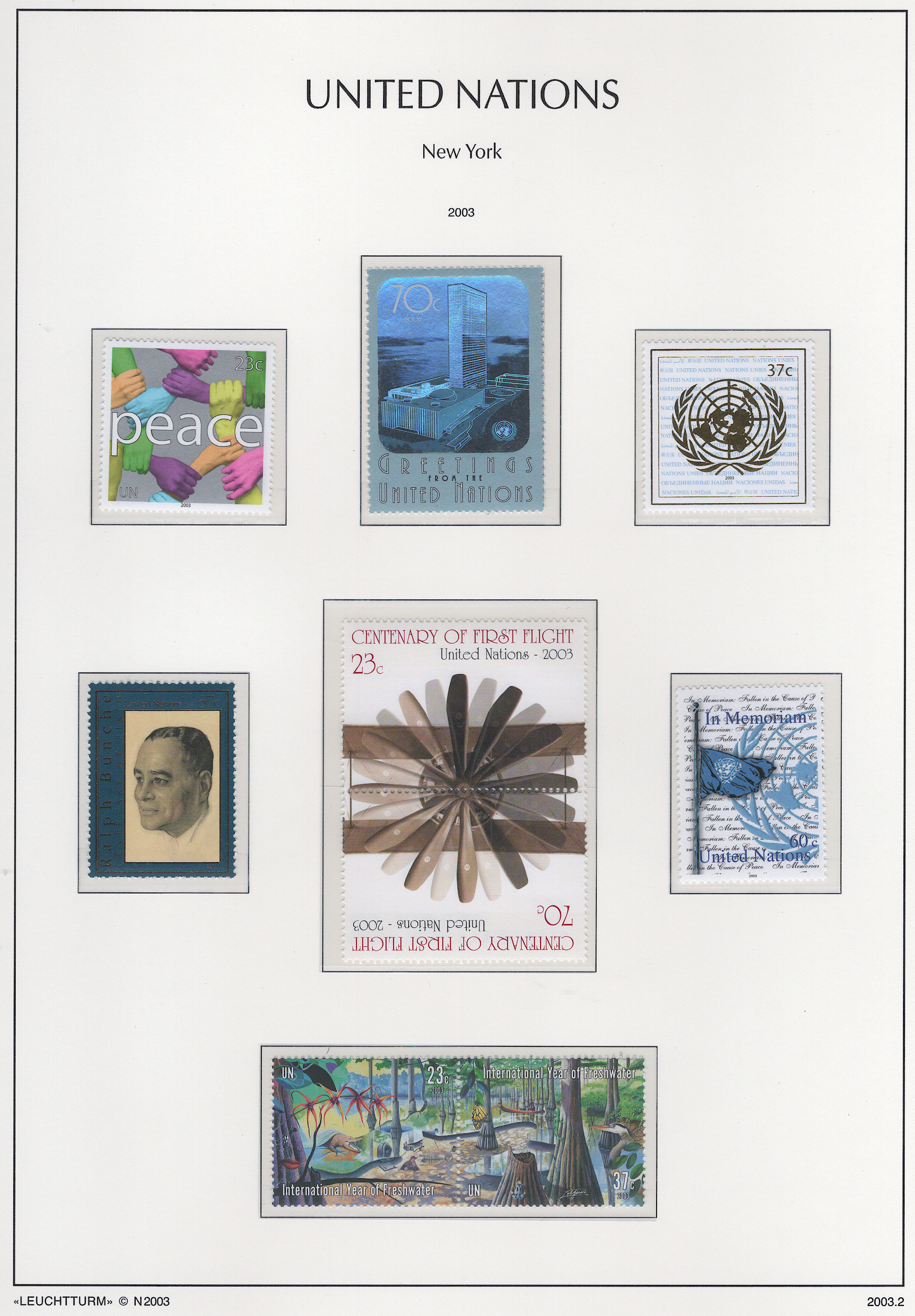
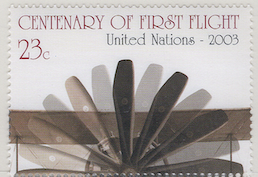
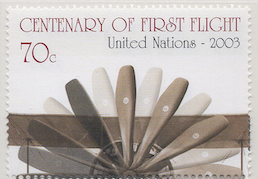
After about seven years, on December 17, 1903 in North Carolina, Orville flew the Wright Flyer for a short, sustainable flight. There’s a great photograph of this world changing event. This is considered to be the first flight. The pair of stamps at the center of this album page commemorates the one-hundredth anniversary of that flight.

It may not seem to be a U.N. topic, but the achievements of the Wright brothers is very much the result of internation collaborationg and interaction. They did not invent flying or even design their first airplane in isolation. It was the result of advancements by many people around the world from different countries. Plus, improvements to make flying practical and accessible too almost all people of the world involved research and testing of thousands of people over decades. Flying and the development of flying machines was very much in the spirit of the U.N.
Note
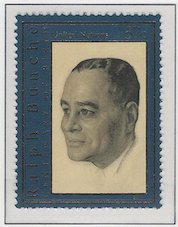
Besides the neat pair of stamps commemorating the first flight, the stamp about Ralph Bunche is worth noting. A description of this key person from the beginnning of the U.N. is described on the Ralph Bunche page in the Vienna album.
Contains 9 spots: own 9 – 9 unused, 0 used.
Page is finished.
Album or Web Page Last changed Nov 19, 2025
Stamp Details
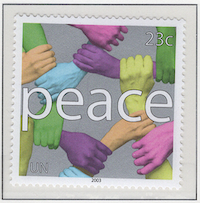
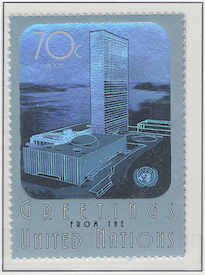
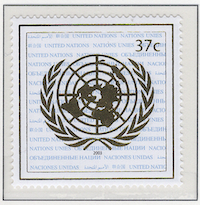
The table below lists information about the stamps shown on this page of Lighthouse’s stamp album. For more details about a particular stamp, click on its description. That will take you to the related web page of Colnect.
spot |
own |
catalog |
subject |
description |
comment |
|---|---|---|---|---|---|
✓ |
837 |
23 (mar 2003) |
|||
✓ |
839 |
70 (mar 2003) |
|||
✓ |
838 |
37 (mar 2003) |
|||
✓ |
848 |
37 (aug 2003) |
|||
✓ |
840 |
23 (mar 2003) |
|||
✓ |
841 |
70 (mar 2003) |
|||
✓ |
849 |
60 (oct 2003) |
|||
✓ |
846 |
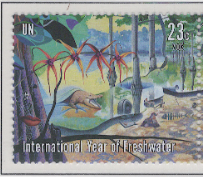
23 (jun 2003) |
|||
✓ |
847 |
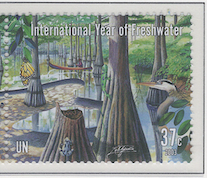
37 (jun 2003) |
Footnotes
Spot refers to the postion of the stamp on the album page (e.g., 3.2 indicates row 3, position 2).
Amt. is an abbreviation for the face amount of the stamp.
Own indicates the stamp status: ✓ for unused; ✗ for used or canceled; ⭑ signifies I ordered one; ; ✨ indicates it was bought recently; ✠ means an auction bid is pending; and ◎ is used, and it costs too much for unused.
To search by catalog number, go to the search box and enter it in the catalog number box. However, it’s a bit broken; I need to fix it.









No Covers Found.