Campione d’Italia
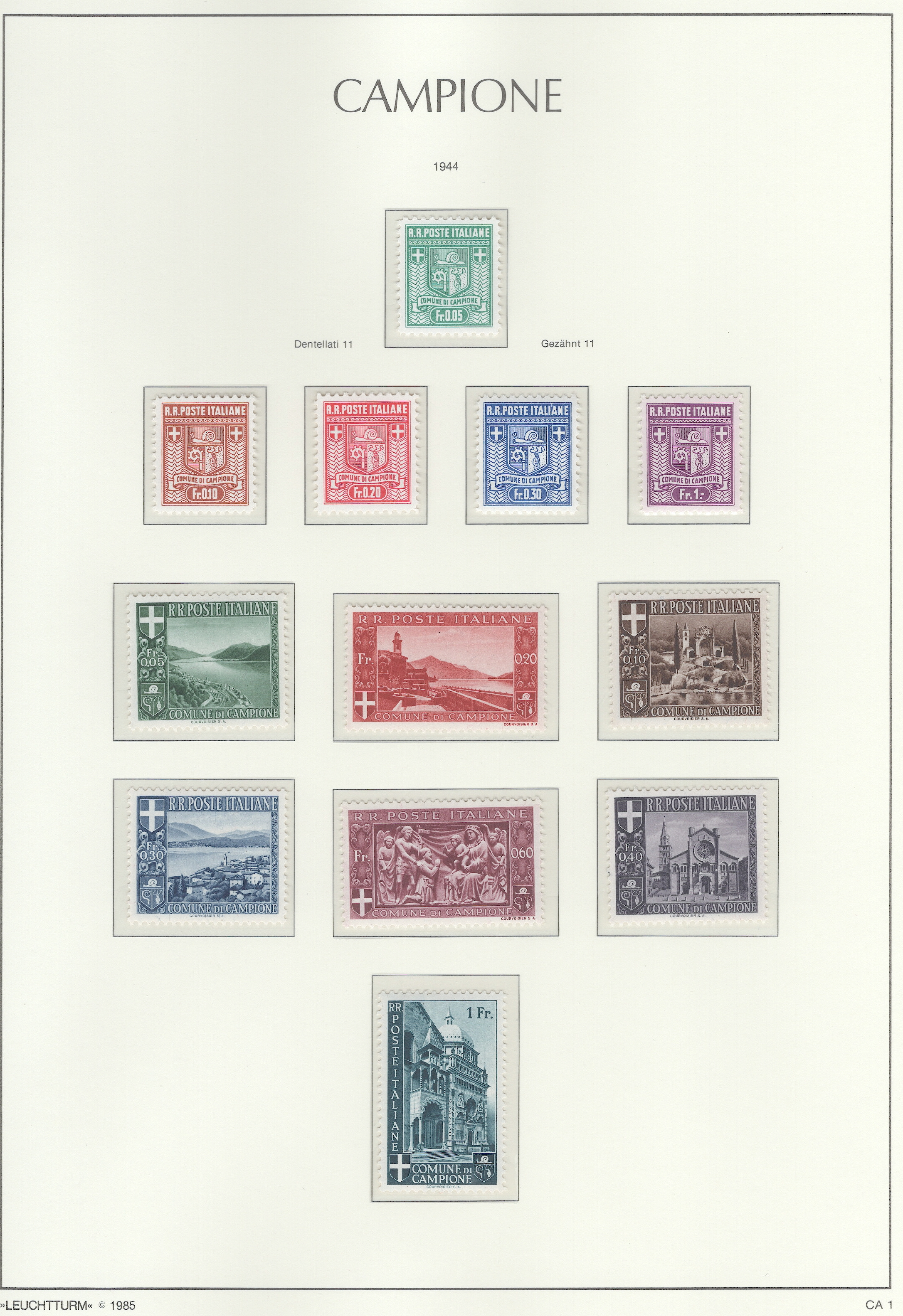
Campione d’Italia is located within Switzerland: it has an odd location and history. It’s an enclave of Italy, but surrounded by Switzerland in the Swiss Canton of Ticino, about nine miles north and outside the main border of Italy.
Campione, as it was called originally, was founded in the first century b.c.e, as an outpost of the Roman empire, to protect the northern frontier from invasions from Switzerland – and to warn Rome of an incursion.
In the eighth century, the lord and owner of Campione gifted it to the archbishopric of Milan and then it went to the Abbey of St. Ambrosia.
At that time, the Ticino region, in which Campione was located, was a possession of the Vatican. In 1512, Pope Julius II gave Ticino to Switzerland – it joined the Swiss Confederation in 1798. However, that gift did not include Campione as it belonged to the abbey in Milan: abbeys are autonomous from the Catholic Church and the Vatican.
Over many years that followed, there was an attempt by Switzerland to trade other lands along the Lombardian border for Campione. That was rejected. Later there was an attempt by the Campionesse to secede and join Switzerland, but Switzerland at the time didn’t want to anger the powers that be in Lombardia and elsewhere in the Italian peninsula.
So it remained part of Lombardia, which became part of Italy in the 1860s, and is still today part of Italy. In the 1930s, Mussolini added the d’Italia to the end of its name.
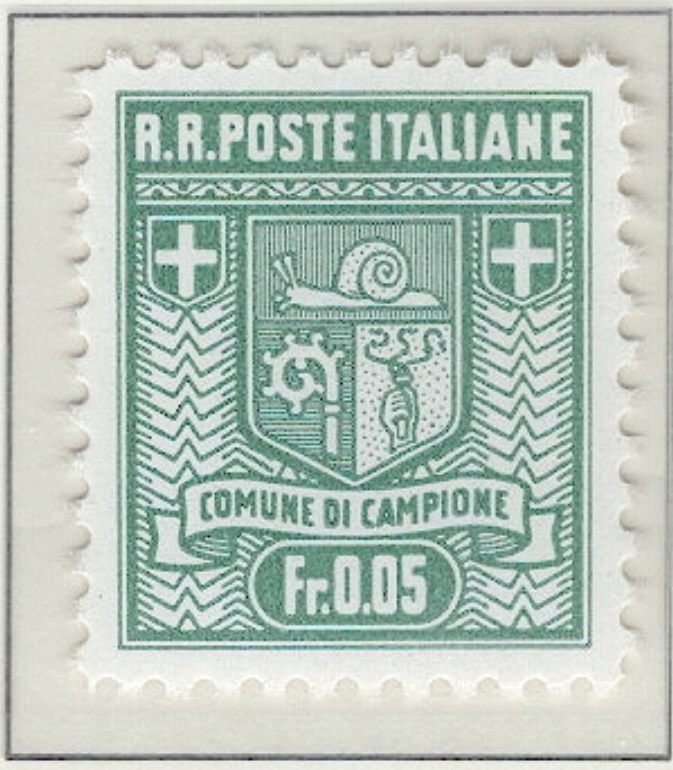
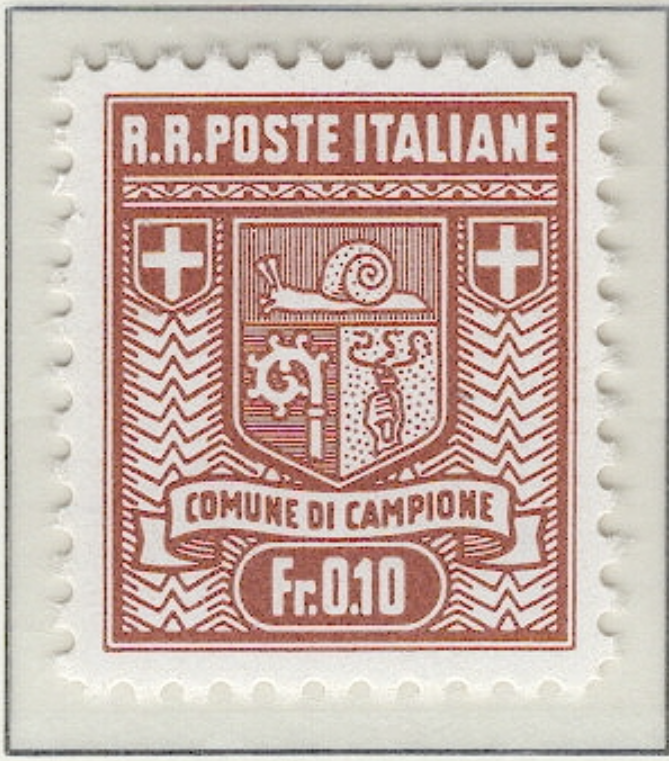
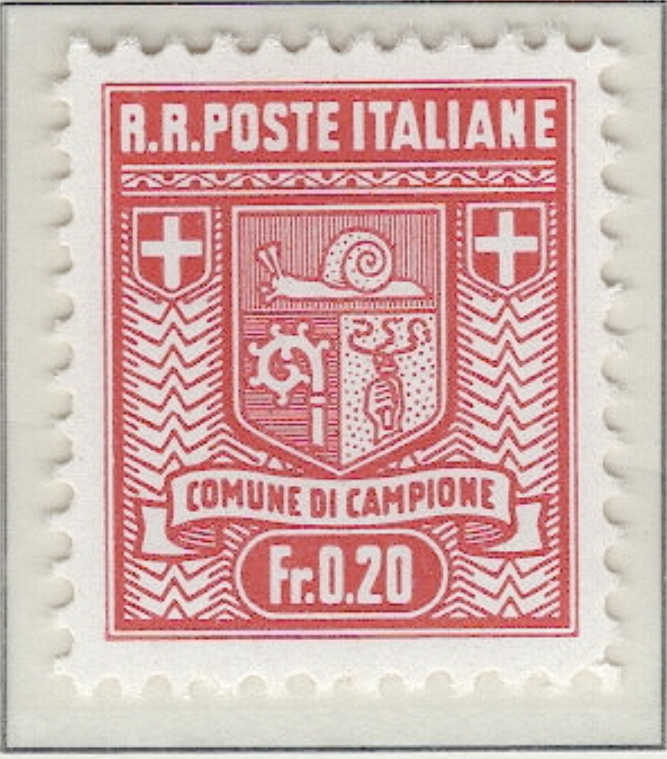
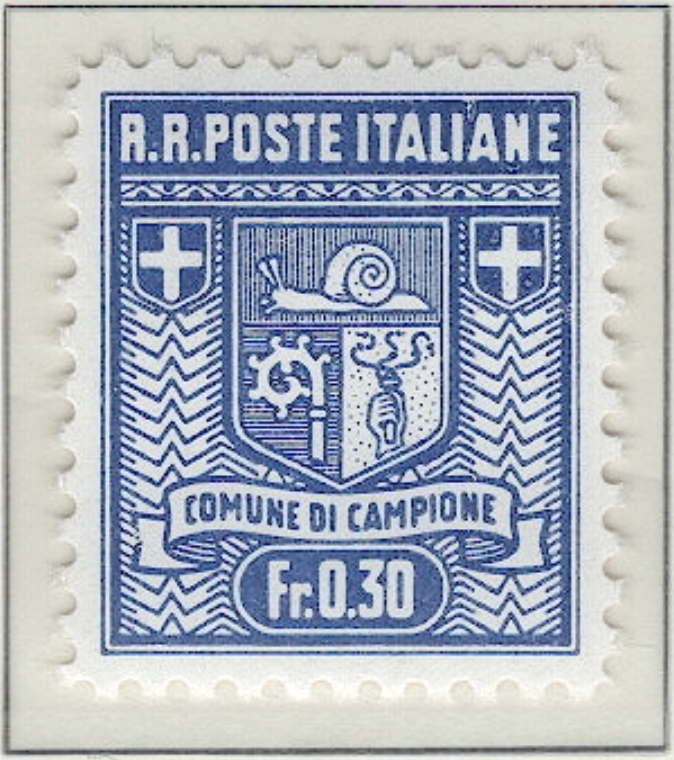
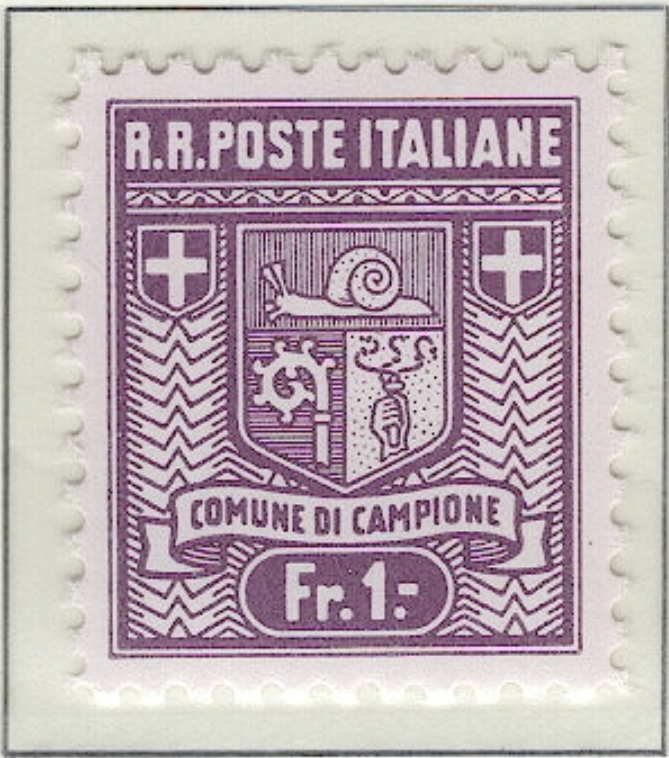
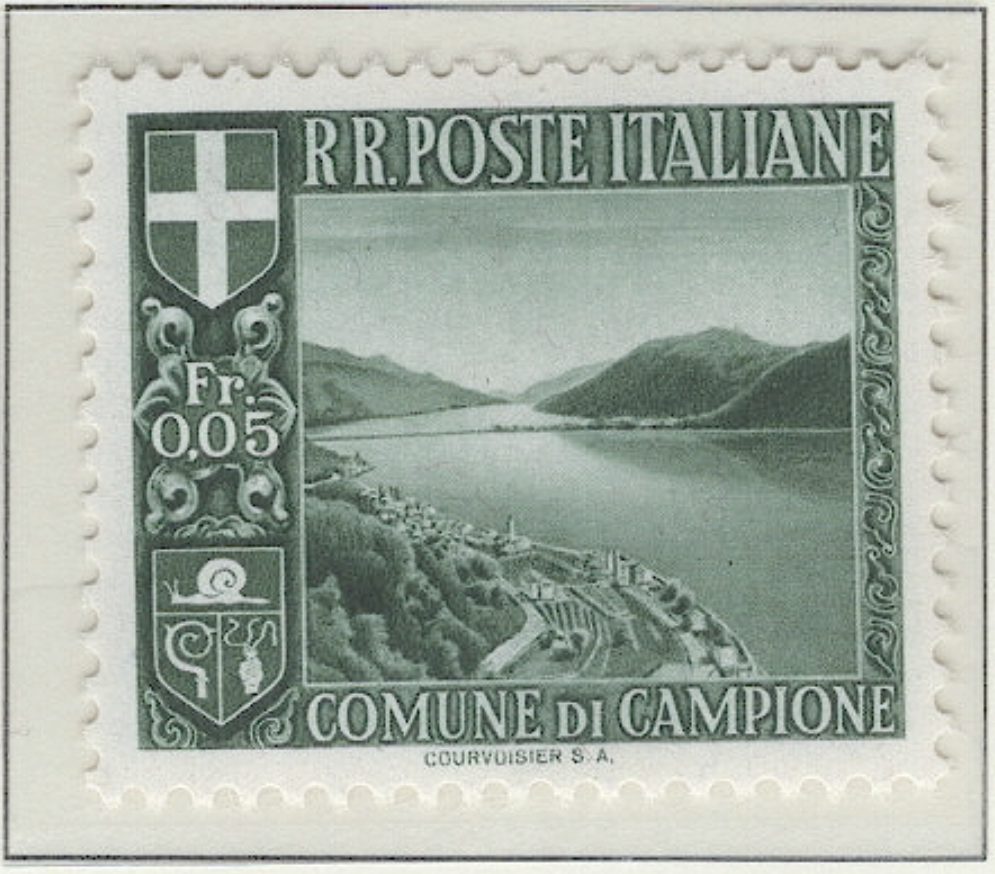
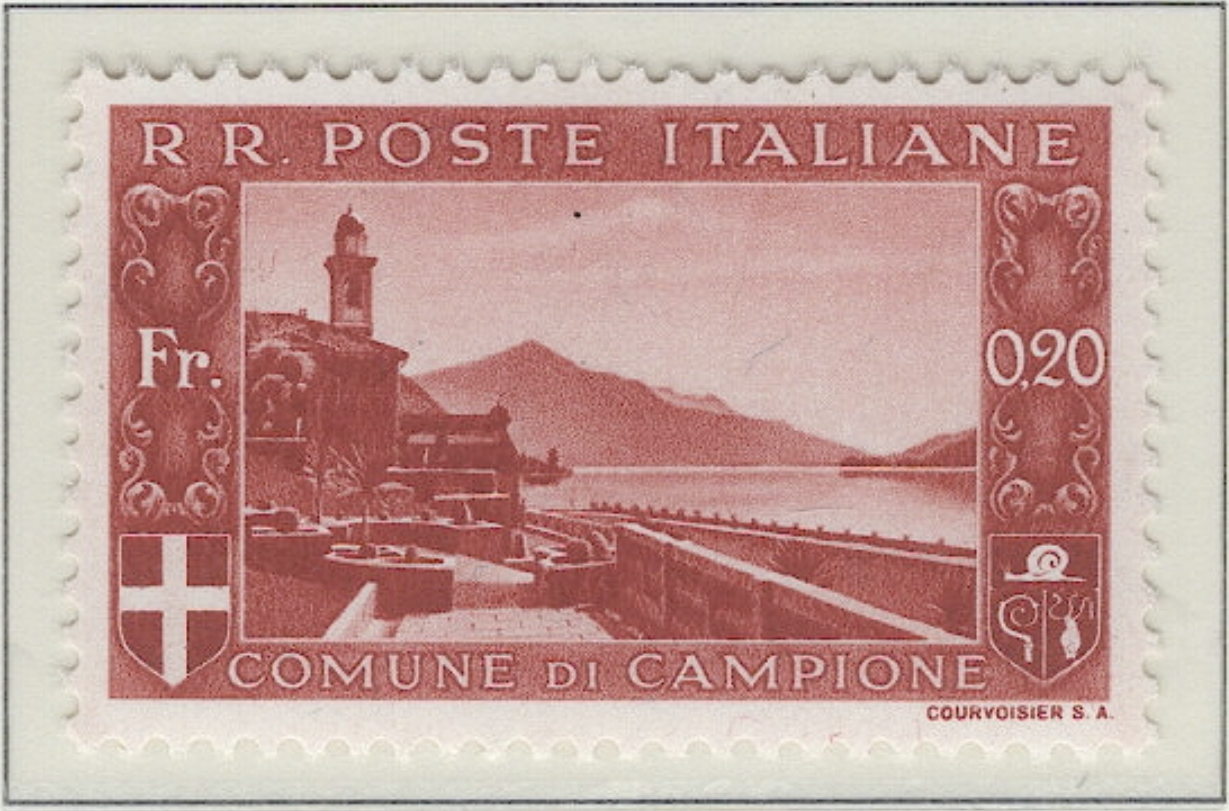
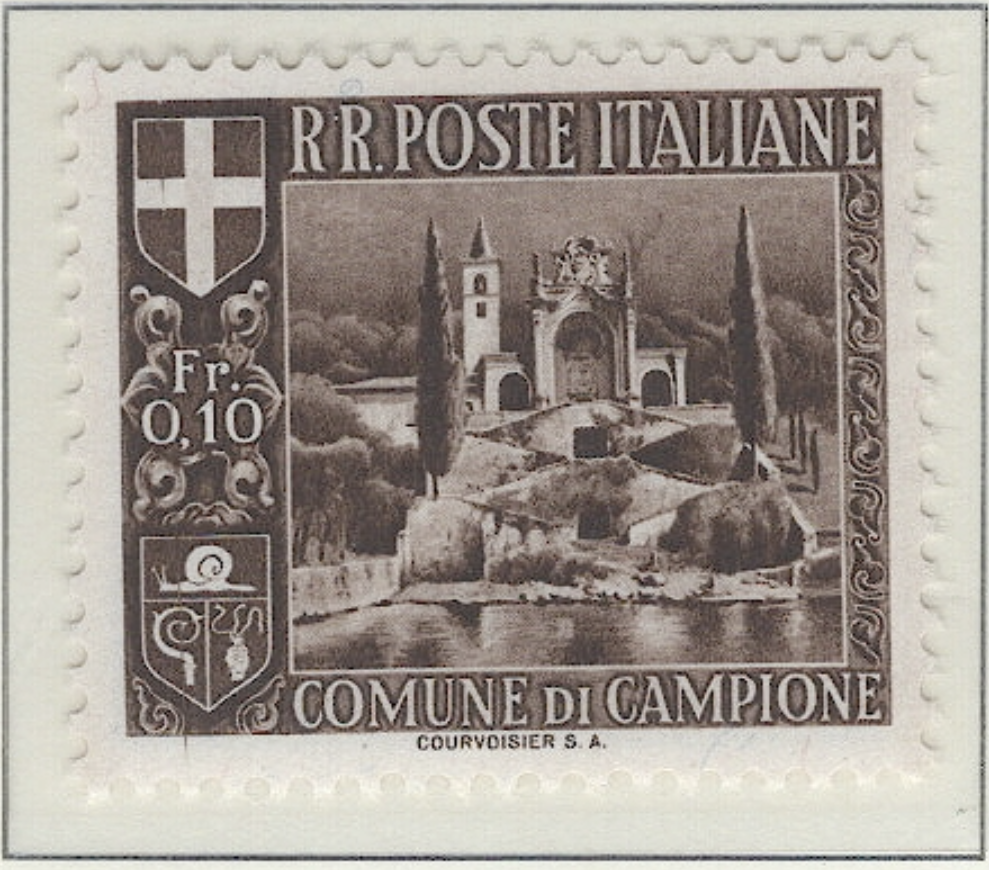
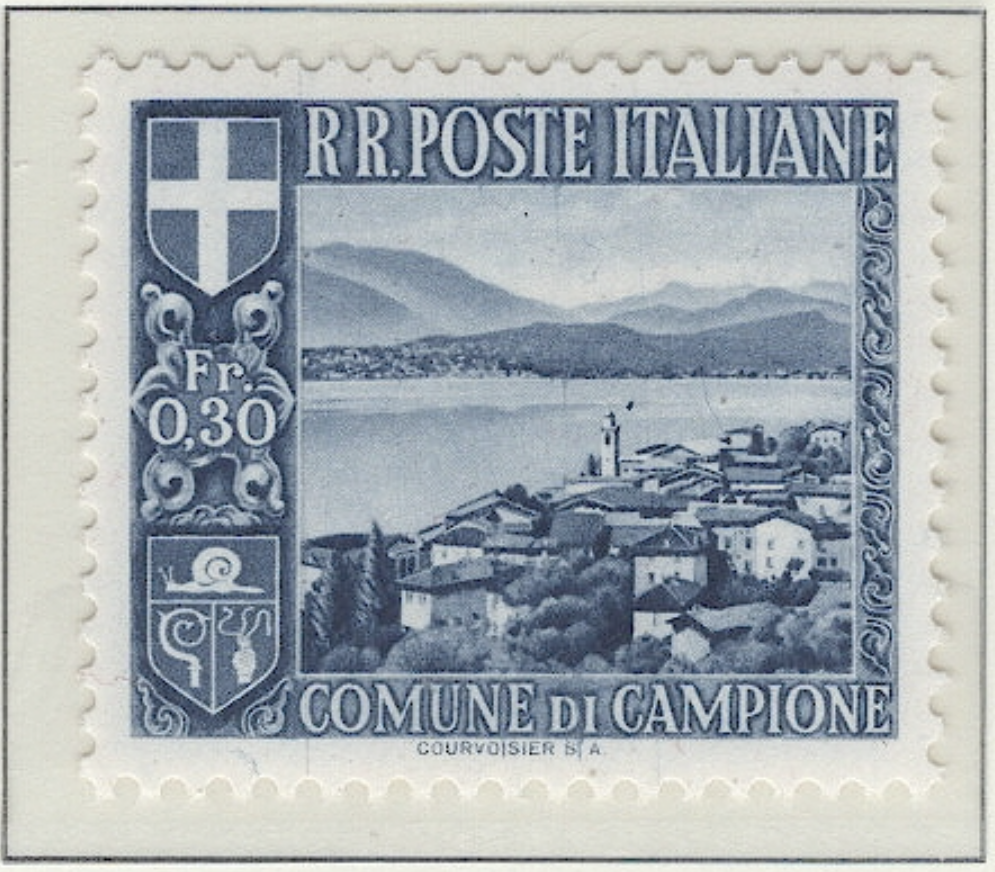
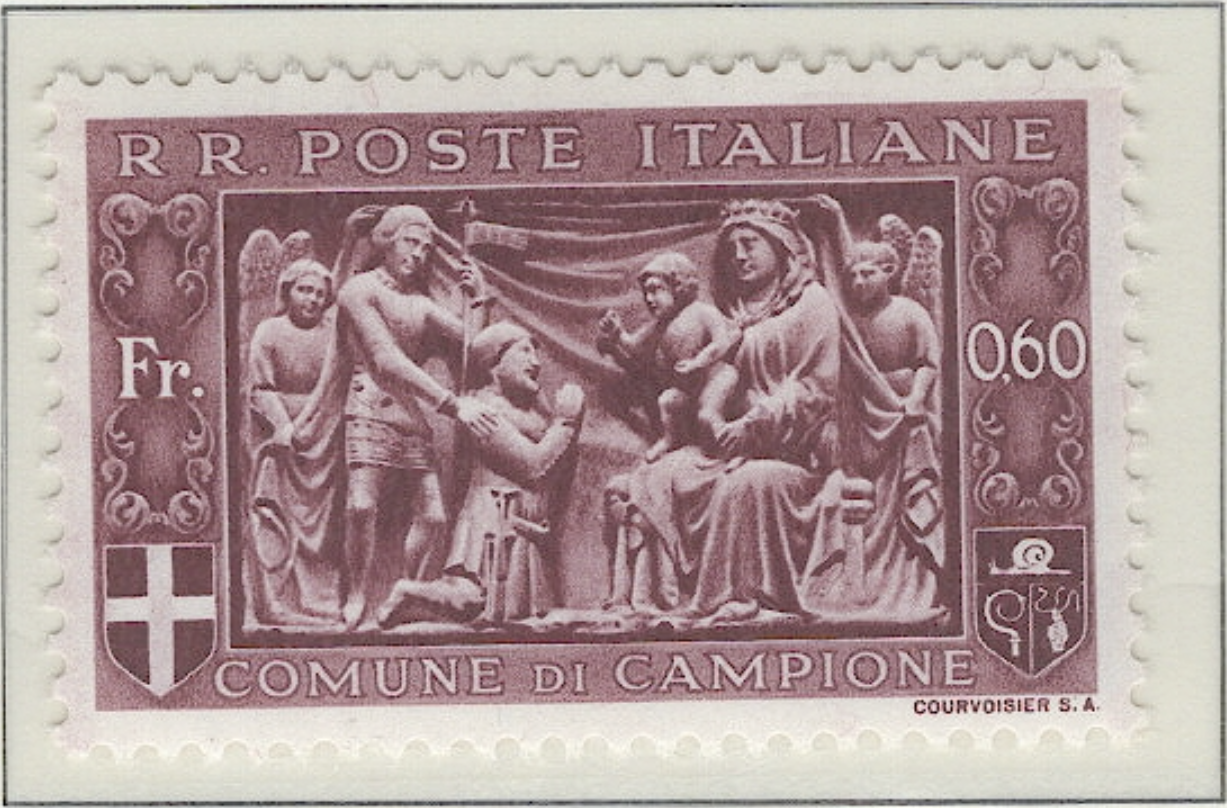
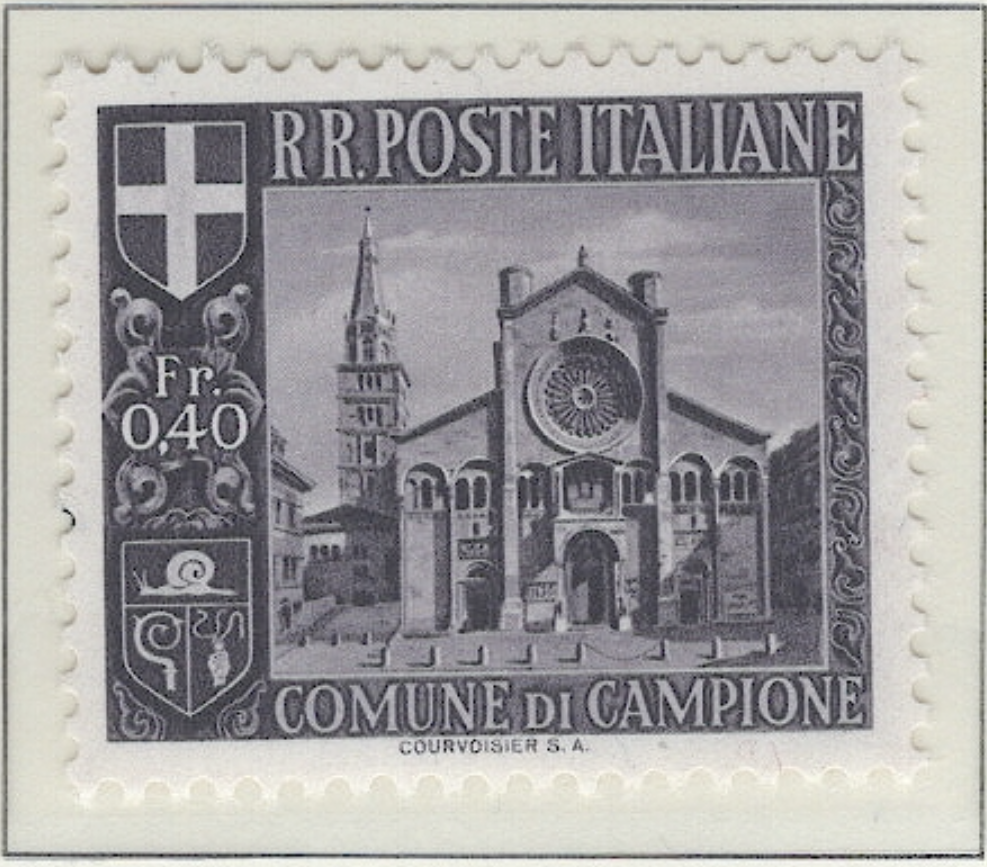
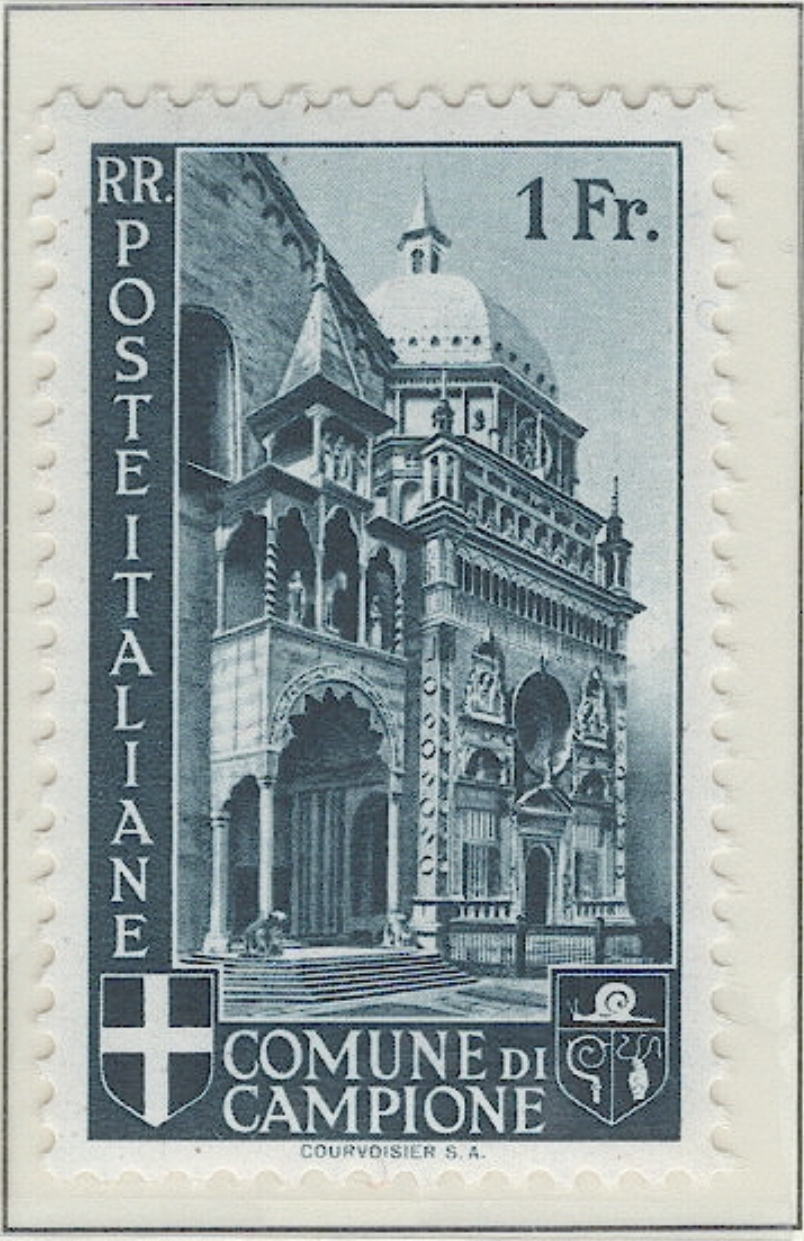
In the midst of the turmoil of the end of the Italian Kingdom (i.e., from 1943 to 1945), Campione d’Italia was cut off from the Italian postal system. It resorted to other methods for mail service: they made their own stamps and routed letters and parcels through the Swiss postal service. The stamps on this page and the next were printed and used during this time. Notice that they’re in Francs – I’m assuming that’s Swiss Francs – and not in Italian Lire.
Note
A few months ago, I saw a dealer had sold the set that you see on the album page here. They may have had it listed for a while, but I missed my chance. Recently, though, another dealer listed the top set on their site. Although it was more than I would like to have spent, I bought it right away. I didn’t want to take a chance someone else would buy it and I wouldn’t see it for sale again for a long time. The result is that this page is now complete.
Contains 12 spots: own 12 – 12 unused, 0 used.
Page is finished.
Album or Web Page Last changed Oct 28, 2022
Stamp Details
The table below lists information about the stamps shown on this page of Lighthouse’s stamp album. For more details about a particular stamp, click on its description. That will take you to the related web page of Colnect.
spot |
own |
catalog |
subject |
description |
comment |
First Issue: Campione
✓ |
CA1 |
0.05Fr (may 1944) |
|||
✓ |
CA2 |
1Fr (may 1944) |
|||
✓ |
CA3 |
0.20Fr (may 1944) |
|||
✓ |
CA4 |
0.30Fr (may 1944) |
|||
✓ |
CA5 |
1Fr (may 1944) |
Campione Scenes
✓ |
CA6 |
0.05Fr (sep 1944) |
|||
✓ |
CA8 |
St. Zenone Church |
0.20Fr (sep 1944) |
||
✓ |
CA7 |
St. Maria dei Ghirli Church |
0.10Fr (sep 1944) |
||
✓ |
CA9 |
Campione on Lake Como |
0.30Fr (sep 1944) |
||
✓ |
CA11 |
Bronze Door Relief |
0.60Fr (sep 1944) |
||
✓ |
CA10 |
Church Entrance |
0.40Fr (sep 1944) |
||
✓ |
CA12 |
St. Zenone Church |
1Fr (sep 1944) |
Footnotes
Spot refers to the postion of the stamp on the album page (e.g., 3.2 indicates row 3, position 2).
Amt. is an abbreviation for the face amount of the stamp.
Own indicates the stamp status: ✓ for unused; ✗ for used or canceled; ⭑ signifies I ordered one; ; ✨ indicates it was bought recently; ✠ means an auction bid is pending; and ◎ is used, and it costs too much for unused.
To search by catalog number, go to the search box and enter it in the catalog number box. However, it’s a bit broken; I need to fix it.











