Deja Vu Pairs
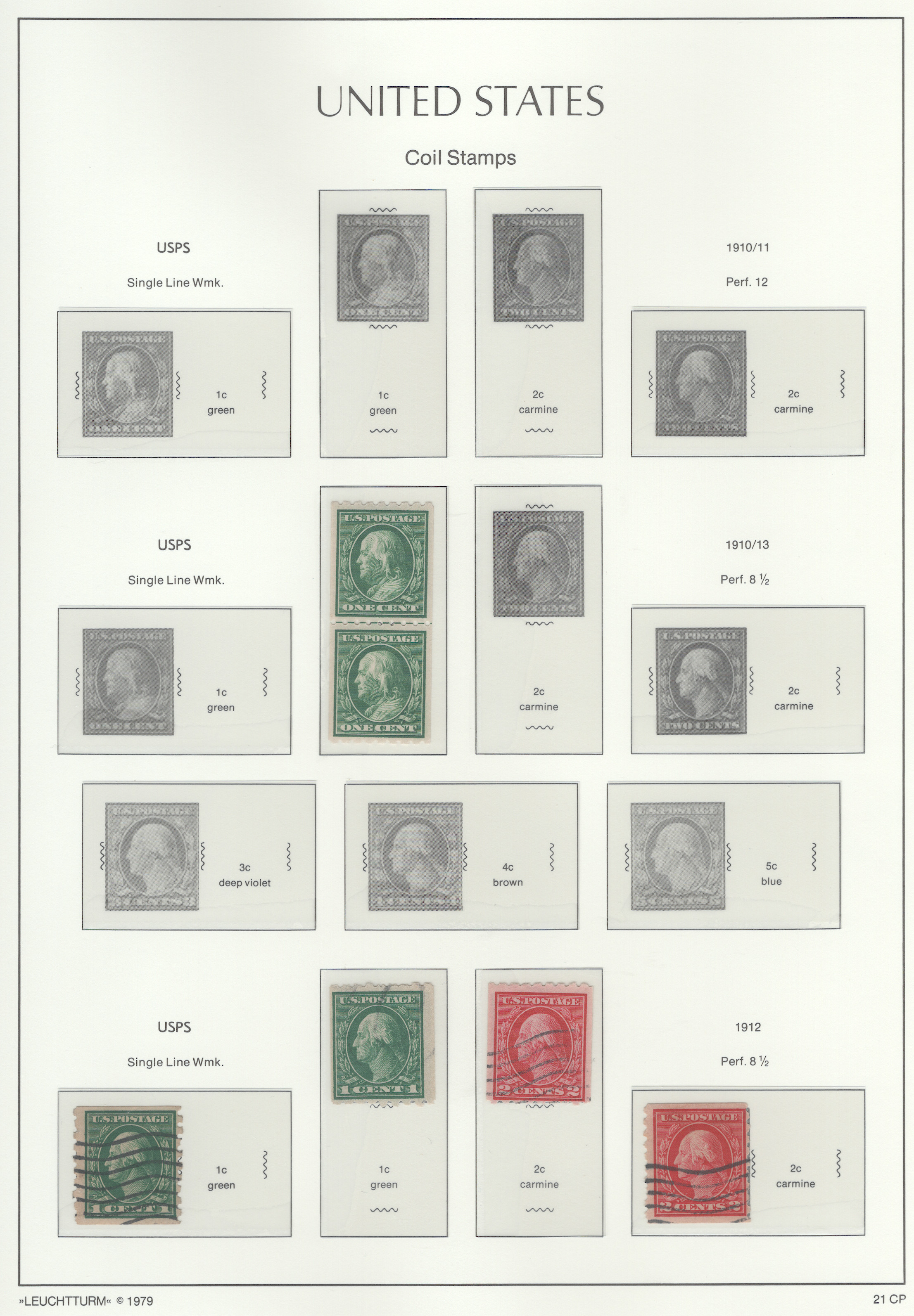
One of the deviations between otherwise identical stamps is sometimes watermarks. A paper watermark is visible when you hold the stamp up to a light, looking at it from the reverse side. You can see a lighten part of the paper. For countries like Italy that were a kingdom, there’s often a watermark in the shape of a crown. For the U.S., there’s usually the initials USPS, which stand for United States Postal Service. Incidentally, the purpose of watermarks was for an added safeguard against forgeries. They found other ways to prevent forgeries, so they stopped using watermarks on stamps after 1938.
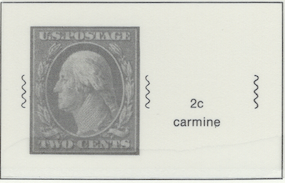
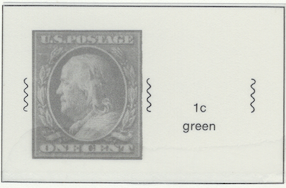
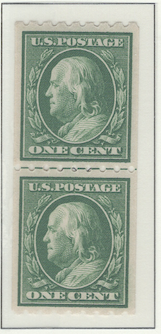
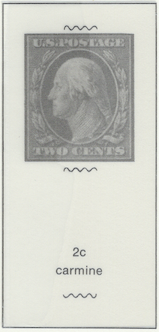
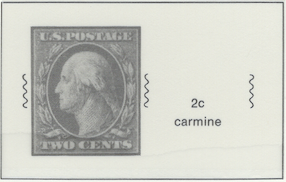
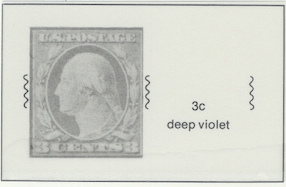
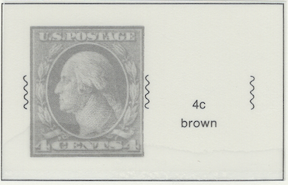
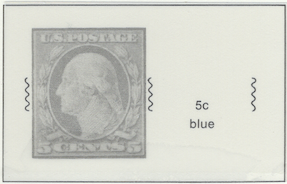
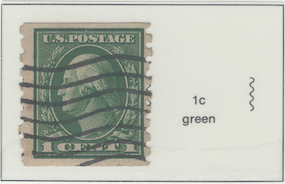
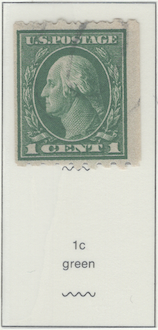
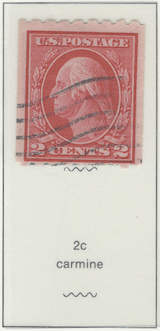
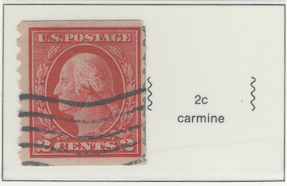
The stamps on this page have the USPS watermark. When this stamp design was first introduced – see five album pages back (Bland Pairs) – they used the USPS watermark, but with double-lined letters. The stamps here have single-lined letters.
Watermarks
Paper watermarks don’t necessarily involve water. There isn’t water inside the paper. It just looks that way. However, originally they did use water to make the mark. In that sense, the term was valid.
The general process for making a watermark on paper is to roll moist paper with a metal roller that has a slightly raised symbol (e.g., a crown). This causes either a compression of the paper or a thinning of the paper in the shape of the symbol. When you hold it up to light, because the paper is thinner, more light shines through making it look like a water stain.
You can test this method by taking a blank piece of paper and placing it on top of a coin. Using a pen or something hard and round, firmly rub the paper over the coil several times. Then flip the paper over and hold it up to a bright light. You should see the impression of the coin – maybe not fully, but at least the round shape.
Note
Somewhere along the way, I acquired a few singles of these stamps, used. I’ll replace them with pairs later. I did buy recently an unused pair – the one in the middle of the page. These aren’t too pricey, but they’re still boring. So this page hasn’t been my focus yet.
Contains 15 spots: own 5 – 1 unused, 4 used.
Album or Web Page Last changed Mar 20, 2025
Stamp Details
The table below lists information about the stamps shown on this page of Lighthouse’s stamp album. For more details about a particular stamp, click on its description. That will take you to the related web page of Colnect.
spot |
own |
catalog |
subject |
description |
comment |
Definitive Line Pairs
387 |
1c (nov 1910) |
||||
385 |
1c (nov 1910) |
||||
386 |
2c (nov 1910) |
||||
388 |
2c (nov 1910) |
||||
392 |
1c (dec 1910) |
||||
✓ |
390 |
1c (dec 1910) |
|||
391 |
2c (dec 1910) |
||||
393 |
2c (dec 1910) |
||||
389 |
3c (jan 1911) |
||||
395 |
4c (apr 1912) |
||||
396 |
5c (mar 1913) |
||||
✗ |
412 |
1c (mar 1912) |
|||
✗ |
410 |
1c (mar 1912) |
|||
✗ |
411 |
2c (mar 1912) |
|||
✗ |
413 |
2c (mar 1912) |
Footnotes
Spot refers to the postion of the stamp on the album page (e.g., 3.2 indicates row 3, position 2).
Amt. is an abbreviation for the face amount of the stamp.
Own indicates the stamp status: ✓ for unused; ✗ for used or canceled; ⭑ signifies I ordered one; ; ✨ indicates it was bought recently; ✠ means an auction bid is pending; and ◎ is used, and it costs too much for unused.
To search by catalog number, go to the search box and enter it in the catalog number box. However, it’s a bit broken; I need to fix it.














