Declaration
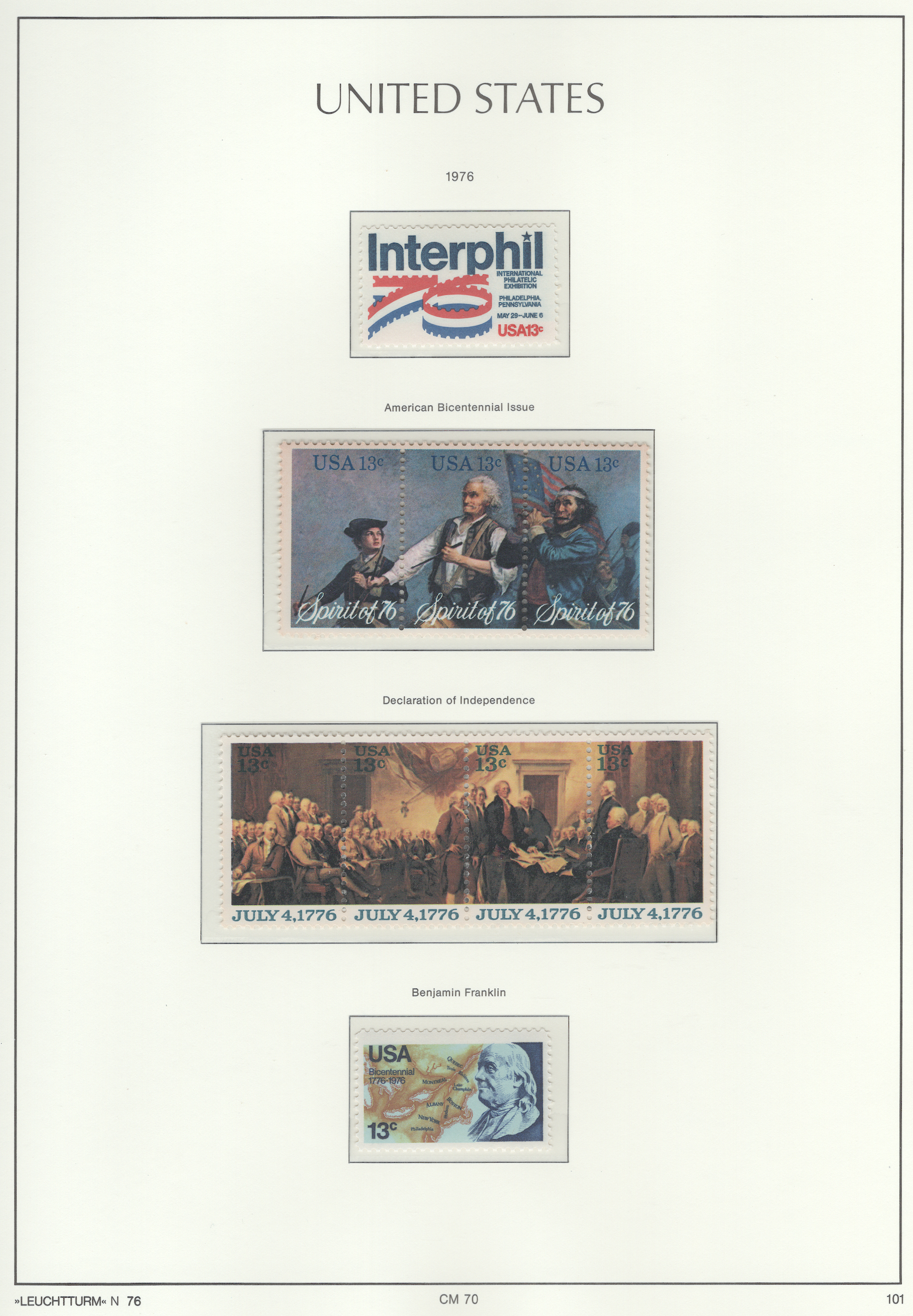
Dissatisfied with how they were treated by the King and Parliament in England, the colonist organized a meeting to discuss a united response so as to be more effective. Each of the eighteen Brittish colonies of mainland North America were asked to send delegates to represent them at the First Continental Congress. Twelve attended: Connecticut, Delaware, Maryland, Massachusetts Bay, New Hampshire, New Jersey, New York, North Carolina, Pennsylvania, Rhode Island, South Carolina, and Virginia. The British colonies, East Florida, Georgia, Nova Scotia, Quebec, Saint John’s Island, and West Florida didn’t send delegates. Their population and leadership were mostly Loyalists.
The resolution of the First Congress was to write the King and Parliament a document known as the Declaration and Resolves. In that document, they listed what they saw as their rights as British subjects, despite living the colonies. They also listed how they should be allowed to govern themselves, without interference from the British government and military. They did allow for Britain to handle external affairs that relate to the colonies, as well as the King’s right to approve and disapprove on some matters. They asked that that any offending acts of Parliament be repealed (e.g., the Coercive Acts), and they allowed to have the rights they had before leaving England.
The response from England was not favorable and nothing was accepted or changed. In fact, more acts of Parliament were passed to abuse the colonies more. A year later, the Second Continental Congress was held, with the same twelve colonies attending, along with Georgia this time. At this point, the Boston Tea Party had happened, and fighting at Lexington and Concord had started the revolutionary war. The second congress met to help organize the war and decide on what message to send to England. This led to the unanimous Declaration of the thirteen united States of America, which became the Declaration of Independence.
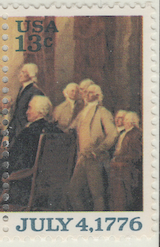
The signing of this document was painted years later by John Trumbull, shown in the set of four stamps on the third row of this album page. The reality is that the delegates were not all present at the time of signing. They signed it separately on different days: they weren’t all together in the room at the same time.
Note
Normally, I complain of too much space on an album page. Although this page has only a few stamps – nine in total made of two singles and two se-tenants – it still a good clustering of stamps. More stamps would be too much.
Contains 9 spots: own 9 – 9 unused, 0 used.
Page is finished.
Album or Web Page Last changed May 5, 2025
Stamp Details
The table below lists information about the stamps shown on this page of Lighthouse’s stamp album. For more details about a particular stamp, click on its description. That will take you to the related web page of Colnect.
spot |
own |
catalog |
subject |
description |
comment |
International Stamp Exposition
✓ |
1632 |
13c (jan 1976) |
American Revolution Bicentential
✓ |
1629 |
13c (jan 1976) |
|||
✓ |
1630 |
13c (jan 1976) |
|||
✓ |
1631 |
13c (jan 1976) |
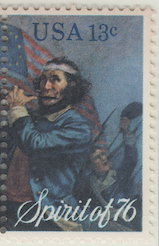
Constitution & Decl. of Independence
✓ |
1691 |
Declaration of Independence |
13c (jul 1976) |
||
✓ |
1692 |
Declaration of Independence |
13c (jul 1976) |
||
✓ |
1693 |
Declaration of Independence |
13c (jul 1976) |
||
✓ |
1694 |
Declaration of Independence |
13c (jul 1976) |
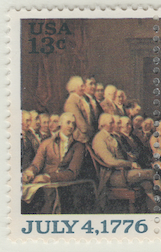
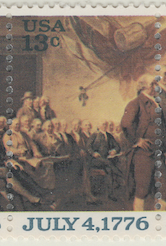
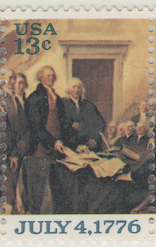
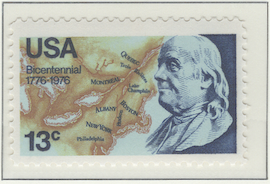
American Revolution Bicentential
✓ |
1690 |
Benjamin Franklin |
13c (jun 1976) |
Footnotes
Spot refers to the postion of the stamp on the album page (e.g., 3.2 indicates row 3, position 2).
Amt. is an abbreviation for the face amount of the stamp.
Own indicates the stamp status: ✓ for unused; ✗ for used or canceled; ⭑ signifies I ordered one; ; ✨ indicates it was bought recently; ✠ means an auction bid is pending; and ◎ is used, and it costs too much for unused.
To search by catalog number, go to the search box and enter it in the catalog number box. However, it’s a bit broken; I need to fix it.








