Kingdom of Sicily
❦ Priority Page ❦
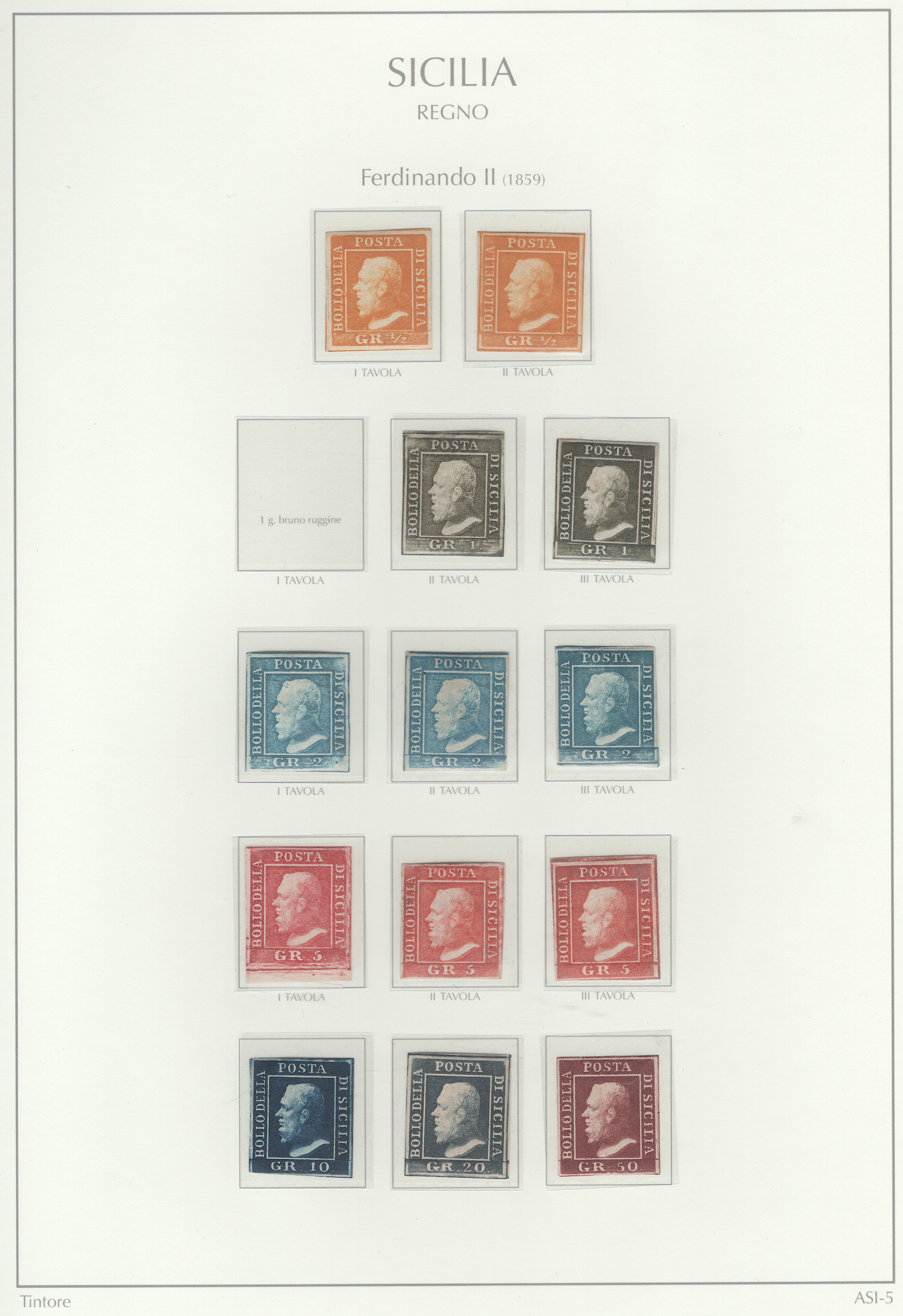
In November 1830, Ferdinando II became king of Sicily at the age of twenty. Like most young men, he had progressive ideas about the world. He was very popular in the early years of his reign, introducing many reforms to the government: cutting tax and expenses, improving the justice system, helping the lower classes. However, there was a movement going on throughout the Italian peninsula for monarchies to be replaced with constitutional monarchies.
Rather than go with the times, he used his military and police to suppress protests for a consitution. Starting 1847, a revolt was begun by the Liberals. Sicily was not alone in this fight: there were revolutions all over Europe.
In 1848, in an attempt to appease the revolutionaries, the king agreed to a constitution and the forming of a parliament. However, it didn’t provide enough freedoms or involve enough reforms. So the unrest continued, leading to the desolving of parliament and the constitution, returning to monarchy rule. As a result, the revolution continued.
The king managed to surpress the revolution, often times by military and naval actions. He increased his rule over the people, and put tens of thousands of dissenters in prison. Eventually, his biggest supporters, England and France started turning against him. On a Mary day, the first week of December 1856, a soldier (Agesilao Milano) tried to assasinate him by stabbing him with a bayonet. The king didn’t die immediately, but instead was infected from the wound which caused medical complications that is believed to have contributed to his death two and a half years later in May 1859.
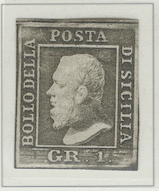
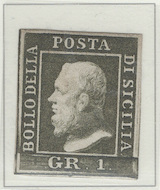
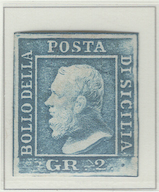
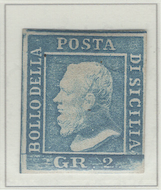
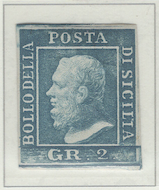
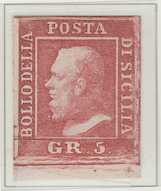
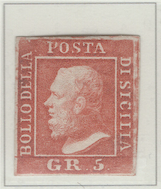
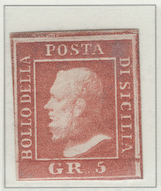
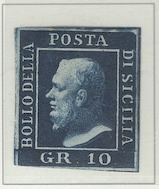
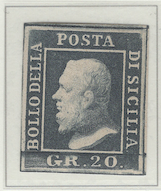
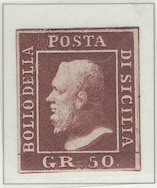
All of the stamps on this page depict King Ferdinando II. There are none of anyone else or anything about the kingdom and their people. There are some on the next page showing his coat of arms, but nothing else. Basically, that was his attitude in these later years: everything about him and his rule, nothing about the people and place that make his kindom. It’s no wonder many of his people turned on him and that when Giuseppe Garibaldi began his campaign for the conquering of Italy, it started in Sicily and was so successful.
Note
Although Ferdinando II was a jerk in his later years, I still like these stamps. I like them not only because I’m of Sicilian dissent, but there’s something about their look that seems to be peering through time at the king.
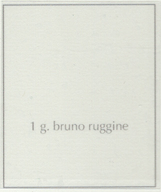
As you can see, I have all but one of the stamps on this page. I bought some from local dealers, but won most at auctions. I’m close to filling the page – something I wasn’t sure would ever happen for any of the pages in this album.
Auctions seem to be the cheapest route for me with pre-Italy stamps. I hope I can get the last one here. I rarely see any for sale or bid. When I do, it’s usually at a high price. My finances are tighter now, not like when I was first buying these stamps. I can’t afford to pay too much. But I’m hopeful I’ll find a good deal one day. I’ll just have to be vigilant.
Contains 14 spots: own 13 – 13 unused, 0 used.
Album or Web Page Last changed Nov 20, 2023
Stamp Details
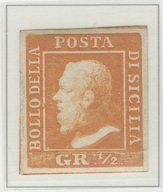
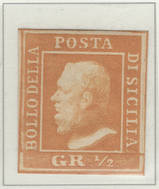
The table below lists information about the stamps shown on this page of Lighthouse’s stamp album. For more details about a particular stamp, click on its description. That will take you to the related web page of Colnect.
spot |
own |
catalog |
subject |
description |
comment |
Kingdom
✓ |
1 |
½g (1859) |
|||
✓ |
2 |
½g (1859) |
|||
3 |
1g (1859) |
||||
✓ |
4 |
1g (1859) |
|||
✓ |
5 |
1g (1859) |
|||
✓ |
6 |
2g (1859) |
|||
✓ |
7 |
2g (1859) |
|||
✓ |
8 |
2g (1859) |
|||
✓ |
9 |
5g (1859) |
|||
✓ |
10 |
5g (1859) |
|||
✓ |
11 |
5g (1859) |
|||
✓ |
12 |
10g (1859) |
|||
✓ |
13 |
20g (1859) |
|||
✓ |
14 |
50g (1859) |
Footnotes
Spot refers to the postion of the stamp on the album page (e.g., 3.2 indicates row 3, position 2).
Amt. is an abbreviation for the face amount of the stamp.
Own indicates the stamp status: ✓ for unused; ✗ for used or canceled; ⭑ signifies I ordered one; ; ✨ indicates it was bought recently; ✠ means an auction bid is pending; and ◎ is used, and it costs too much for unused.
To search by catalog number, go to the search box and enter it in the catalog number box. However, it’s a bit broken; I need to fix it.













