The Beginning
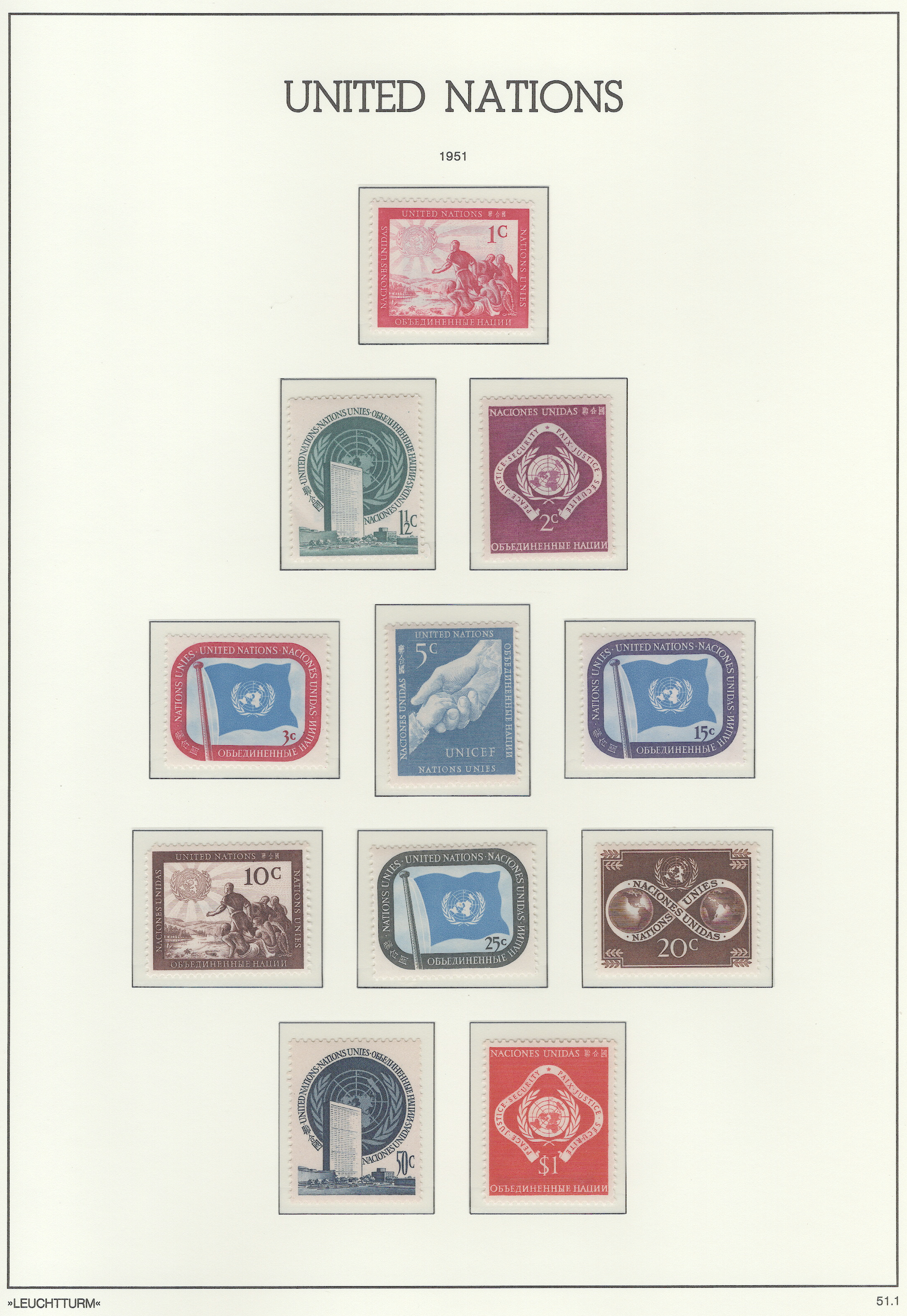
José Arce, a delegate from Argentina proposed in 1947 that the United Nations establish a postal system, with a post office in the New York headquarters and issue its own postage stamps. At the time, he was president of the U.N. General Assembly – for only about five months. It was probably because he was a stamp collector that he wanted the U.N. to do this.
Arce had a few official arguments for this idea. One was that since only soverign nations issue stamps accepted by the postal union (i.e., the UPU), stamps and a postal administration would put the U.N. on the same level of respectability as member nations. Second, stamps on envelops from the U.N. could draw the public’s attention to programs, projects, and goals of the U.N. And third, selling stamps to collectors could be an extra source of revenues for the U.N. offices.
In November 1947, the General Assembly passed a resolution instructing the Secretary General to begin the process to establish a postal system. In November 1950, the General Assembly formally approved the creation of the U.N. Postal Administration. They still needed to negotiate a deal with the U.S. post office to be able to hand off mail to them using U.N. stamps. The U.S. goverenment agreed, provided U.N. stamps were in U.S. dollars and that U.N. mail was sent from the U.N. offices.
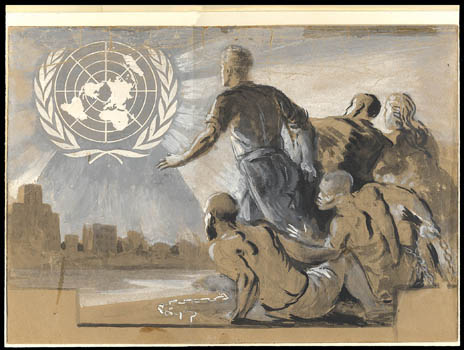
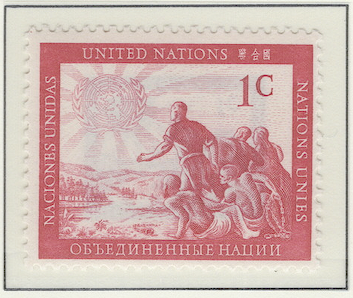
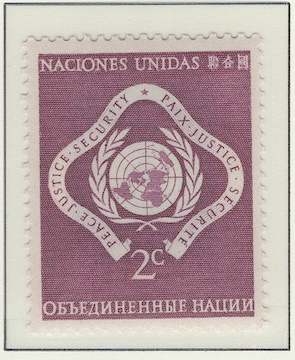
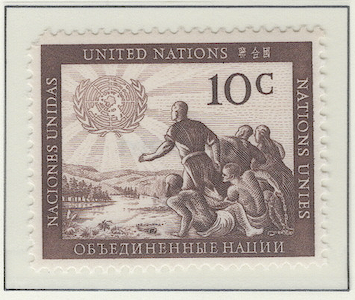
On October 24, 1951, the first stamp was issued, the first one at the top of this page. It was printed by De La Rue & Co. Ltd., the same company that first printed stamps for Italy. The design, though, is a little sappy looking, in my opinion. It’s from a painting by O.C. Meronti, made specifically for the first stamp. The original painting looks better. For an organization, though, that’s all about things like equality, it’s odd that the image is of four men and maybe only one woman.
Note
Stamps from the United Nations aren’t very expensive. There’s only one, the souvenir sheet for the 10th Anniversary, which you can buy for about one-hundred fifty dollars. There are a few reasons for this.
Since U.N. stamps aren’t very old and they started printing them in a modern era, they’re in abundance and there aren’t any variants – or at least not many. Also, because no one is a citzen of the U.N., although there are people who hold U.N. passports, U.N. stamps aren’t very popular amongst collectors as collecting stamps of their own country. The result of no rarities, a huge supply of all of the stamps available, and low demand for them, you can buy all of the stamps issued by the U.N. of New York in mint condition for probably less than a thousand dollars.
I don’t have all of them yet, but now that I’m working on this album, now that it has my attention, it won’t take me long to get them all – at least the ones from New York and once I have the album pages.
Contains 11 spots: own 11 – 11 unused, 0 used.
Page is finished.
Album or Web Page Last changed Dec 1, 2023
Stamp Details
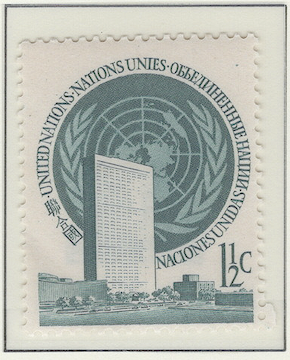
The table below lists information about the stamps shown on this page of Lighthouse’s stamp album. For more details about a particular stamp, click on its description. That will take you to the related web page of Colnect.
spot |
own |
catalog |
subject |
description |
comment |
U.N. Definitives
✓ |
1 |
1c (oct 1951) |
|||
✓ |
2 |
1½c (oct 1951) |
|||
✓ |
3 |
2c (nov 1951) |
|||
✓ |
4 |
3c (oct 1951) |
|||
✓ |
5 |
5c (oct 1951) |
|||
✓ |
7 |
15c (nov 1951) |
|||
✓ |
6 |
10c (nov 1951) |
|||
✓ |
9 |
25c (oct 1951) |
|||
✓ |
8 |
20c (nov 1951) |
|||
✓ |
10 |
50c (nov 1951) |
|||
✓ |
11 |
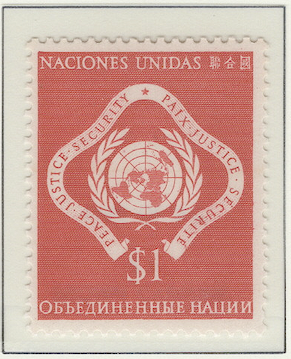
$1 (oct 1951) |
Footnotes
Spot refers to the postion of the stamp on the album page (e.g., 3.2 indicates row 3, position 2).
Amt. is an abbreviation for the face amount of the stamp.
Own indicates the stamp status: ✓ for unused; ✗ for used or canceled; ⭑ signifies I ordered one; ; ✨ indicates it was bought recently; ✠ means an auction bid is pending; and ◎ is used, and it costs too much for unused.
To search by catalog number, go to the search box and enter it in the catalog number box. However, it’s a bit broken; I need to fix it.











No Covers Found.
