Peninsular Sicily
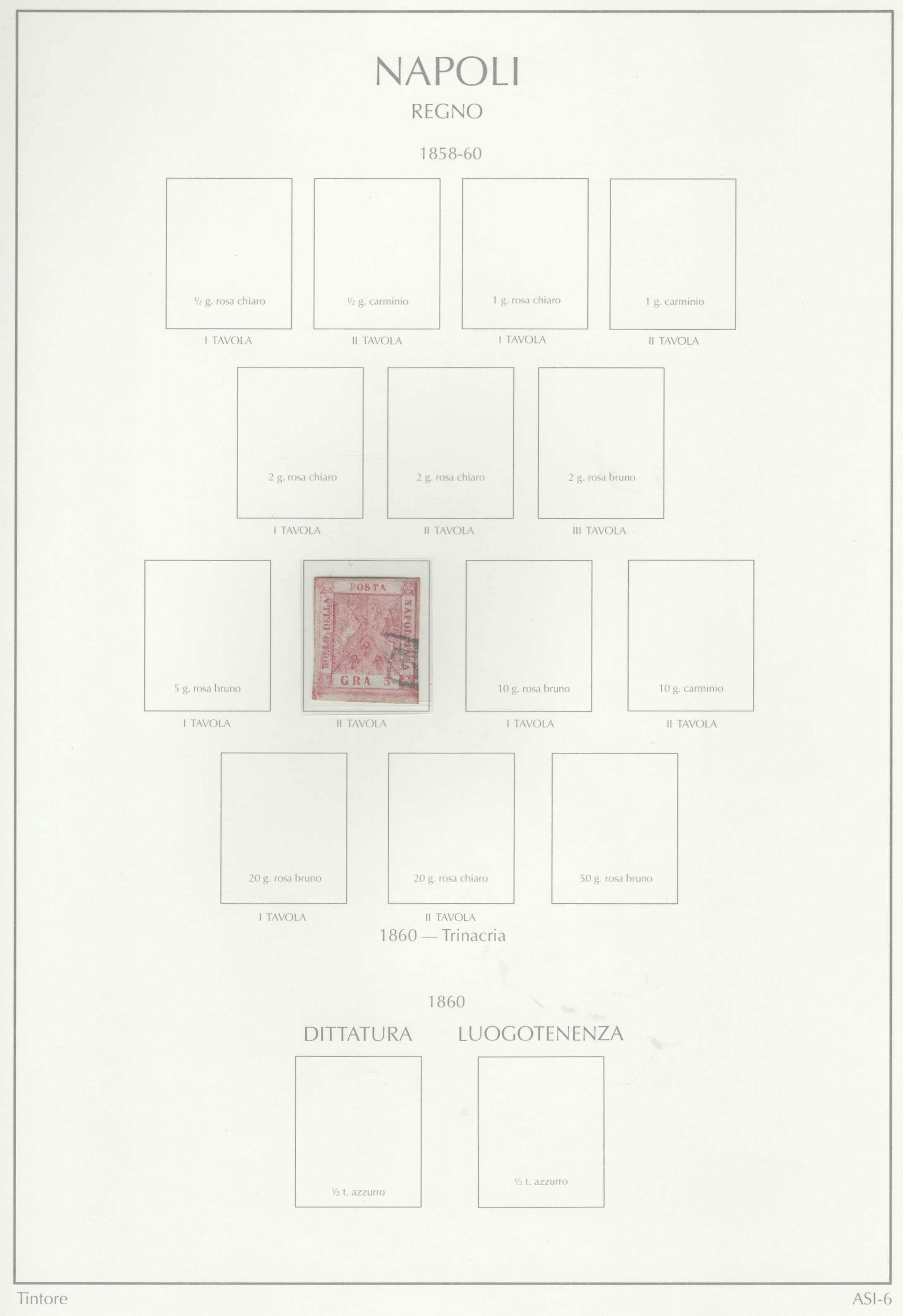
The Kingdom of the Two Sicilies was composed of the island now known as Sicily and the lower regions of the Italian peninsula, sometimes called by the misnomer, the Kingdom of Naples.
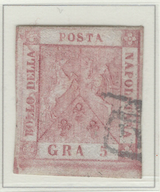
The images on these stamps are all the same at the core – only the frames are different. They’re basically the crest or logo of the Kingdom of Two Sicilies. They’re made up of three parts: a rearing horse; a woman’s head with three legs; and three stylized fleurs de lis.
The rearing horse has been the symbol for Naples since the thirteenth century. I’m a little unclear as to why it was chosen, but I’ve managed to piece it together in a fairly coherent story: In the year 1253, when the city was conquered by an outside army, there was a golden statue of a rearing horse near the center of town – for no particular reason other than maybe it was pretty and interesting – it wasn’t the town symbol at that point. The leader of the conquering forces, in a symbolic act to show the people they were under his control – perhaps thinking the horse statue was their chosen icon – put a bridle over the statue’s head, with a bit in its mouth. At some point, though, the people freed themselves from their oppressors. After they did, they started using the symbol of a rearing horse, with no bridle or bit, to symbolize a strong and free Naples.
As for the head with three legs, it’s the symbol for Sicily, know at the Trinacria – which was also the Greek name for the island, from the time when it was owned by the Greeks. They called it that because the island is in a vague triangle shape with three promontories: called Passero in the southeast; Peloro in the northeast; and Lilibeo in the west. The head in the center of the legs is of a Gorgon. The Gorgons were three grim sisters from Greek mythology who represent specific perversions: Stheno, who represents moral perversion; Euryale, sexual perversion; and Medusa, intellectual.
The three flowers are the symbol for the House of Bourbon – they were the kings of Sicily and Naples. Basically, the Kingdom of the Two Sicilies is composed of the Kingdom of Naples and the Kingdom of Sicily, first joined together by the Bourbon king, Ferdinando I – grandfather of Ferdinando II, mentioned on the previous album page.
Note
These stamps are generally expensive – especially unused. Because of that, and since this album is new for me, this page is empty. However, I did recently buy a used one at an auction in Tuscany. It’s the one on the second row – the only one on the page. I prefer not to buy used ones, but the price was low enough and the cancelation marks minimal. Plus, I had an order from a previous auction that hadn’t been shipped yet. It cost me only an extra euro to add this one to the package. So I bought it to get this page started.
Contains 16 spots: own 1 – 1 unused, 0 used.
Album or Web Page Last changed Dec 12, 2023
Stamp Details
The table below lists information about the stamps shown on this page of Lighthouse’s stamp album. For more details about a particular stamp, click on its description. That will take you to the related web page of Colnect.
spot |
own |
catalog |
subject |
description |
comment |
Kingdom
1 |
½g (1858) |
||||
2 |
½g (1858) |
||||
3 |
1g (1858) |
||||
4 |
1g (1858) |
||||
5 |
2g (1858) |
||||
6 |
2g (1858) |
||||
7 |
2g (1858) |
||||
8 |
5g (1858) |
||||
✓ |
9 |
5g (1858) |
|||
10 |
10g (1858) |
||||
11 |
10g (1858) |
||||
12 |
20g (1858) |
||||
13 |
20g (1858) |
||||
14 |
50g (1858) |
Dictatorship
15 |
½t (1860) |
Lieutenancy
16 |
½t (1860) |
Footnotes
Spot refers to the postion of the stamp on the album page (e.g., 3.2 indicates row 3, position 2).
Amt. is an abbreviation for the face amount of the stamp.
Own indicates the stamp status: ✓ for unused; ✗ for used or canceled; ⭑ signifies I ordered one; ; ✨ indicates it was bought recently; ✠ means an auction bid is pending; and ◎ is used, and it costs too much for unused.
To search by catalog number, go to the search box and enter it in the catalog number box. However, it’s a bit broken; I need to fix it.















