Naples Fair
The Triennial Exhibition of Italian Overseas Territories (i.e., Mostra Triennale delle terre italiane d’Oltremare) was held in Naples, Italy in 1940. A major complex was built for the expo. that included several buildings and pavillions, an arena that could hold 10,000 people, an acquarium, and gardens – and it was positioned near an archaological site that was enhanced.
The purpose was to educate the Italian and global public about the Italian colonies and other Italian territories. There were colonial art shows and museums, photographs from the Italian territories, bars and other scenes that included musicians and dancers from the colonies, performing music from their cultures. There were also lectures, meetings on plans for exploration of Africa, books published on various topics related to the expansion of Italy, and products displayed and sold to individuals and to businesses looking to establish a regular trade with the colonies and territories. The gardens included various plants and trees taken from the colonies so that attendees could see the unique environments.
The expo was meant to given visitors a sense of what life was like in the Italian colonies, as well as learn about the many projects being developed in the colonies: a network of roadways, airports, hospitals, irrigation systems, and ports. The hope was to demonstrate how well Italy was operating as a colonial power, albeit a newcomer to colonialism. Being respected by other powers of Europe in this way would be critical when negotiations invariably took place after wars regarding conquered lands and lost territories.
The expo was based on a similar one held in Paris in 1931 in which Belgium, Britain, Denmark, France, Italy, the Netherlands, Portugal, and the United States participated with pavillions and exhibits introducing their colonies. It was like a world fair, but for colonial nations, only. The expo in Naples was the same, but only for Italy.
The rest of this story is on the Triennale page.
Note
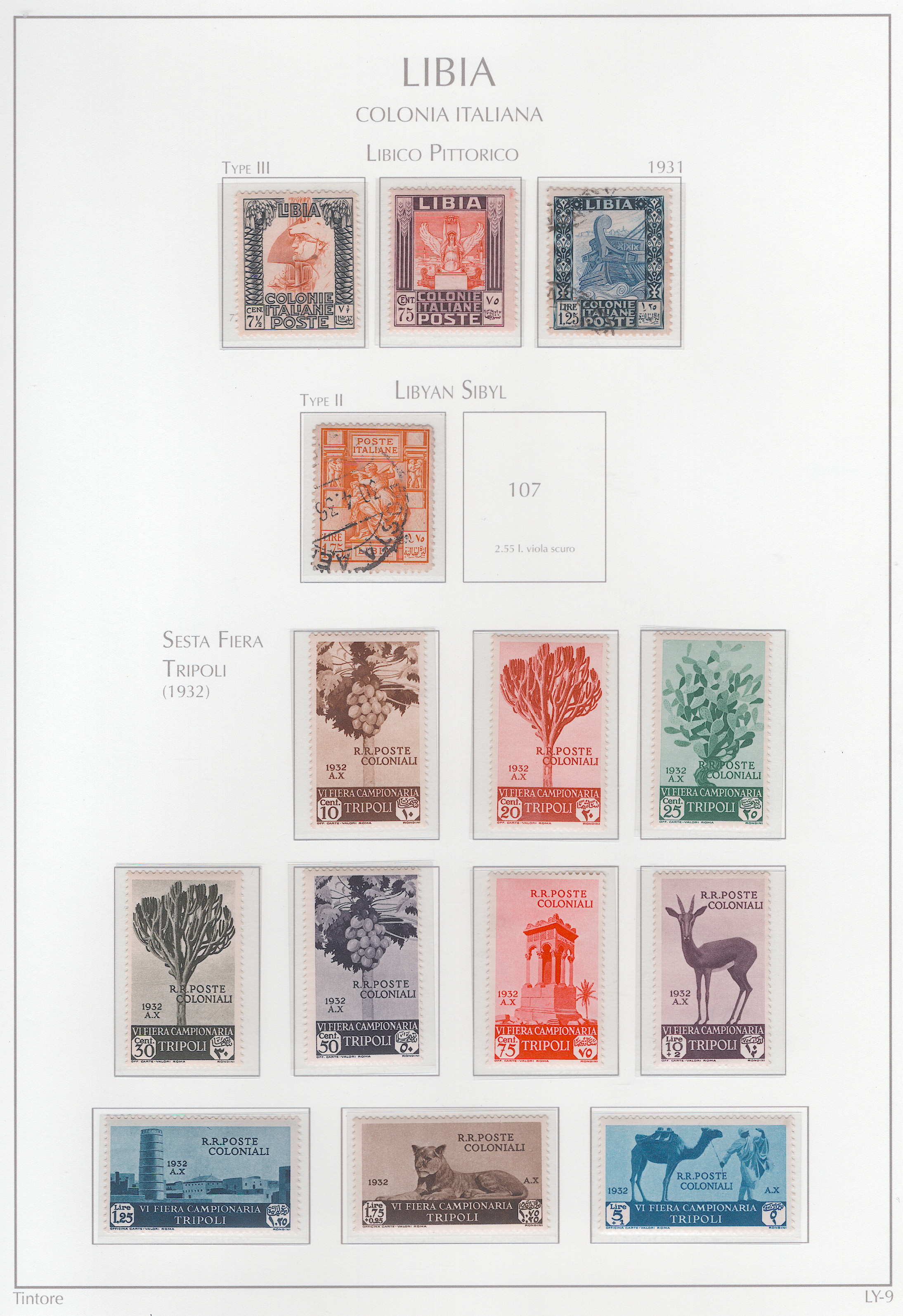
This page is complete, but I probably should locate it nearer the Triennale page. The bottom set on this page are air mail stamps, with Sassone catalog numbers A38 to A40. The stamps on the other page are also air mail, Sassone A41 to A52 – with an odd one, A28 in the midst. I may need to move that one odd stamp elsewhere.
Contains 15 spots: own 14 – 12 unused, 2 used.
Album or Web Page Last changed Feb 15, 2025
Stamp Details
The table below lists information about the stamps shown on this page of Lighthouse’s stamp album. For more details about a particular stamp, click on its description. That will take you to the related web page of Colnect.
spot |
own |
catalog |
subject |
description |
comment |
Libyan Pictorials III
✓ |
103 |
7½c (mar 1931) |
|||
✓ |
104 |
75c (feb 1931) |
|||
✗ |
105 |
1.25₤ (mar 1931) |
Libyan Sibyl Pictorials II
✗ |
106 |
1.75₤ (feb 1931) |
|||
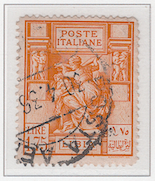
107 |
2.55₤ (feb 1931) |
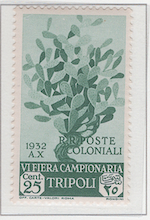
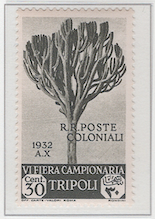
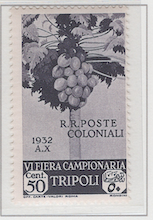
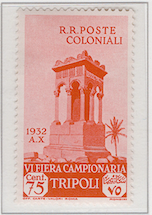
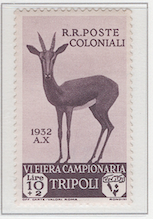
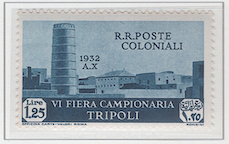
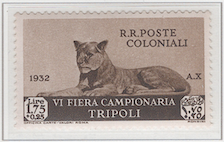
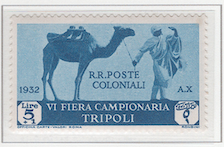
Sixth Tripoli Trade Expo.
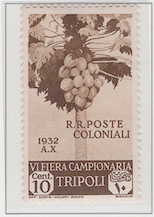
✓ |
108 |
10c (mar 1932) |
|||
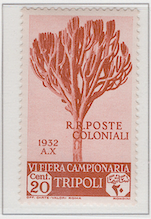
✓ |
109 |
20c (mar 1932) |
|||
✓ |
110 |
25c (mar 1932) |
|||
✓ |
111 |
30c (mar 1932) |
|||
✓ |
112 |
50c (mar 1932) |
|||
✓ |
113 |
75c (mar 1932) |
|||
✓ |
117 |
10+2₤ (mar 1932) |
|||
✓ |
114 |
1.25₤ (mar 1932) |
|||
✓ |
115 |
1.75+0.25₤ (mar 1932) |
|||
✓ |
116 |
5+1₤ (mar 1932) |
Footnotes
Spot refers to the postion of the stamp on the album page (e.g., 3.2 indicates row 3, position 2).
Amt. is an abbreviation for the face amount of the stamp.
Own indicates the stamp status: ✓ for unused; ✗ for used or canceled; ⭑ signifies I ordered one; ; ✨ indicates it was bought recently; ✠ means an auction bid is pending; and ◎ is used, and it costs too much for unused.
To search by catalog number, go to the search box and enter it in the catalog number box. However, it’s a bit broken; I need to fix it.














