Papal States
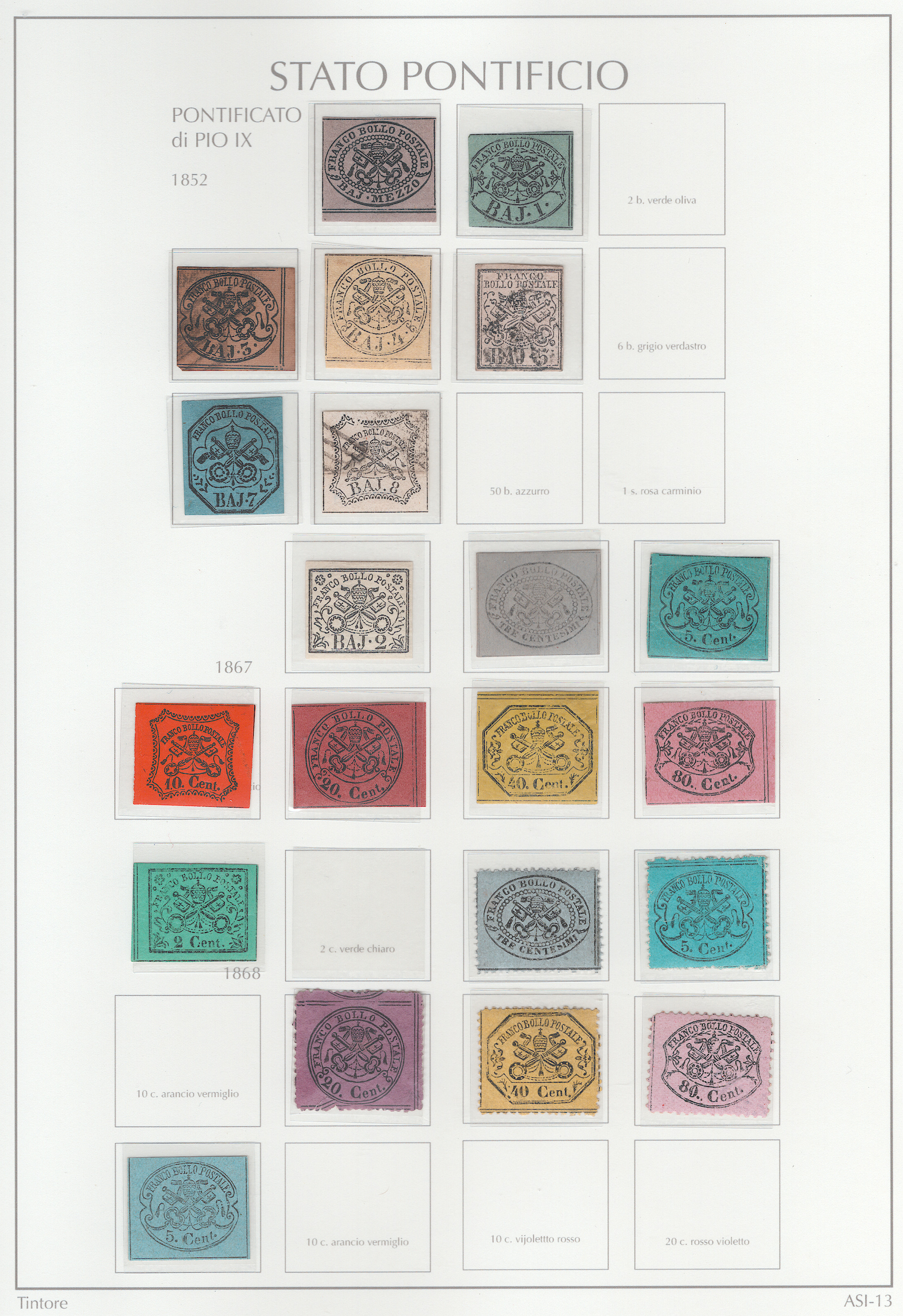
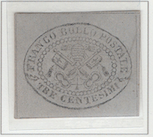
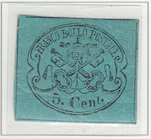
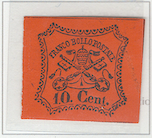
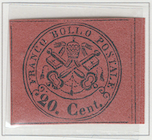
Several of these stamps were issued in 1867, after the formation of the Kingdom of Italy. All of the republics, kingdoms, and duchies of the Italian peninsula were conquered and merged together to form the new kingdom, except for the Papal States. They were under the protection of French troops and the French emperor. The result was that the Papal States were in isolation.
The Reign of Pope Pius IX
During this period, when these stamps were issued, the Roman Catholic Church and the Papal States were led by Pope Pius IX (i.e., Giovanni Maria Mastai Ferretti). He was born in 1792 in Senigallia, which is located in Italy – not Africa.
Although Giuseppe Garibaldi and his forces took over all of the peninsula of Italy, including the islands of Sardegna and Sicily, he was not able to take the Papal States. They were under the protection of the French Empire.
In 1868, Pope Pius IX started the First Vatican Council. A few things came out of that council meeting, including giving up ownership and control of the Papal States to the Kingdom of Italy in 1870. But until then, his rule covered what is now the regions of Lazio, Marche, Umbria and Romagna, and portions of Emilia. Rome is located in Lazio.
Perforated Stamps
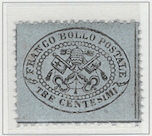
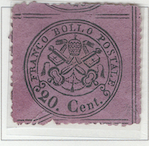
Although Lombardia started perforating stamps – rather than cutting them by hand – in 1868, it took the Papal States ten years to do so. These stamps, the ones on the sixth and seventh rows, are the first perforated ones they issued. However, when they printed a sheet, they didn’t perforate the outer margins. Some of them, the ones by the edge might have a selvage – or the selvage might be cut away by hand.
What I don’t understand is why the stamp I have here, the first one on the sixth row, is not perforated on any side. Also, none of the ones that go on the bottom row were perforated. They may have decided it wasn’t working very well. When Henry Archer first invented the perforating machine, it didn’t work too well. He had to redesign it and make adjustments. Maybe the Papal States had one of the old machines and gave up on it later in the year.
Note
It’s fascinating to me that the Vatican had its own government – and not just the city state it has now – encompassing what are now four or five regions of Italy. Still today they have their own post office and postage stamps. I don’t collect them, but I do collect these.
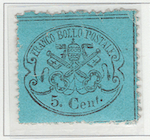
These aren’t my favorite stamps, though. I don’t like the paper colors too much. I also don’t like that the paper they’re printed on. When I first acquired one of these stamps long ago, I remember wondering if it was fake. I also don’t like the haphazard sizes: they were cut by hand, using crude scissors or a knife.
When I first designed and when I redesigned this album page – created the table of stamps in the database – I overlooked one stamp: catalog number 24 – it’s on the sixth row. I saw it for sale on the site of Milan dealer. I bought it and added an extra stamp mount at the beginning of the row and shifted the first stamp on that row to the left. That’ll do for now. Maybe when I get more or all of these stamps I’ll redesign the page again.
As I’m writing this, I see now that I’m missing more Papal stamps in my database: catalog numbers 12, 14, 21, 27, and 31. I don’t know how I overlooked them. It’s so confusing to determine which stamps belong in an album, even a small, one-page albums like this one. Actually, it wasn’t until I merged the three pages I had originally into one page that I’m now noticing what I’m missing.
Contains 30 spots: own 22 – 19 unused, 3 used.
Album or Web Page Last changed Jun 30, 2025
Stamp Details
The table below lists information about the stamps shown on this page of Lighthouse’s stamp album. For more details about a particular stamp, click on its description. That will take you to the related web page of Colnect.
spot |
own |
catalog |
subject |
description |
comment |
Montarsolo Design - Baiocco & Scudo
✓ |
1 |
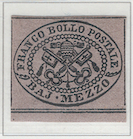
½b. (1852) |
|||
✓ |
2 |
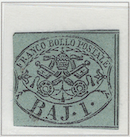
1b. (1852) |
|||
3 |
2b. (1852) |
||||
✗ |
4 |
3b. (1852) |
|||
✓ |
5 |
4b. (1852) |
|||
✗ |
6 |
5b. (1852) |
|||
✓ |
7 |
6b. (1852) |
|||
✓ |
8 |
7b. (1852) |
|||
✗ |
9 |
8b. (1852) |
|||
10 |
50b. (1852) |
||||
11 |
1s. (1852) |
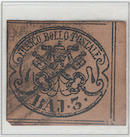
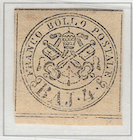
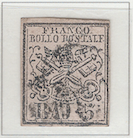
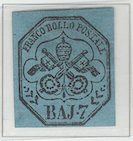
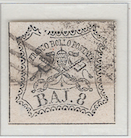

Montarsolo Design
✓ |
13 |
2c. (1867) |
|||
✓ |
15 |
3c. (1867) |
|||
✓ |
16 |
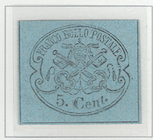
5c. (1867) |
|||
✓ |
17 |
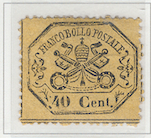
10c. (1867) |
|||
✓ |
18 |
20c. (1867) |
|||
✓ |
19 |
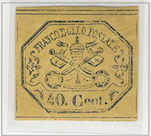
40c. (1867) |
|||
✓ |
20 |
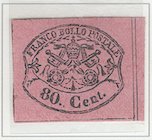
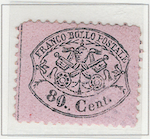
80c. (1867) |
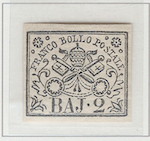
Montarsolo Design - Perforated
✓ |
22 |
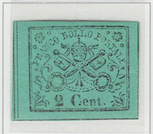
2c. (1868) |
|||
23 |
3c. (1868) |
||||
✓ |
24 |
3c (1868) |
|||
✓ |
25 |
5c. (1868) |
|||
26 |
10c. (1868) |
||||
✓ |
28 |
20c. (1868) |
|||
✓ |
29 |
40c. (1868) |
|||
✓ |
30 |
80c. (1868) |
Montarsolo Design
✓ |
32 |
5c. (1868) |
|||
33 |
10c. (1868) |
||||
34 |
20c. (1868) |
||||
35 |
20c. (1868) |
Footnotes
Spot refers to the postion of the stamp on the album page (e.g., 3.2 indicates row 3, position 2).
Amt. is an abbreviation for the face amount of the stamp.
Own indicates the stamp status: ✓ for unused; ✗ for used or canceled; ⭑ signifies I ordered one; ; ✨ indicates it was bought recently; ✠ means an auction bid is pending; and ◎ is used, and it costs too much for unused.
To search by catalog number, go to the search box and enter it in the catalog number box. However, it’s a bit broken; I need to fix it.





























