St. George
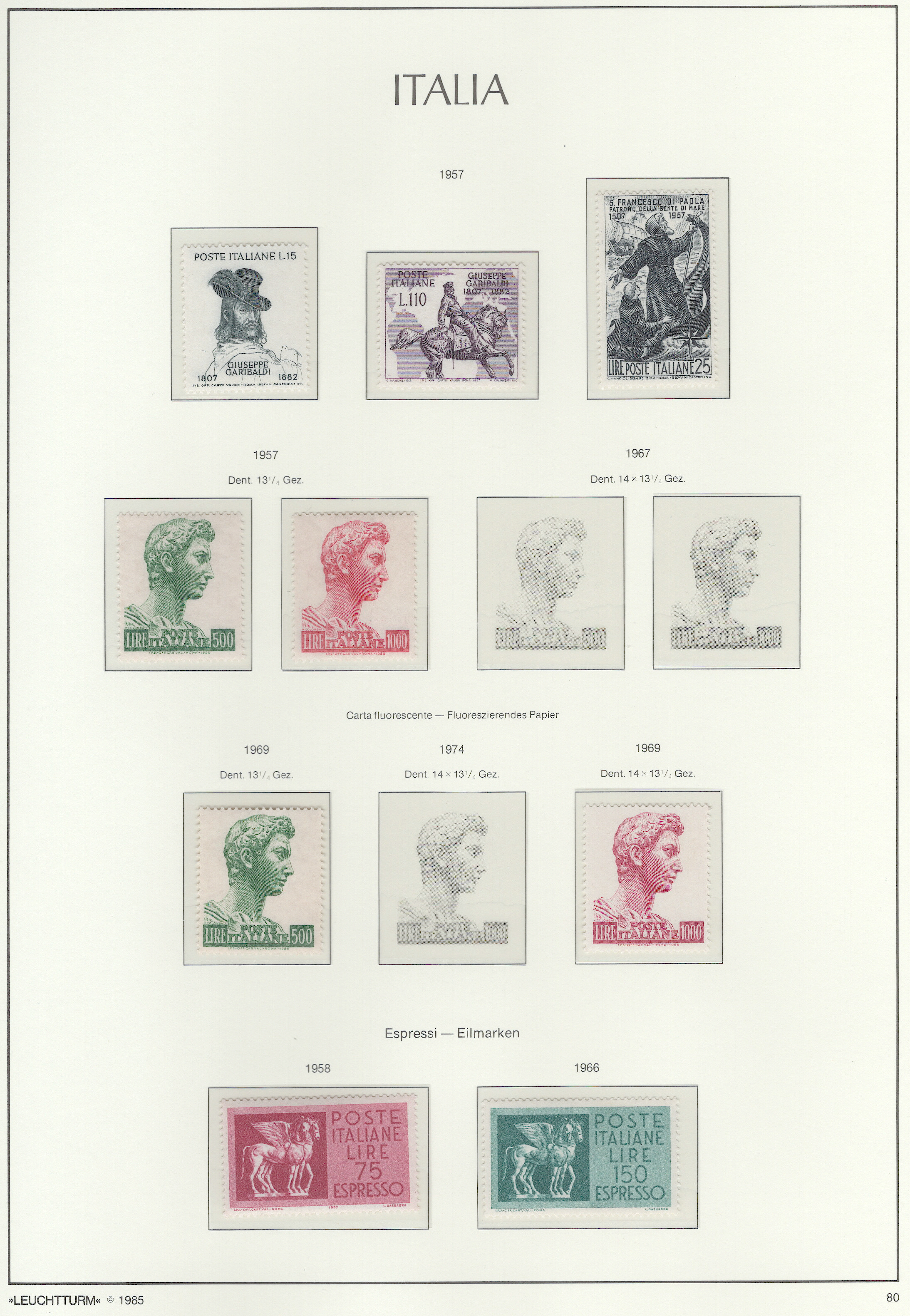
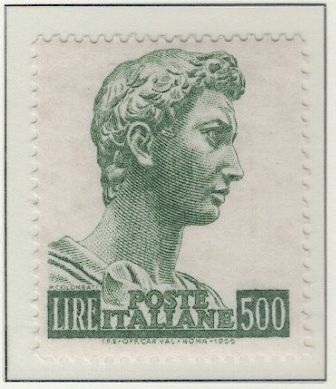
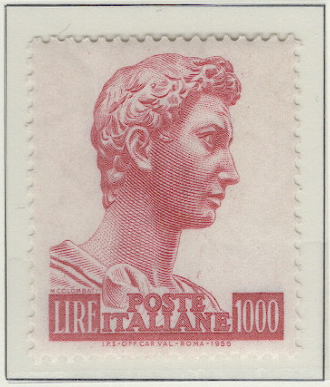
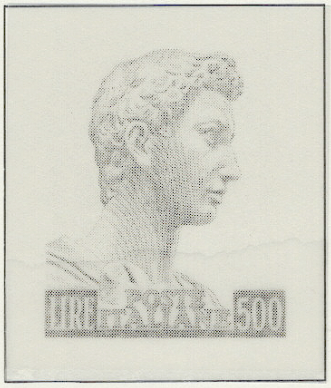
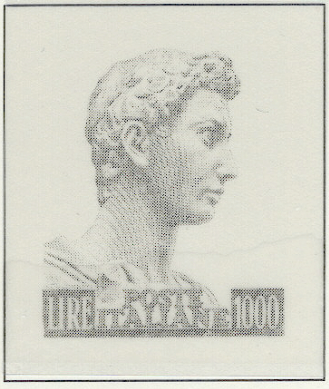
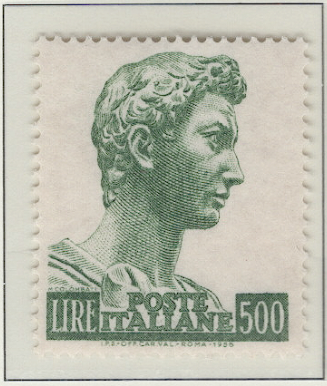
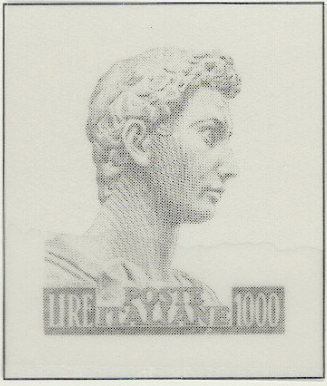
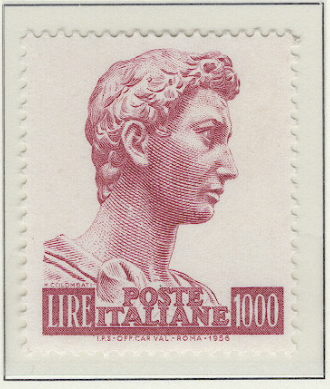
The second and third row of this album page shows pairs of stamps depicting a statue of St. George by Donatello.
Donatello
Donatello (Donato di Niccolò di Betto Bardi) was born around 1386 in Florence and died there on December 13, 1466. Around 1403, he went to Rome with Filippo Brunelleschi to study ancient remains, and he then apprenticed in Lorenzo Ghiberti’s workshop from 1404 to 1407. The Medici family supported him throughout his career. His bronze David is the first freestanding nude male statue since antiquity, and his Gattamelata in Padua is the first life-size equestrian statue since antiquity. He also developed stiacciato, a very shallow relief style in which every part of the relief sits at a low depth. In 1443, he was called to Padua, where he stayed for about ten years, and he spent his last years back in Florence working on the pulpits of San Lorenzo.
Saint George
The Saint George statue was made around 1415 to 1417 and is one of fourteen statues that Florence’s guilds commissioned for the church of Orsanmichele. Saint George was the patron of the armorers and swordmakers (Arte dei Corazzai e Spadai in Italian), so the guild had him shown as an armored knight to promote their products. Basically, it was an advertisement carved in marble. A shallow relief below the statue shows Saint George slaying the dragon. It is only about 2 cm deep, yet it still gives a sense of receding space. The statue stood in a niche on the north side of the church until 1700, when it was moved to a southern niche for better protection from the sun.
Over the centuries, the statue was damaged and moved again. A thrown stone broke its nose in 1858, and Aristodemo Costoli later replaced it. In 1892, the statue was moved to the Bargello Museum, and a bronze replica stood in the niche until 2008, when a marble replica replaced it. During World War II, it was stored at the Villa di Poggio a Caiano to protect it from bombing. However, German soldiers stole it, and Frederick Hartt later recovered it in Neumelans, in South Tyrol. It returned to Florence in 1945 and is still in the Bargello today.
Note
The first printing of these St. George stamps was in 1957 with a perforation of 13½ x 13¼, despite what the album page states. The reprinting ten years later in 1967 are identical except they were done with a 14 x 13¼ perforation. It gets trickier when you get to the subsequent printings. The green 500 lira one was printed again in 1969 with a 13¼ perforation on all sides. The rose one, though, had the same 14 x 13¼ perforation as the 1967 ones, but seems a little lighter or dusty colored. To make it worse, the 1974 printing of the 1000 lira stamp is the same perforation. I think the difference is only distinguishable with a florescent light to show phosphorescent highlights.
Contains 12 spots: own 8 – 8 unused, 0 used.
Album or Web Page Last changed Jan 1, 2023
Stamp Details
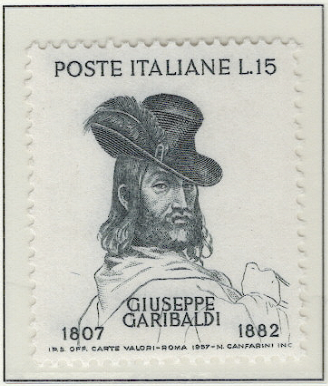
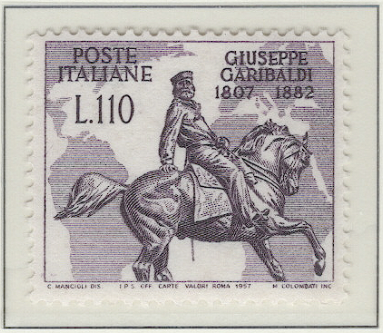
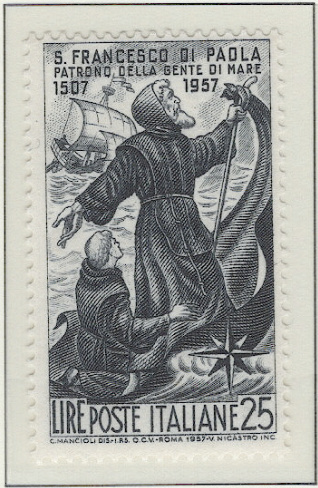
The table below lists information about the stamps shown on this page of Lighthouse’s stamp album. For more details about a particular stamp, click on its description. That will take you to the related web page of Colnect.
spot |
own |
catalog |
subject |
description |
comment |
|---|---|---|---|---|---|
✓ |
823 |
15₤ (dec 1957) |
|||
✓ |
824 |
110₤ (dec 1957) |
|||
✓ |
825 |
25₤ (dec 1957) |
Donatello
✓ |
810 |
500₤ (jun 1957) |
|||
✓ |
811 |
1000₤ (jun 1957) |
|||
810/II |
500₤ (jan 1965) |
||||
811/II |
1000₤ (jan 1965) |
||||
✓ |
810A |
500₤ (mar 1969) |
|||
810A |
500₤ (jan 1974) |
||||
811A |
1000₤ (nov 1974) |
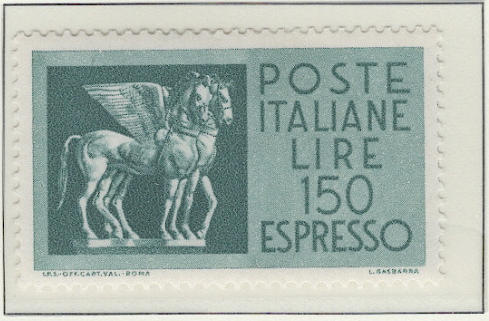
Express Mail
✓ |
E34 |
75₤ (jan 1958) |
|||
✓ |
E35 |
150₤ (mar 1966) |
Footnotes
Spot refers to the postion of the stamp on the album page (e.g., 3.2 indicates row 3, position 2).
Amt. is an abbreviation for the face amount of the stamp.
Own indicates the stamp status: ✓ for unused; ✗ for used or canceled; ⭑ signifies I ordered one; ; ✨ indicates it was bought recently; ✠ means an auction bid is pending; and ◎ is used, and it costs too much for unused.
To search by catalog number, go to the search box and enter it in the catalog number box. However, it’s a bit broken; I need to fix it.











