Montenegro Kingdom
The Kingdom of Montenegro began on August 28, 1910, when Prince Nikola, who had ruled since 1860, proclaimed himself king in Cetinje. Austria-Hungary occupied the country from January 15, 1916, to October 1918, and Nikola went into exile. On November 26, 1918, the Podgorica Assembly deposed him and voted to unite Montenegro with Serbia, which led to the creation of Yugoslavia on December 1, 1918. Italy had a personal interest in all of this. Nikola’s daughter Elena married the future King Victor Emmanuel III of Italy on October 24, 1896, and became Queen of Italy in 1900. Italy was the Ally most interested in Montenegro’s fate, Italian and French troops occupied the coast in 1918, and Elena even appealed to President Woodrow Wilson on her father’s behalf.
Italy came back in April 1941, after the Axis invasion of Yugoslavia, and its troops entered Cetinje on April 17. Count Serafino Mazzolini was appointed civil commissioner on April 28. At first, the Italians planned a quasi-independent Montenegrin kingdom, and Elena is said to have urged her husband to press Mussolini for it. Her nephew Prince Michael was offered the crown and refused it. On July 12, 1941, an assembly in Cetinje proclaimed the restoration of Montenegro under Italian protection, with Sekula Drljević heading the governing committee. However, a general uprising began on July 13, started by the Communist Party of Yugoslavia, and Italian troops had to fall back to strongholds in Cetinje, Podgorica, Nikšić and Pljevlja. Basically, the puppet state lasted less than two weeks, because its independence was canceled on July 24.
On July 25, Mussolini gave General Alessandro Pirzio Biroli full civil and military powers, and more than 70,000 Italian troops put down the uprising within about six weeks. The Governorate of Montenegro (Governatorato del Montenegro) was established on October 3, 1941, and Pirzio Biroli served as governor until 1943. He later made deals with Chetnik leaders, so the Italians effectively held the towns while the Chetniks held most of the countryside, and a joint offensive in 1942 pushed out the remaining Partisans. A Yugoslav historian holds him responsible for many executions. The stamps from this period are overprints. In 1941, Yugoslav stamps were overprinted with Montenegro in Latin and Cyrillic (Crna Gora) and the date April 17, 1941, and later with the name of the Governorate. After Italy surrendered in September 1943, Germany occupied the territory and stayed until December 1944.
Note
This is another set of expansion pages. I recently designed these pages as part of my attempt to create all of the album pages I need for all of the remaining Italian stamp there were. I’m starting to think I’m being naive in thinking it’s possible to do this. I’m not allowing for errors and oddities. I’m not including stamps used in Italy that were issued by occupying troops – except for the Italian Socialist Republic, which was controled by the Germans. Still, every time I think I’m almost finished adding pages, I discover some territory where Italians were selling stamps in their name and with the king’s image on them.
For now, I keep plodding along in the hopes it’ll end soon. I’m not even printing the pages yet. I’ll do that later. Then I’ll mount the stamps and scan the pages to repost here. I don’t have many of these new occupation albums, just a few of most of them. Some I suspect are quite expensive. So I may never have them. Maybe my heirs will complete the albums. That’s every collector’s dream and false illusion. It never happens. We’re just temporary curators. Our heirs only sell our collections, not continue them.
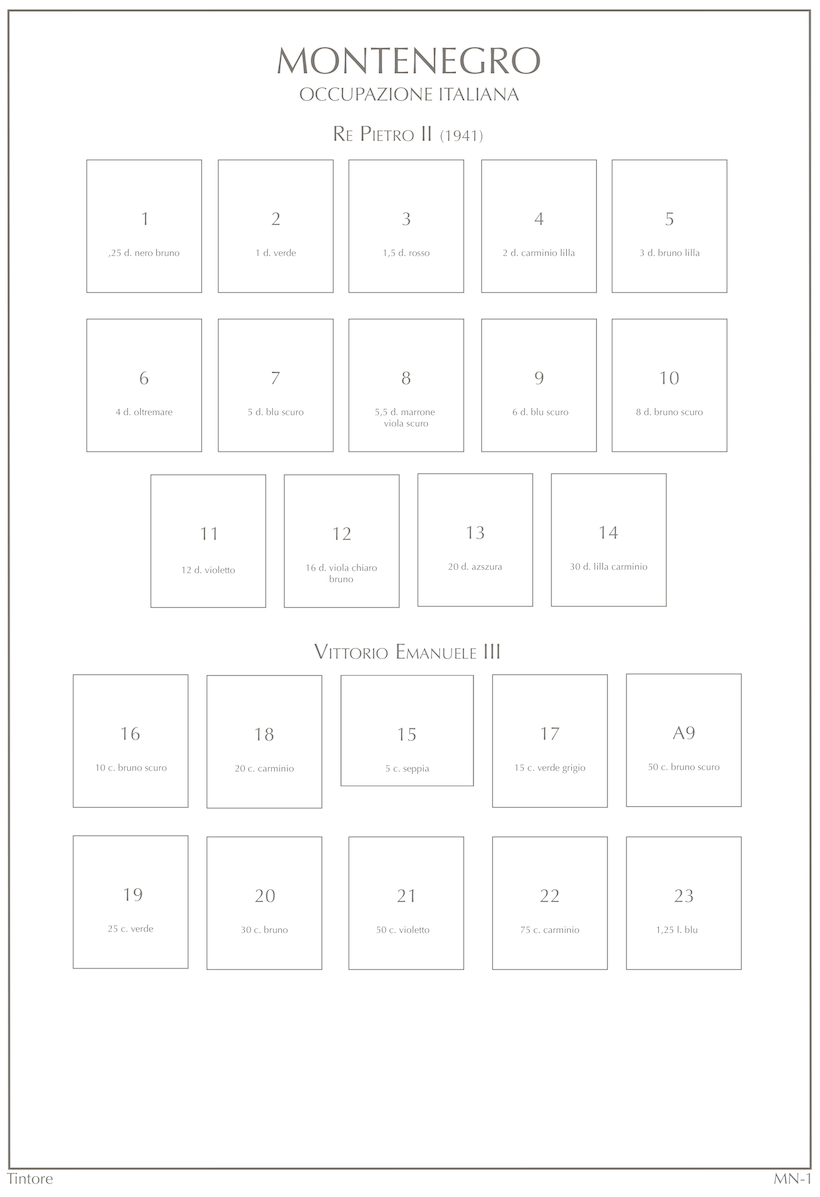
Contains 24 spots: own 0 – 0 unused, 0 used.
Stamp Details
The table below lists information about the stamps shown on this page of Lighthouse’s stamp album. For more details about a particular stamp, click on its description. That will take you to the related web page of Colnect.
spot |
own |
catalog |
subject |
description |
comment |
|---|---|---|---|---|---|
1 |
0.25din (jun 1941) |
||||
2 |
1din (jun 1941) |
||||
3 |
1.50din (jun 1941) |
||||
4 |
2din (jun 1941) |
||||
5 |
3din (jun 1941) |
||||
6 |
4din (jun 1941) |
||||
7 |
5din (jun 1941) |
||||
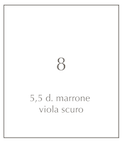
8 |
5.50din (jun 1941) |
||||
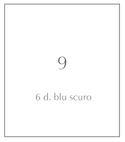
9 |
6din (jun 1941) |
||||
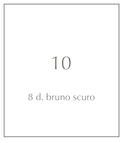
10 |
8din (jun 1941) |
||||
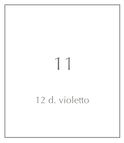
11 |
12din (jun 1941) |
||||
12 |
16din (jun 1941) |
||||
13 |
20din (jun 1941) |
||||
14 |
30din (jun 1941) |
||||
16 |
Emperor Augustus |
10c (jun 1941) |
|||
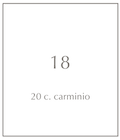
18 |
Julius Caesar |
20c (jun 1941) |
|||
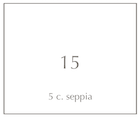
15 |
The Capitoline Wolf |
5c (jun 1941) |
|||
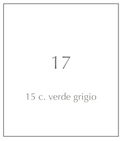
17 |
Italia Turrita |
15c (jun 1941) |
|||
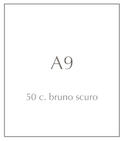
A9 |
Pegasus |
50c (jun 1941) |
|||
19 |
Vittorio Emanuele III |
25c (jun 1941) |
|||
20 |
Vittorio Emanuele III |
30c (jun 1941) |
|||
21 |
Vittorio Emanuele III |
50c (jun 1941) |
|||
22 |
Vittorio Emanuele III |
75c (jun 1941) |
|||
23 |
Vittorio Emanuele III |
1.25₤ (jun 1941) |
Footnotes
Spot refers to the postion of the stamp on the album page (e.g., 3.2 indicates row 3, position 2).
Amt. is an abbreviation for the face amount of the stamp.
Own indicates the stamp status: ✓ for unused; ✗ for used or canceled; ⭑ signifies I ordered one; ; ✨ indicates it was bought recently; ✠ means an auction bid is pending; and ◎ is used, and it costs too much for unused.
To search by catalog number, go to the search box and enter it in the catalog number box. However, it’s a bit broken; I need to fix it.
remaining stamps & stories in sub-album
page |
story |
note |
used |
need |
ordered |
|---|---|---|---|---|---|
24 |
|||||
24 |
|||||
25 |
|||||
17 |
|||||
20 |























