George Rogers Clark
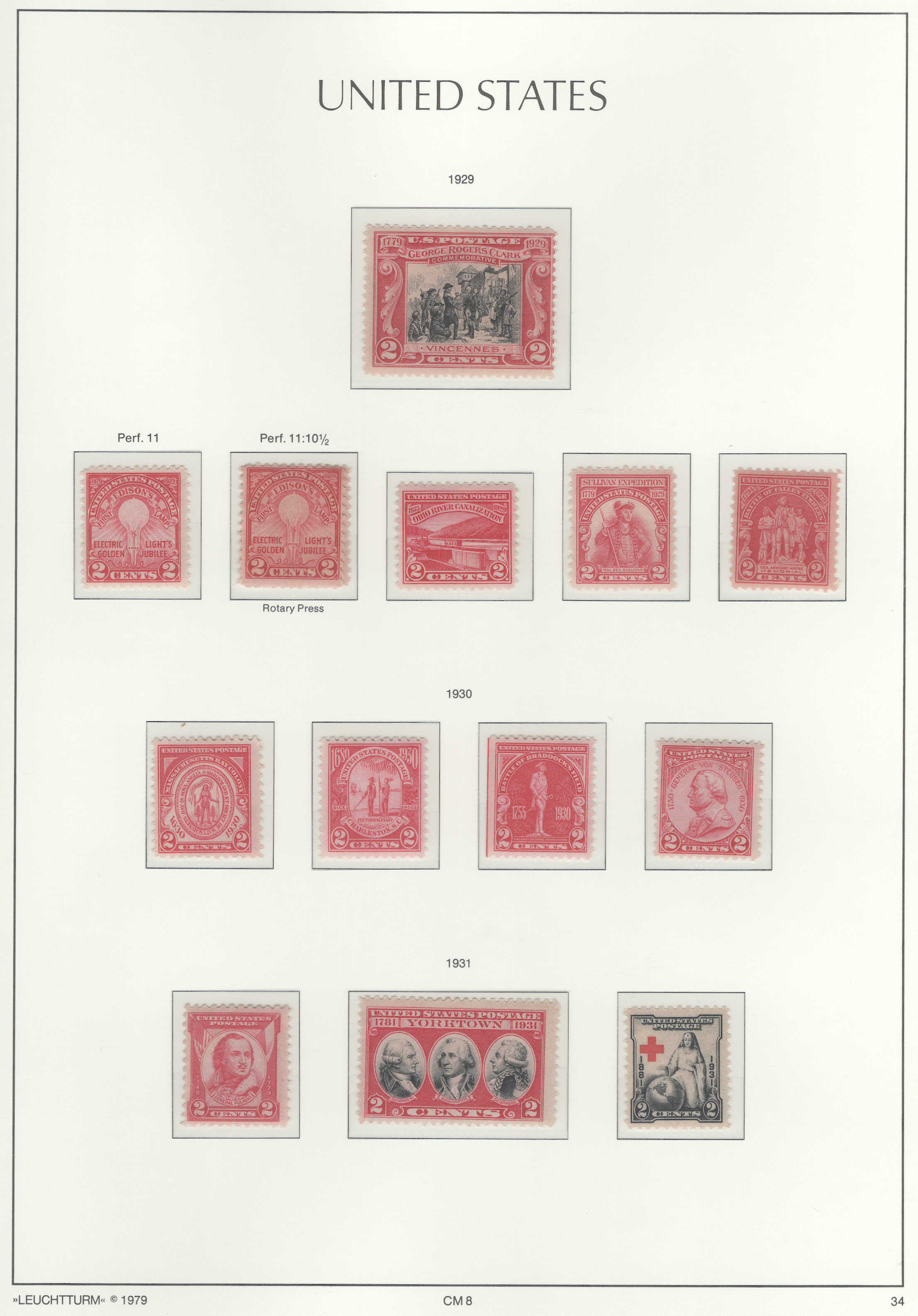
George Rogers Clark was an interesting and sad fellow. As a young man, he was a top officer from the Virginia Militia and the Continental Army during the American Revolution. The image of him on the first stamp on this album page shows one of his victories, the Siege of Fort Sackville in Vincennes, Indiana – which was part of Virginia at the time. Clark and less than two-hundred soldiers took the fort which held over four-hundred soldiers and volunteers – which isn’t easy to do when they’re located within a fort.
His victory secured what would soon after become the Northwest Territory, which the Brittish relinquished due to their losses to Clark in Vincennes and other towns in the area. This succeeded territory doubled the size of the U.S.; it would later become the states of Illinois, Indiana, Michigan, Ohio, Wisconsin, and part of Minnesota. As a result, Clark was considered a hero and rose in the Continental Army to Brigadier General. Incidentally, much of the cost of the trek to Vincennes and some of his other military campaigns were financed by Clark with his own money. Virginia granted him 150,000 acres of land after the war, but didn’t reimburse him for his expenditures. Land was abundant then and of little use considering his cash requirements.
After the war, he was shunned because of criticisms he made of the government for not addressing the problems they were having in the territory with Native Americans raiding their settlements. Also, in need of money and perhaps missing the glory he received from the war time, he joined the French revolutionaries in their attempt to remove the Spanish from New Orleans and control of the Mississippi River: it was originally a French colony, but was given to the Spanish for a time by the French king. Clark led the French troops down the river, but were stopped by an order from President Washington not to get involved. The result for Clark was that he was humiliated and again out of pocket for significant expenditures, of which the French refused to pay given his withdrawal.
Clark was involved in a series of projects to improve the region, but continued to make bad decisions that cost him money and his reputation. To keep creditors from seizing his land, he gave most of it to friends and relatives, including his younger brother William Clark, known for the Lewis & Clark Expedition to explore and map the French territory of Louisiana, which the U.S. had purchased.
While his brother was enjoying success, Clark was depressed and became known as a drunkard and a failure. He also suffered with poor health, which involve a couple of strokes until he died in 1818 broke financially and emotionally.
Note
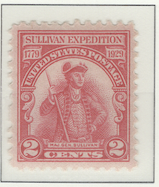
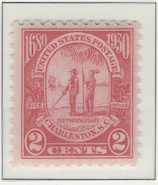
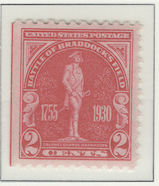
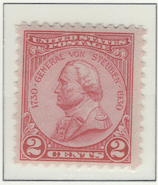
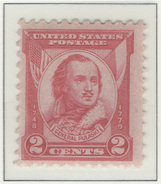
Carmine ink seems to have been the preferred color for stamps in these years, with a bit of black on a few. I do like the look of the Clark one with the reddish frame and black inset. Considering the life Clark had, it’s a nice tribute to him, the size and design and placing the stamp at the top of the page.
Contains 13 spots: own 13 – 13 unused, 0 used.
Page is finished.
Album or Web Page Last changed Mar 16, 2025
Stamp Details
The table below lists information about the stamps shown on this page of Lighthouse’s stamp album. For more details about a particular stamp, click on its description. That will take you to the related web page of Colnect.
spot |
own |
catalog |
subject |
description |
comment |
Fort Sackville
✓ |
651 |
George Rogers Clark |
2c (feb 1929) |
Electric Light Golden Jubilee
✓ |
654 |
Electric Light |
2c (jun 1929) |
||
✓ |
655 |
Electric Light |
2c (jun 1929) |
Other
✓ |
681 |
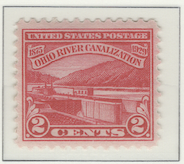
Ohio River Canalization |
2c (oct 1929) |
||
✓ |
657 |
2c (jun 1929) |
|||
✓ |
680 |
2c (sep 1929) |
|||
✓ |
682 |
2c (apr 1930) |
|||
✓ |
683 |
2c (apr 1930) |
|||
✓ |
688 |
2c (jul 1930) |
|||
✓ |
689 |
2c (sep 1930) |
|||
✓ |
690 |
2c (jan 1931) |
|||
✓ |
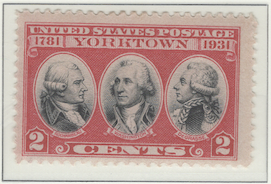
703 |
Yorktown Heroes |
2c (oct 1931) |
||
✓ |
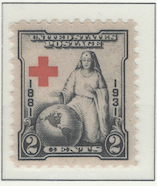
702 |
Red Cross |
2c (may 1931) |
Footnotes
Spot refers to the postion of the stamp on the album page (e.g., 3.2 indicates row 3, position 2).
Amt. is an abbreviation for the face amount of the stamp.
Own indicates the stamp status: ✓ for unused; ✗ for used or canceled; ⭑ signifies I ordered one; ; ✨ indicates it was bought recently; ✠ means an auction bid is pending; and ◎ is used, and it costs too much for unused.
To search by catalog number, go to the search box and enter it in the catalog number box. However, it’s a bit broken; I need to fix it.












