Bulk & Zip+4
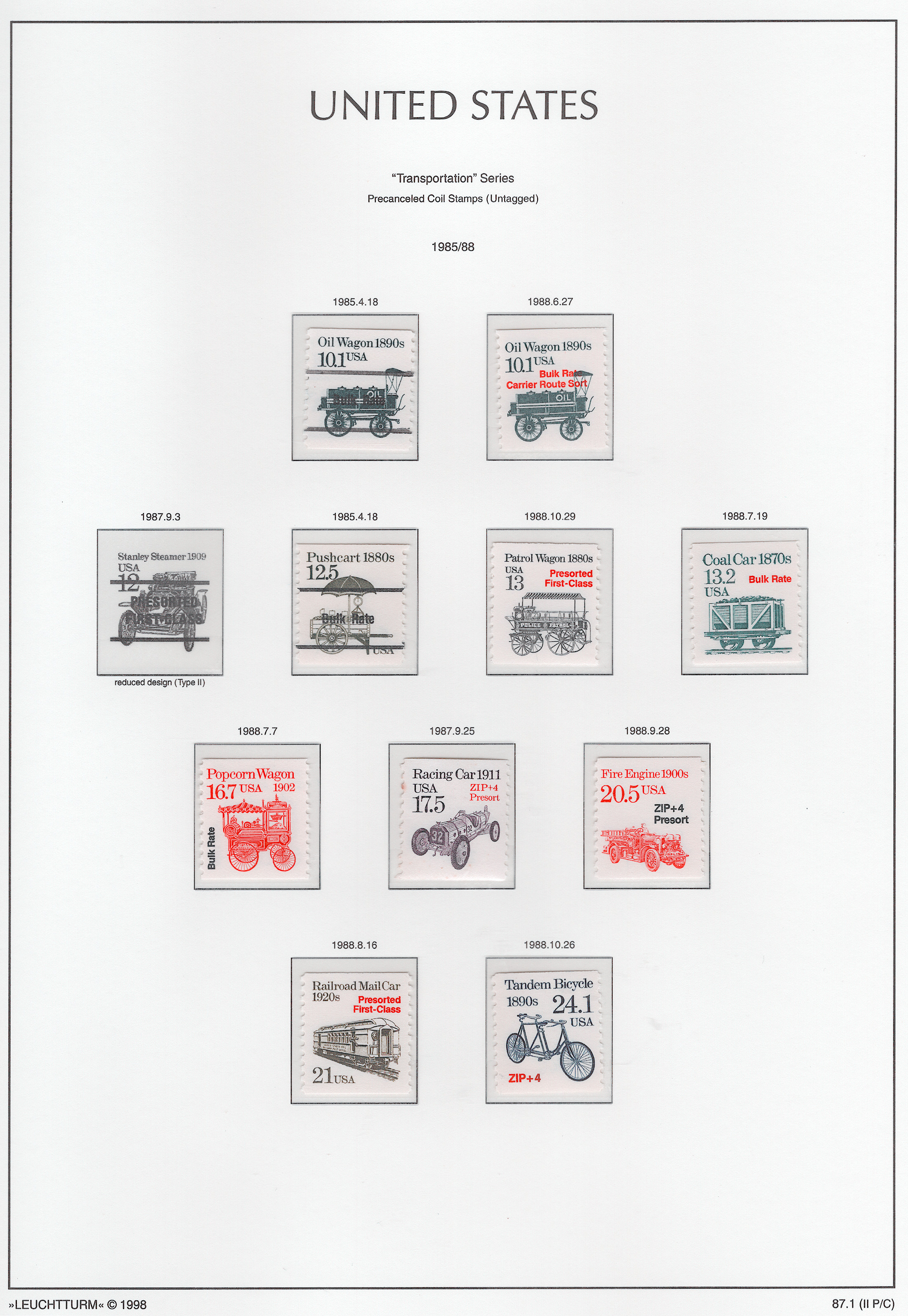
This page has stamps with overprints for various ways to send mail and receive a discount if you’re sending large quantities regularly. You just have to do a few things to save the post office time and thereby keeping their cost down.
Bulk Discount
Bulk mail is mail, letters mostly, that are sorted first by the sender by postal codes. Usually, each pack of envelops for each zip code is wrapped in a piece of paper with the code written on it, held together with a rubber band. The packs are put in an open box and given to the post office with a list of the zip codes and quantities of each.
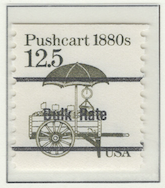
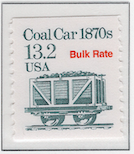
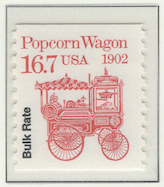
No envelop may be more than a pound. There must be at least two-hundred envelopes, or at least fifty pounds of mail to be considered bulk. Should the weight and quantity standards be met, and the envelopes pre-sorted properly, the sender will be given a discount. You see that two of the stamps on this album page are marked with Bulk Rate in red.
Extra Zip Discount
In 1963, the U.S. Post Office started using postal codes known as zip codes. There were numeric codes that designated which state, city, and area a letter was intended. This allowed the post office to route quickly letters to the area where they were destined. Then the local distribution center or post office would work out which street so they knew which letter carrier would handle them for final delivery. In 1983, they added four digits to the postal code, calling it Zip + 4. Thhis refined the sorting even more, to a speific street or apartment building, even to a specific address for organizations that received plenty of mail.
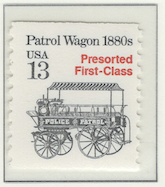
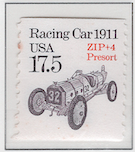
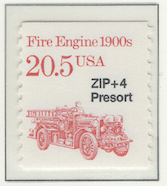
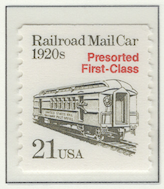
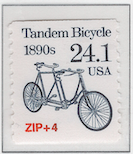
You can see overprinted on the last stamp on the bottom row that it’s overprinted with the words, Zip+4. It’s at a face amount less than normal for a letter. The one next to it says Presorted First Class – it’s a few cents less. Two of the stamps on the row above them have overprinted on them, Zip+4 Presort. Those cost less – one more than the other because it was issued a year later when the rates increased.
Note
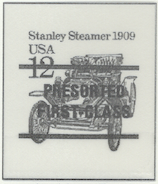
This page is almost complete. I’m missing just one stamp, the first one on the second row. I have not been able to find it after searching over two years on-line from stamp dealers in the U.S.
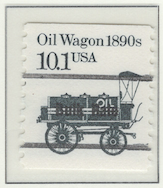
This definitive has a minor difference – notice the catalog number is 2132b. The same stamp without the overprint, catalog 2132 is on the Penny-Farthing page. The same stamp with even the same overprint, catalog 2132a is on the Pre-Canceled Pairs page.
The difference between 2132a and 2132b is that the text on the former where ii says, “Stanley Steamer 1909” measures 18 mm across the top, while the same text on the latter measures 17 ⅔ mm. If you compare them side by side, you can see that the 2132b has more space next to it. It’s a minor difference, but it calls for a spot on this album page – which is irritating since I wouldn’t have allocated for it if I had designed the page. Now I feel compelled to find it – and from a dealer who would notice the difference enough to classify correctly, should they happen to acquire one. I suspect when I do find one for sale, I won’t know for sure until I receive it if it’s the one I want.
Contains 11 spots: own 10 – 10 unused, 0 used.
Album or Web Page Last changed Jul 23, 2025
Stamp Details
The table below lists information about the stamps shown on this page of Lighthouse’s stamp album. For more details about a particular stamp, click on its description. That will take you to the related web page of Colnect.
spot |
own |
catalog |
subject |
description |
comment |
Transportation
✓ |
2130b |
10.1c (apr 1985) |
|||
✓ |
2130a |
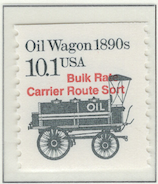
10.1c (jun 1988) |
|||
2132b |
12c (apr 1987) |
||||
✓ |
2133a |
12.50c (apr 1985) |
|||
✓ |
2258 |
13c (oct 1988) |
|||
✓ |
2259 |
13.20c (jul 1988) |
|||
✓ |
2261 |
16.70c (jul 1988) |
|||
✓ |
2262a |
17.50c (sep 1987) |
|||
✓ |
2264 |
20.50c (sep 1988) |
|||
✓ |
2265 |
21c (aug 1988) |
|||
✓ |
2266 |
24.10c (oct 1988) |
Footnotes
Spot refers to the postion of the stamp on the album page (e.g., 3.2 indicates row 3, position 2).
Amt. is an abbreviation for the face amount of the stamp.
Own indicates the stamp status: ✓ for unused; ✗ for used or canceled; ⭑ signifies I ordered one; ; ✨ indicates it was bought recently; ✠ means an auction bid is pending; and ◎ is used, and it costs too much for unused.
To search by catalog number, go to the search box and enter it in the catalog number box. However, it’s a bit broken; I need to fix it.










