Northern Wildlife
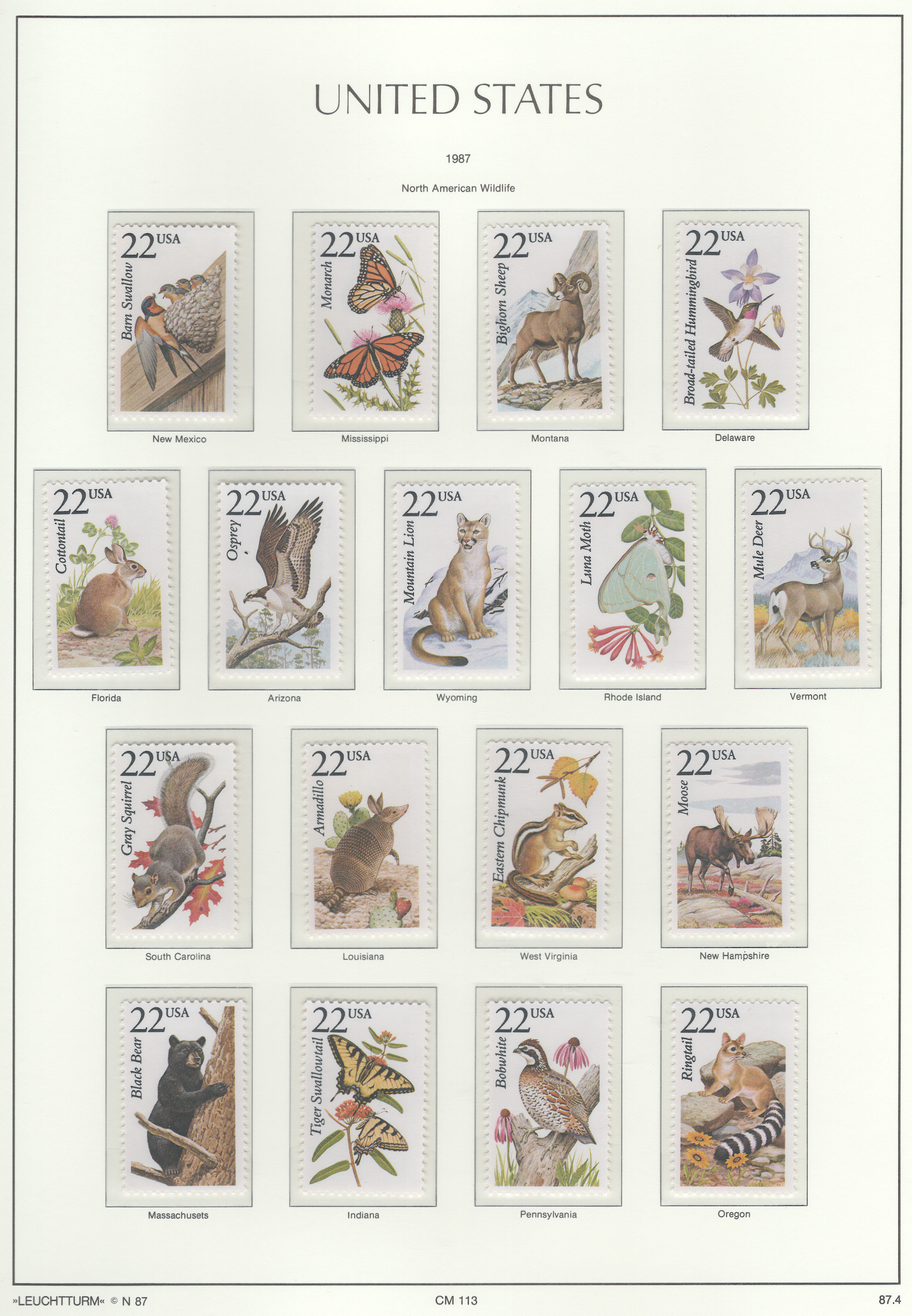
There are so many birds, insects, and animals in this set of stamps. I don’t have time to write about all of them, so I’ve chosen a couple on each page, instead. I chose some of my favorites.
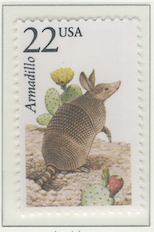
Armadillo
The stamp for Louisiana on the third row of this album page has an armadillo. Armadillo or Cingulata is a sweet order of animals. They’re about sixty million years old, originally from South America. They’re part of a super-order called, Xenarthra, which includes tree sloths and anteaters. Armadillos are adorable animals, very much like sloths. Sloths are one of my favorite animals. They’re so simple and tranquil – like their cousins, they have one of the lowest metabolic rates.
The armadillos are also cute when you see them up close. One summer when I was on a silent Jesuit retreat at Grand Coteau in Louisiana, there were five armadillos on the lawn foraging for food beheath the grass. They were so docile. We were able to approach them without them running off – it probably helped that we were also docile because of the retreat. I crouched down next to them, about two feet away. I wanted to pet them, but suspected that might not be well received. I was grateful for the few minutes I was able to have with them, though.
Osprey
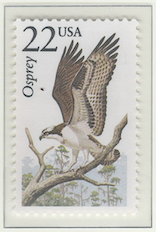
If it wasn’t obvious from my writings elsewhere, I like birds. One of my favorite raptors is the Osprey, a two-foot long fish hawk that’s been around for about fifty million years. First, I like the coloring: soft ash brown feathers on the wings and back, with white smoke feathers on the head and body – similar to the coloring of the Avocet, for which I named my editing company. Then I like that the osprey’s crown always seems ruffled, giving it a disheveled look as if it woke too early from a late night of drinking. It’s a cool look. I’ve seen them mostly in St. Petersburg, Florida. For some reason, though, the stamp for Arizona has an osprey. I suppose they’re found there, but the state’s not known for waterways where you might find osprey.
One of the interesting scientific things about the osprey is their uniqueness. They’re part of the same order of birds as eagles, hawks, and other birds of prey. However, within that order and its many families, osprey is the only member of their family, the Pandionidae – even though they’re found all over the world, on six continents. That much dispersal usually leads to many species in a family classification. There are sub-species, birds with minor deviations (e.g., slight size and color pattern differences), but even those are limited to just four maybe only three sub-species. They’re like A.A. Milne’s Tigger character: the wonderful thing about being an osprey is they’re the only one.
Note
This set of stamps is so well designed and drawn. The colors are nice; the look is fresh. They’re similar to the state birds series (see State Birds), which included state flowers. This set, though, includes more than birds and its not tied to which animals the state legislatures chose for their states. I’m not sure what the basis was for selecting which bird, insect, or animal to put on which state stamp. Regardless, I like the eclectic mix of these.
Contains 17 spots: own 17 – 17 unused, 0 used.
Page is finished.
Album or Web Page Last changed Jul 21, 2025
Stamp Details
The table below lists information about the stamps shown on this page of Lighthouse’s stamp album. For more details about a particular stamp, click on its description. That will take you to the related web page of Colnect.
spot |
own |
catalog |
subject |
description |
comment |
Wild Life of North America
✓ |
2286 |
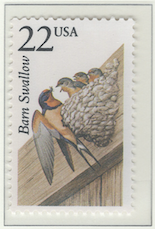
Barn Swallow |
22c (jun 1987) |
||
✓ |
2287 |
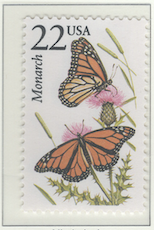
Monarch Butterfly |
22c (jun 1987) |
||
✓ |
2288 |
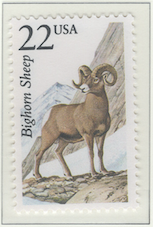
Bighorn Sheep |
22c (jun 1987) |
||
✓ |
2289 |
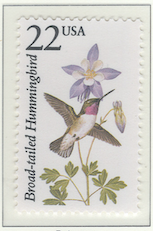
Broad-Tailed Hummingbird |
22c (jun 1987) |
||
✓ |
2290 |
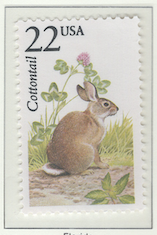
Eastern Cottontail |
22c (jun 1987) |
||
✓ |
2291 |
American Osprey |
22c (jun 1987) |
||
✓ |
2292 |
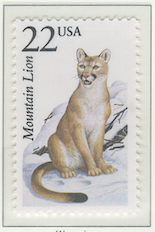
Mountain Lion |
22c (jun 1987) |
||
✓ |
2293 |
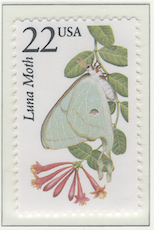
Luna Moth |
22c (jun 1987) |
||
✓ |
2294 |
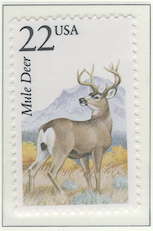
Mule Deer |
22c (jun 1987) |
||
✓ |
2295 |
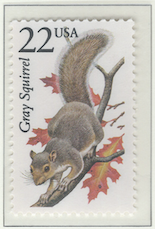
Eastern Grey Squirrel |
22c (jun 1987) |
||
✓ |
2296 |
Nine-banded Armadillo |
22c (jun 1987) |
||
✓ |
2297 |
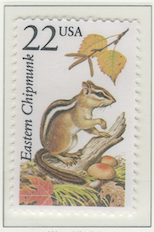
Eastern Chipmunk |
22c (jun 1987) |
||
✓ |
2298 |
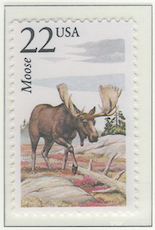
Moose |
22c (jun 1987) |
||
✓ |
2299 |
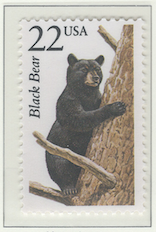
American Black Bear |
22c (jun 1987) |
||
✓ |
2300 |
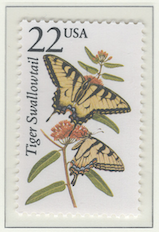
Eastern Tiger Swallowtail |
22c (jun 1987) |
||
✓ |
2301 |
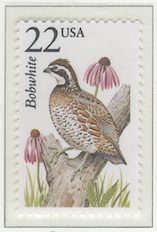
Northern Bobwhite |
22c (jun 1987) |
||
✓ |
2302 |
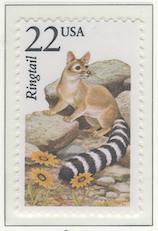
Ringtail |
22c (jun 1987) |
Footnotes
Spot refers to the postion of the stamp on the album page (e.g., 3.2 indicates row 3, position 2).
Amt. is an abbreviation for the face amount of the stamp.
Own indicates the stamp status: ✓ for unused; ✗ for used or canceled; ⭑ signifies I ordered one; ; ✨ indicates it was bought recently; ✠ means an auction bid is pending; and ◎ is used, and it costs too much for unused.
To search by catalog number, go to the search box and enter it in the catalog number box. However, it’s a bit broken; I need to fix it.
















