Indigenous Music
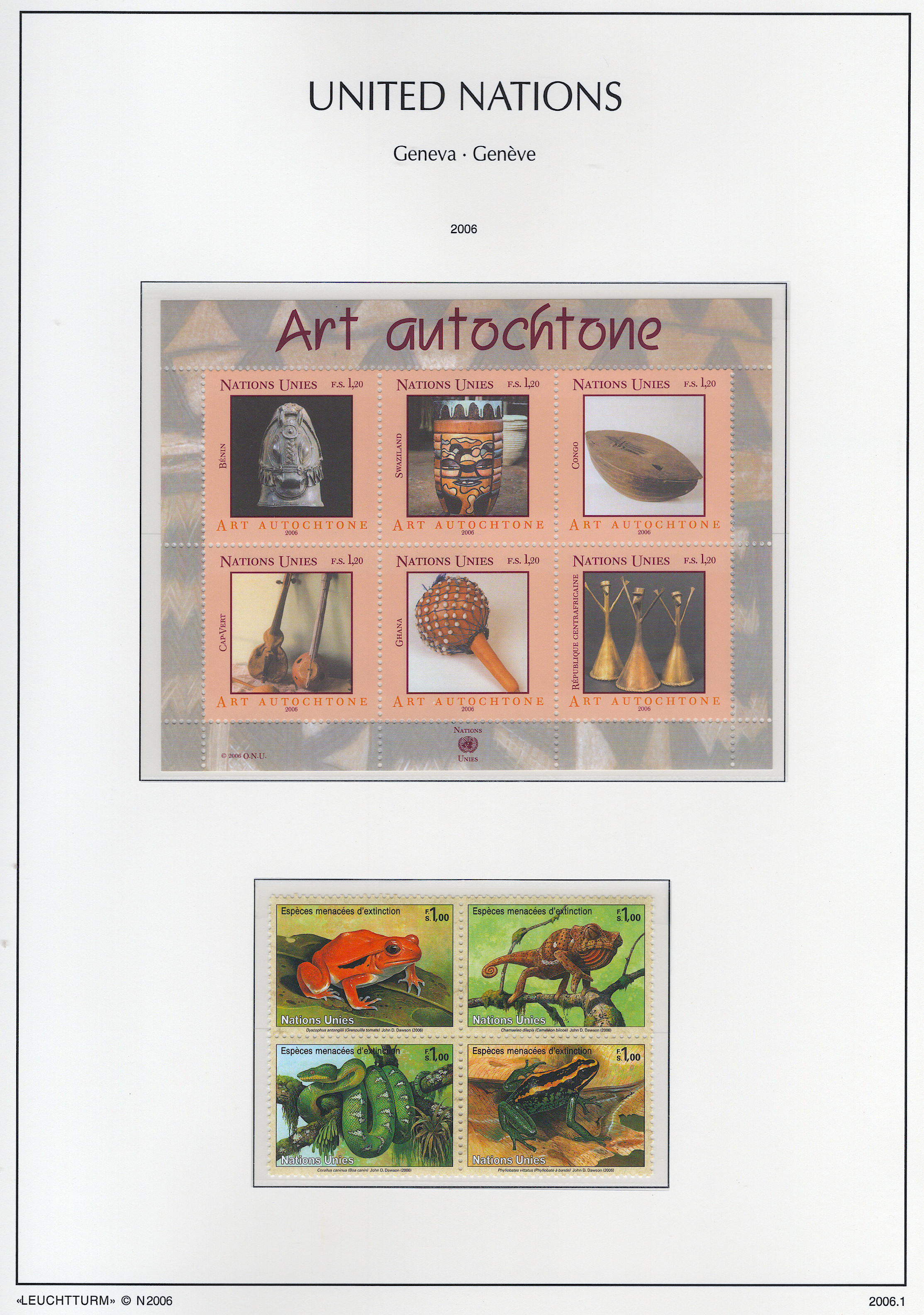
For this series of stamps of indigenous art, the three U.N. post office location issued sheets of six unique stamps each, for a total of eighteen stamps. They celebrate indigenous cultures, cultural heritage, and the rights of indigenous peoples. This set issued in 2006 highlights musical instruments from North Africa.
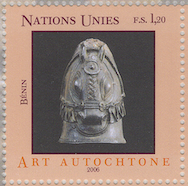
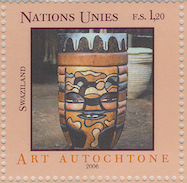
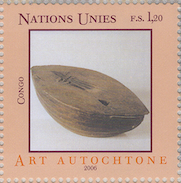
The first stamp is bronze horse head from the Lower Niger, from Benin. Known as the Carafa Head, this ceremonial bell is in the National Archaeological Museum of Naples. The second stamp is of a Swazi carved wooden drum made with goat skin. The next is a sanza, a thumb piano of the Budu people, featuring metal keys on a wooden resonator.
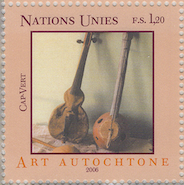
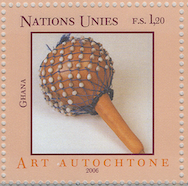
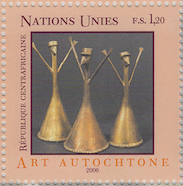
On the second row, the first stamp shows two Cabo Verde gourd banjos, which are predecesors to the modern banjo. Next is a shekere from Ghana, another percussion instrument made from a gourd. It’s played by shaking and slapping to make rhythmic sounds. The last stamps shows three bronze or brass bells meant to be effigies Charles de Gaulle, with his arms up, supposedly gesturing his famous “Je vous ai compris” (“I have understood you”) announcement in Algiers in 1958. It’s from the Republic of Central Africa, a former French colony, and is known as victory bells to celebrate French origins and independence.
For more of these stamps depicting indigenous musical instruments from Africa, see the New York (UN-2006.1) and the Vienna (UNV-2006.1) albums. There are also stamps in this album of indigenous art from South America and Europe.
Note
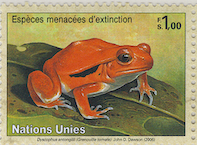
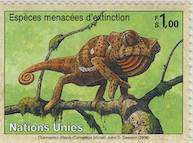
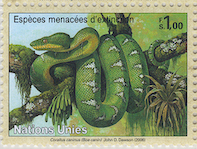
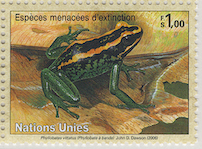
The indigenous art stamps are interesting, but I like the stamps of endangered species better – especially when they show pictures of birds. For the four here, there aren’t any bird stamps. Instead, these show a snake, a lizard and frogs. They’re important too, but I don’t like them on stamps.
Contains 10 spots: own 10 – 10 unused, 0 used.
Page is finished.
Album or Web Page Last changed Dec 19, 2025
Stamp Details
The table below lists information about the stamps shown on this page of Lighthouse’s stamp album. For more details about a particular stamp, click on its description. That will take you to the related web page of Colnect.
spot |
own |
catalog |
subject |
description |
comment |
United Nations Anniversary
✓ |
452a |
1.20 (feb 2006) |
|||
✓ |
452b |
1.20 (feb 2006) |
|||
✓ |
452c |
1.20 (feb 2006) |
|||
✓ |
452d |
1.20 (feb 2006) |
|||
✓ |
452e |
1.20 (feb 2006) |
|||
✓ |
452f |
1.20 (feb 2006) |
Endangered Species
✓ |
453 |
1 (mar 2006) |
|||
✓ |
454 |
1 (mar 2006) |
|||
✓ |
455 |
1 (mar 2006) |
|||
✓ |
456 |
1 (mar 2006) |
Footnotes
Spot refers to the postion of the stamp on the album page (e.g., 3.2 indicates row 3, position 2).
Amt. is an abbreviation for the face amount of the stamp.
Own indicates the stamp status: ✓ for unused; ✗ for used or canceled; ⭑ signifies I ordered one; ; ✨ indicates it was bought recently; ✠ means an auction bid is pending; and ◎ is used, and it costs too much for unused.
To search by catalog number, go to the search box and enter it in the catalog number box. However, it’s a bit broken; I need to fix it.










No Covers Found.