Postage Due
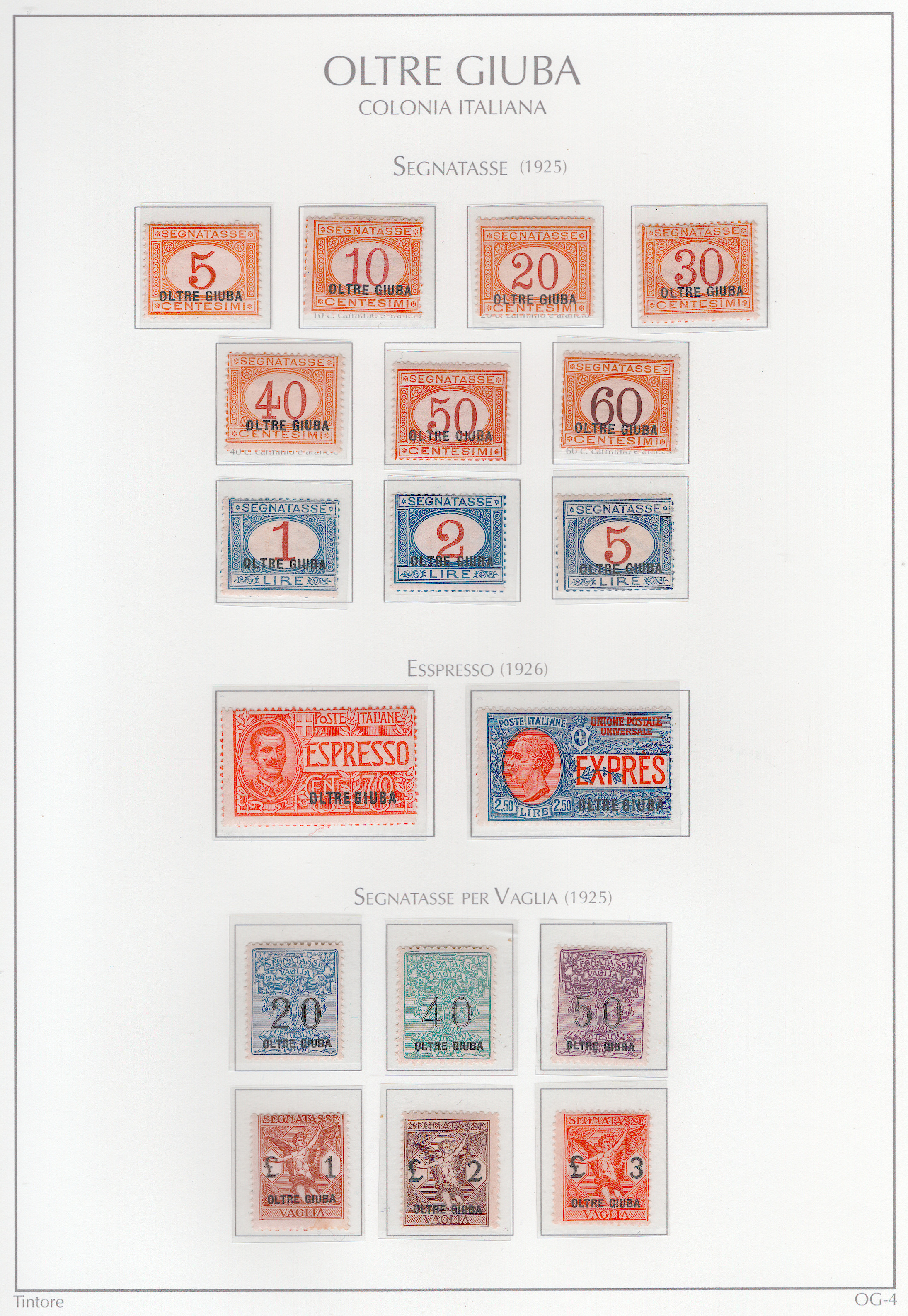
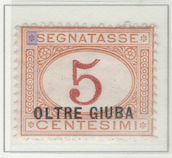
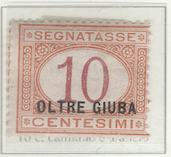
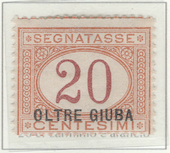
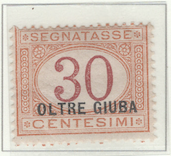
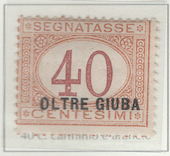
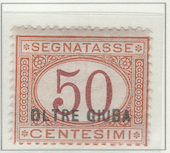
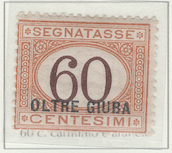
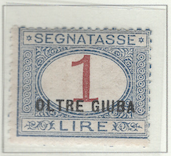
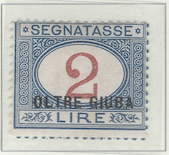
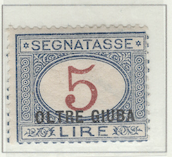
These stamps were used when mail was sent without enough postage. If someone handed an envelop at the post office, they wouldn’t accept it without the correct postage. However, if someone put an envelop in a public mail box, rather than return the envelop to the sender, they would put postage due stamps on the envelop for the deficient amount and deliver it, expecting the recipient to pay the cost of them. If they didn’t pay, only then would the envelop be returned to the sender.
Postage due stamps are almost always very plain, like the ones here. Perhaps they were plain because their use was not encouraged. It may also be because they weren’t used much: there’s no use wasting money on designing a stamp that isn’t widely used.
Express Mail
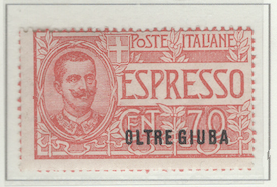
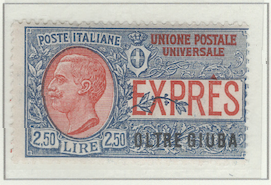
The two stamps in the middle, on the fourth row are for express mail service. I can’t imagine those were used very much. For such a small territory, regular mail would probably be about as fast as express, both arriving the same day, maybe at the same time. Maybe that’s why they issued only two of these stamps. I may be wrong. Maybe express mail could be used for faster delivery to other Italian colonies or to the Italian peninsula.
Postal Money Orders
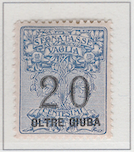
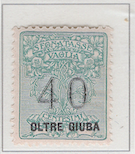
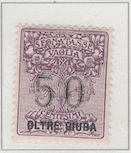
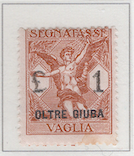
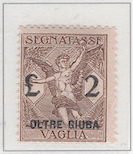
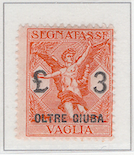
The bottom set of stamps are called in Italian, Segnatasse per Valglia – which literally and vaguely translates to sign of tax for valuable thing. They’re stamps to be attached to a post office money order, to indicate that the required service charge has been paid.
The basic procedure was for someone who wanted to send money to someone else (e.g., a family member, a vendor), to go to their local post office in Italy and deposit the money for whatever amount they want to send. They would then be given a money order for that amount, to assign it to whomever. A postal worker would take one of these stamps, which the sender would have to buy for the face amount, and attach it to the money order to validate it. Then the sender would mail it to the recipient – another stamp for the envelop – perhaps along with a cover letter. The envelop would be delivered to the recipient wherever they were in Italy. That person would then go to their local post office to get the cash for the postal money order.
Compared to methods that are available to us today for transfering money, the method of late 19th Century Italy seems like a protracted process. But at that time, it was quick and more secure than mailing cash in the mail or traveling across the peninsula to deliver the money in person.
Note
This page is almost finished. The money order stamps cost a bit more, so I’ve put off buying them for a bit. Plus, there aren’t many dealers that have them for sale. Still, I’m watching for a good deal or at least a quality I can afford.
Contains 18 spots: own 18 – 18 unused, 0 used.
Page is finished.
Album or Web Page Last changed Dec 15, 2024
Stamp Details
The table below lists information about the stamps shown on this page of Lighthouse’s stamp album. For more details about a particular stamp, click on its description. That will take you to the related web page of Colnect.
spot |
own |
catalog |
subject |
description |
comment |
Postage Due - Overprints
✓ |
S1 |
5c (jun 1925) |
|||
✓ |
S2 |
10c (jun 1925) |
|||
✓ |
S3 |
20c (jun 1925) |
|||
✓ |
S4 |
30c (jun 1925) |
|||
✓ |
S5 |
40c (jun 1925) |
|||
✓ |
S6 |
50c (jun 1925) |
|||
✓ |
S7 |
60c (jun 1925) |
|||
✓ |
S8 |
1₤ (jun 1925) |
|||
✓ |
S9 |
2₤ (jun 1925) |
|||
✓ |
S10 |
5₤ (jun 1925) |
Express Mail
✓ |
E1 |
70c (apr 1926) |
|||
✓ |
E2 |
2.50₤ (apr 1926) |
Money Order Stamps
✓ |
SV1 |
20c (jun 1925) |
|||
✓ |
SV2 |
40c (jun 1925) |
|||
✓ |
SV3 |
50c (jun 1925) |
|||
✓ |
SV4 |
1₤ (jun 1925) |
|||
✓ |
SV5 |
2₤ (jun 1925) |
|||
✓ |
SV6 |
3₤ (jun 1925) |
Footnotes
Spot refers to the postion of the stamp on the album page (e.g., 3.2 indicates row 3, position 2).
Amt. is an abbreviation for the face amount of the stamp.
Own indicates the stamp status: ✓ for unused; ✗ for used or canceled; ⭑ signifies I ordered one; ; ✨ indicates it was bought recently; ✠ means an auction bid is pending; and ◎ is used, and it costs too much for unused.
To search by catalog number, go to the search box and enter it in the catalog number box. However, it’s a bit broken; I need to fix it.

















