Antarctica
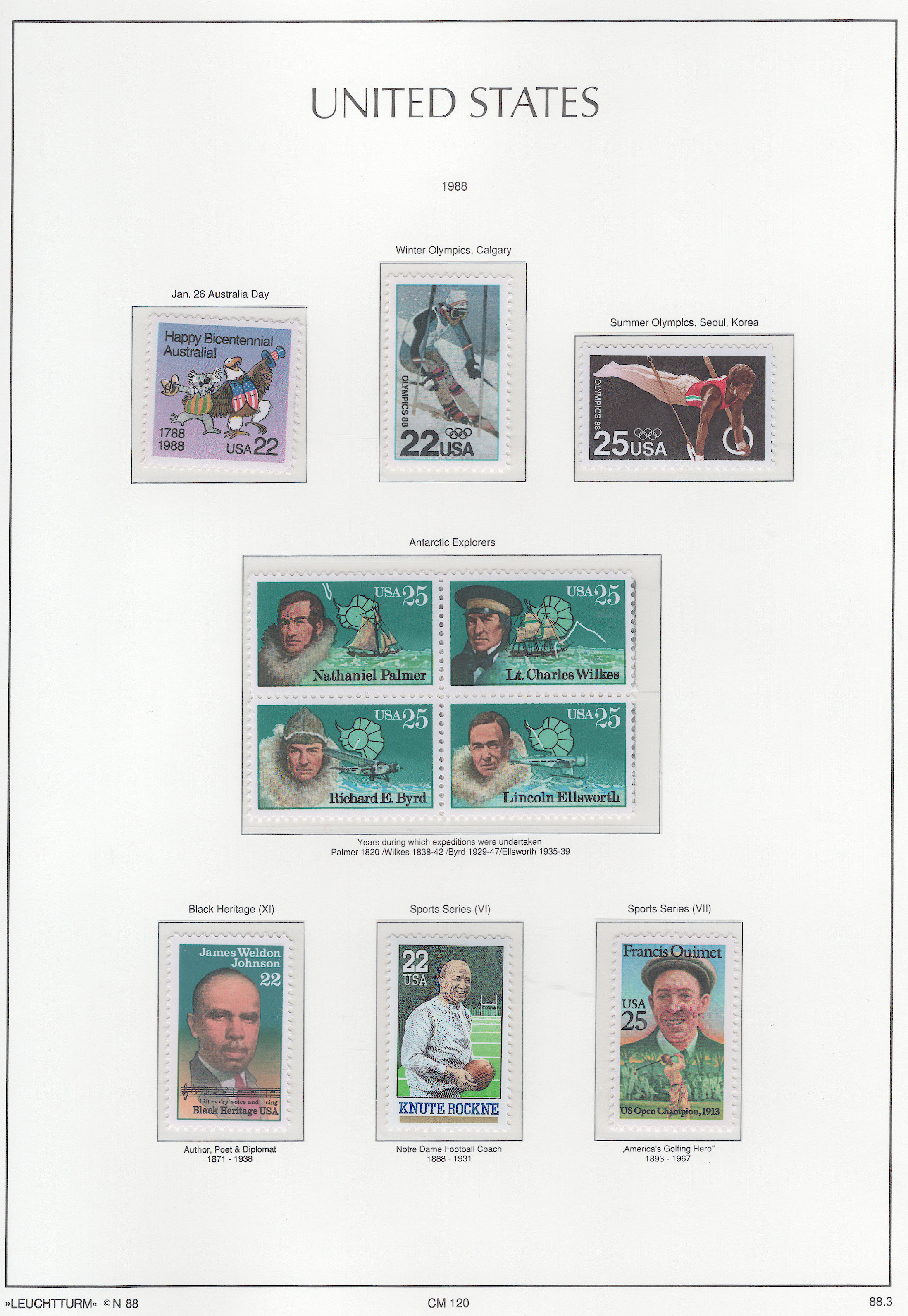
The Antarctica is a continent at the southern end of the world, about forty percent larger than the size of Europe. Europeans and Polynesians sailed near it and around it for centuries It took many intentional attempts to discover and explore. The middle set of stamps celebrate some key explorers.
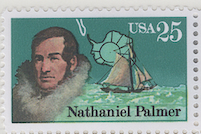
Nathaniel Palmer was a whale and seal hunter from the Nineteenth Century. At the time, seal skins from the Antarctic Circle were prized. He pushed further south with a small sailing vessel in search of a seal rookery and found the Antarctica Pennisula. Starting in 1820, Palmer and his crew visited several times and were among the first people on land there.
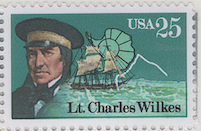
Charles Wilkes was a U.S. Navy officer from the Nineteenth Century. In the 1830s, he led the U.S. Exploring Expedition while sought to explore and survey the Pacific Ocean, including surrounding lands and the South Seas. In 1838, they charted over fifteen hundred miles of the Antarctica coast.
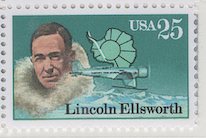
Using a Northrop Gamma, a small cargo plane with skis for landing gear, Lincoln Ellsworth flew several flights in Antarctica in the 1930s. He conducted four expeditions in Antarctica, exploring further inland to survey and map the continent.
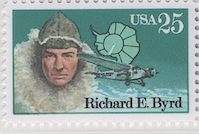
Richard E. Byrd is one of the most famous polar explorers, the most famous American polar explorer. He claimed to have been the first person to fly both to the North and South Pole. He led a few major expeditions in the 1930s and 1940s to Antarctica as an Admiral in the U.S. Navy with thousands of sailors and other personel. See the Admiral Byrd page for more on Byrd.
Note
Of the two polar regions, the Antarctic and explorations there are the most interesting. At the South Pole there’s actually land. Antarctica has penguins and sea birds, as well as seals, sea lions and other animals. There’s lichen that’s hundreds of year old and older. Below ground can be found fossils of plants and animals from millions of years ago, including dinosaurs. It’s a fascinating region. Exploring the Arctic close to the North Pole seems so miserable and in search of nothing. So I appreciate these stamps about Antarctic explorers more than the ones of the Arctic explorers (see Page 86.5).
Contains 10 spots: own 10 – 10 unused, 0 used.
Page is finished.
Album or Web Page Last changed Jul 20, 2025
Stamp Details
The table below lists information about the stamps shown on this page of Lighthouse’s stamp album. For more details about a particular stamp, click on its description. That will take you to the related web page of Colnect.
spot |
own |
catalog |
subject |
description |
comment |
United Nations & Other Nations
✓ |
2370 |
22c (jan 1988) |
Olympics
✓ |
2369 |
22c (jan 1988) |
|||
✓ |
2380 |
25c (aug 1988) |
Famous Explorers
✓ |
2386 |
25c (sep 1988) |
|||
✓ |
2387 |
25c (sep 1988) |
|||
✓ |
2388 |
25c (sep 1988) |
|||
✓ |
2389 |
25c (sep 1988) |
Famous Americans
✓ |
2371 |
22c (feb 1988) |
|||
✓ |
2376 |
22c (mar 1988) |
|||
✓ |
2377 |
25c (jun 1988) |
Footnotes
Spot refers to the postion of the stamp on the album page (e.g., 3.2 indicates row 3, position 2).
Amt. is an abbreviation for the face amount of the stamp.
Own indicates the stamp status: ✓ for unused; ✗ for used or canceled; ⭑ signifies I ordered one; ; ✨ indicates it was bought recently; ✠ means an auction bid is pending; and ◎ is used, and it costs too much for unused.
To search by catalog number, go to the search box and enter it in the catalog number box. However, it’s a bit broken; I need to fix it.









