Battles
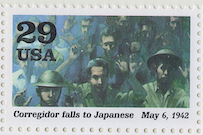
Although the U.S. had already been preparing for the war by drafting men into the military and activating National Guard units, they took a significant hit when so many ships and sailors were llost in Pearl Harbor, Hawaii. It would take some time to react with force.
In January of 1942, twenty-six countries signed the Declaration by United Nations – not the same organization we now call the U.N., which would not be formed until after the war. This included the U.S., the U.K., the Soviet Union, China, Australia, Canada, India, and many Central and South American countries. It also included nations that were already conquered and occupied by the Axis Powers: their governments in exile signed.
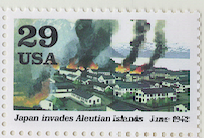
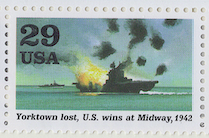
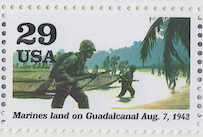
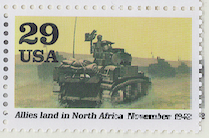
Also in January, American troops land in Samoa to stop the advancing of Japan. The U.S. also start sending troops to Ireland and England to prepare for an offensive against Germany. Over the next few months, the U.S. and the British Navy conduct a slow fight against Japanese forces spread out over the western side of the Pacific and in southeast Asia, struggling to push them back. In the Atlantic, Allied forces fight may sea battles with German U-Boats in the process of transferring troops, weapons, ships, and supplies to the U.K. At the same time, U.S. troops joined U.K. and French troops fighting Germans and Italians in northern Africa, mostly in the French colonies like Morocco.
Note
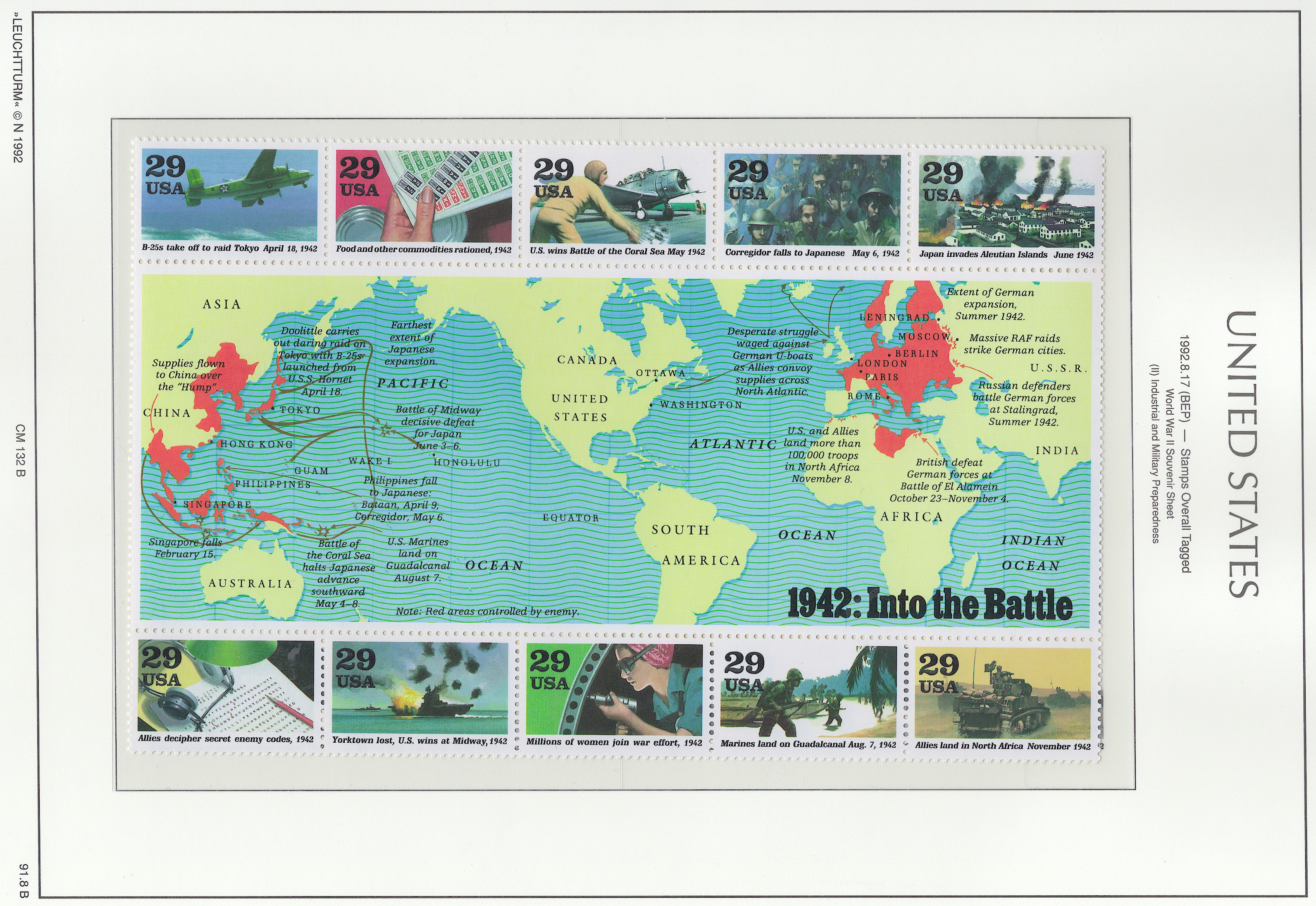
The map on this souvenir sheet seems more instructive. It shows in red the activities in northern Africa along the coast. You can also see how much activity was going on that year in the Pacific and Asia. The Japanese were very effective. They were better prepared for this fight.
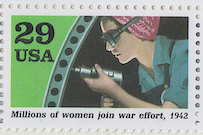
Incidentally, there are stamps on each of these souvenir sheets that depict what people were doing in the U.S. when fighting was going on around the world. One such stamp is the one at the bottom middle showing a woman working on build a ship. With so many men away, women were called upon to take over their jobs and to help build weapons and munitions. The women grow to like their independence and will eventually lead to women’s liberation in the 1970s. This war changed plenty and had an impact for decades that followed.
Contains 10 spots: own 10 – 10 unused, 0 used.
Page is finished.
Album or Web Page Last changed Jul 23, 2025
Stamp Details
The table below lists information about the stamps shown on this page of Lighthouse’s stamp album. For more details about a particular stamp, click on its description. That will take you to the related web page of Colnect.
spot |
own |
catalog |
subject |
description |
comment |
World War II
✓ |
2697a |
29c (aug 1992) |
|||
✓ |
2697b |
29c (aug 1992) |
|||
✓ |
2697c |
29c (aug 1992) |
|||
✓ |
2697d |
29c (aug 1992) |
|||
✓ |
2697e |
29c (aug 1992) |
|||
✓ |
2697f |
29c (aug 1992) |
|||
✓ |
2697g |
29c (aug 1992) |
|||
✓ |
2697h |
29c (aug 1992) |
|||
✓ |
2697i |
29c (aug 1992) |
|||
✓ |
2697j |
29c (aug 1992) |
Footnotes
Spot refers to the postion of the stamp on the album page (e.g., 3.2 indicates row 3, position 2).
Amt. is an abbreviation for the face amount of the stamp.
Own indicates the stamp status: ✓ for unused; ✗ for used or canceled; ⭑ signifies I ordered one; ; ✨ indicates it was bought recently; ✠ means an auction bid is pending; and ◎ is used, and it costs too much for unused.
To search by catalog number, go to the search box and enter it in the catalog number box. However, it’s a bit broken; I need to fix it.









