Bellini
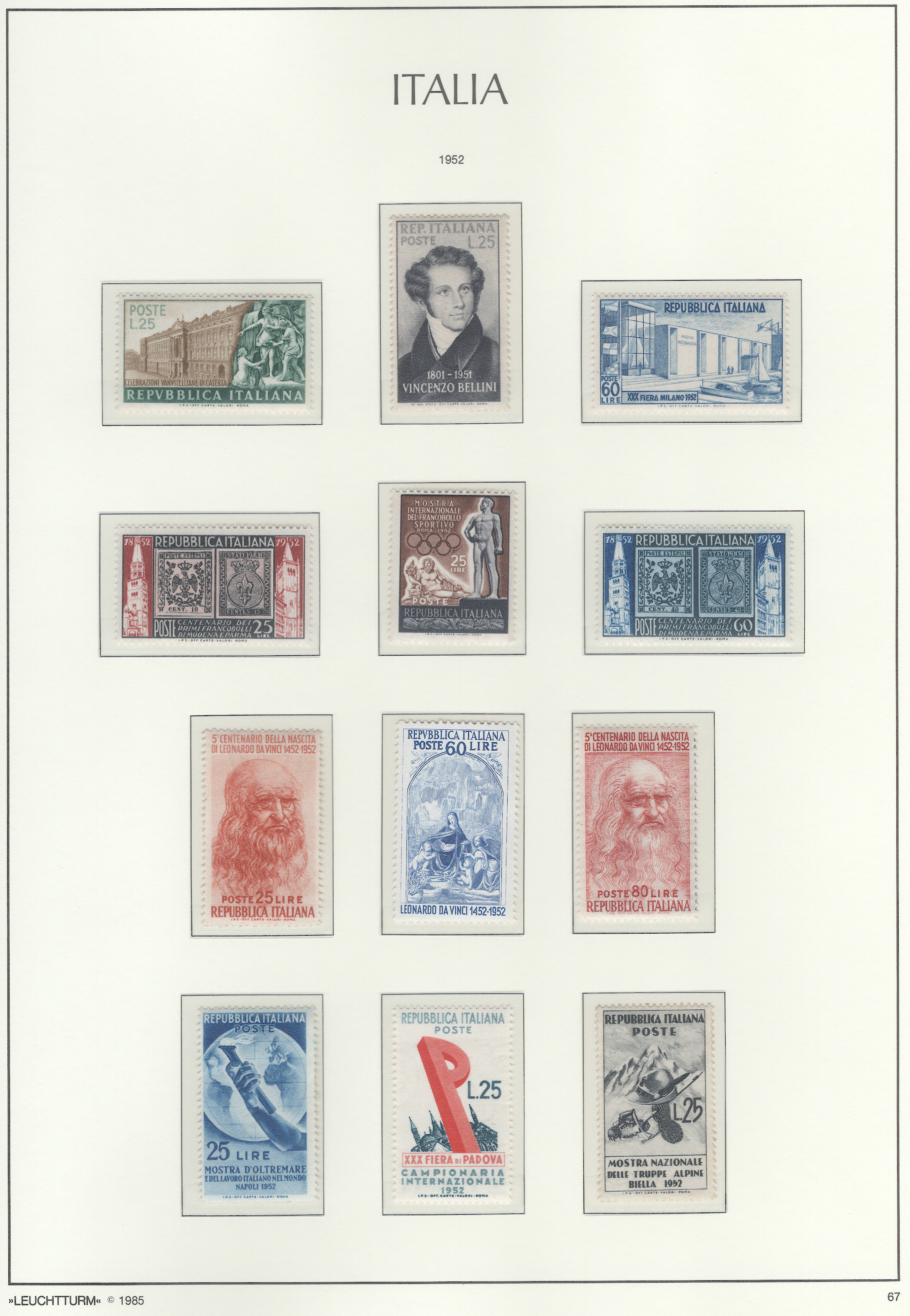
Vincenzo Bellini was born in Catania, Sicily, on November 3, 1801. He was the eldest of seven children in a very musical family. His grandfather and his father were both organists and teachers, so music was part of the house from the start. Some of the stories about his childhood, e.g., singing an aria at eighteen months, come from an anonymous hand-written history, and his biographer Herbert Weinstock regards them as myths.
In 1819 the city of Catania granted him a four-year pension to study at the Real Collegio di Musica (the royal conservatory) in Naples. He ended up living there for eight years. It was at the conservatory that he met Francesco Florimo, who became his lifelong friend and first biographer. His first opera, Adelson e Salvini, was written for the students in 1825, and his first professional one, Bianca e Gernando, was given at the Teatro di San Carlo on May 30, 1826.
Bellini then moved to Milan, where Il pirata opened at La Scala in October 1827 and started his career in earnest. He never held an official position with an opera company. He lived on what he earned from his operas, and he asked for higher fees than usual. Most of them were written with the librettist Felice Romani. The four years between 1827 and 1831 gave us Il pirata, I Capuleti e i Montecchi, La sonnambula and Norma. The opening night of Norma on December 26, 1831, was a flop – Bellini wrote to Florimo of a “solemn fiasco” – but it was sold out by the second evening and has been one of the most popular operas ever since.
His last opera, I puritani, was written in Paris for the Théâtre-Italien and premiered on January 24, 1835. It was a huge success, and King Louis-Philippe made him a knight of the Légion d’honneur. Eight months later, on September 23, 1835, Bellini died in Puteaux, just outside Paris. He was 33. He had suffered from a recurring stomach illness for years, and the autopsy found an inflamed colon and an abscess on the liver. He never married. Basically, he didn’t want a relationship getting in the way of his music.
Rossini arranged the funeral and Bellini was buried in Père Lachaise cemetery. In 1876 his remains were moved to the cathedral in Catania, where he was born. Catania also has a museum in his honor (the Museo Civico Belliniano) and a theater, the Teatro Massimo Bellini, which opened in 1890. Italy put his portrait on the 5,000 lire banknote before the switch to the Euro, with a scene from Norma on the back.
Note
The Bellini stamp has that classic design I like. I wish I could get a stamp designed of me in that style. I chose to feature him on this page because of the design and because he was a Sicilian composer of operas who also worked in Milan – my two key locations in Italy.
Contains 12 spots: own 12 – 12 unused, 0 used.
Page is finished.
Album or Web Page Last changed Jan 9, 2023
Stamp Details
The table below lists information about the stamps shown on this page of Lighthouse’s stamp album. For more details about a particular stamp, click on its description. That will take you to the related web page of Colnect.
spot |
own |
catalog |
subject |
description |
comment |
|---|---|---|---|---|---|
✓ |
683 |
25₤ (feb 1952) |
|||
✓ |
682 |
25₤ (jan 1952) |
|||
✓ |
685 |
60₤ (apr 1952) |

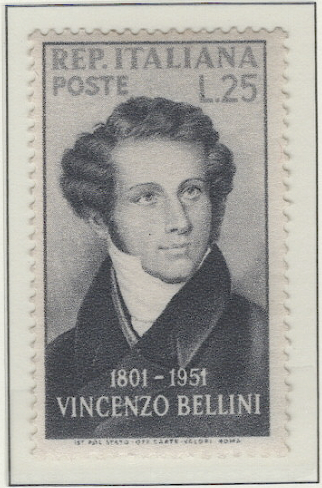

Centenary of First Stamps
✓ |
684 |
25₤ (mar 1952) |
|||
✓ |
689 |
25₤ (may 1952) |
|||
✓ |
690 |
60₤ (may 1952) |
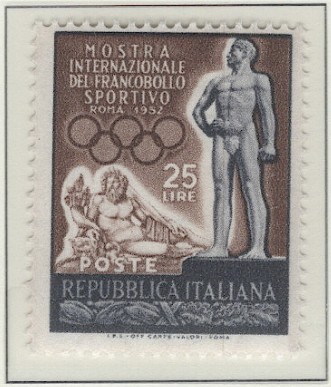


Leonardo da Vinci
✓ |
686 |
25₤ (apr 1952) |
|||
✓ |
111 |
60₤ (dec 1952) |
|||
✓ |
688 |
80₤ (dec 1952) |
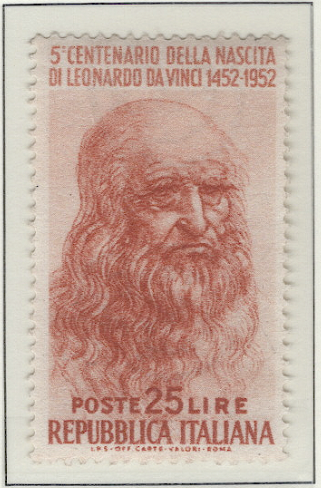

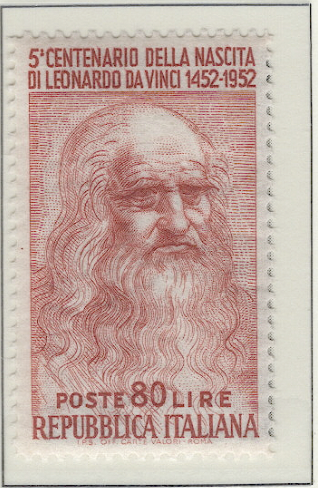
Other
✓ |
691 |
25₤ (jun 1952) |
|||
✓ |
693 |
25₤ (jun 1952) |
|||
✓ |
698 |
25₤ (oct 1952) |



Footnotes
Spot refers to the postion of the stamp on the album page (e.g., 3.2 indicates row 3, position 2).
Amt. is an abbreviation for the face amount of the stamp.
Own indicates the stamp status: ✓ for unused; ✗ for used or canceled; ⭑ signifies I ordered one; ; ✨ indicates it was bought recently; ✠ means an auction bid is pending; and ◎ is used, and it costs too much for unused.
To search by catalog number, go to the search box and enter it in the catalog number box. However, it’s a bit broken; I need to fix it.











