Gemini Four
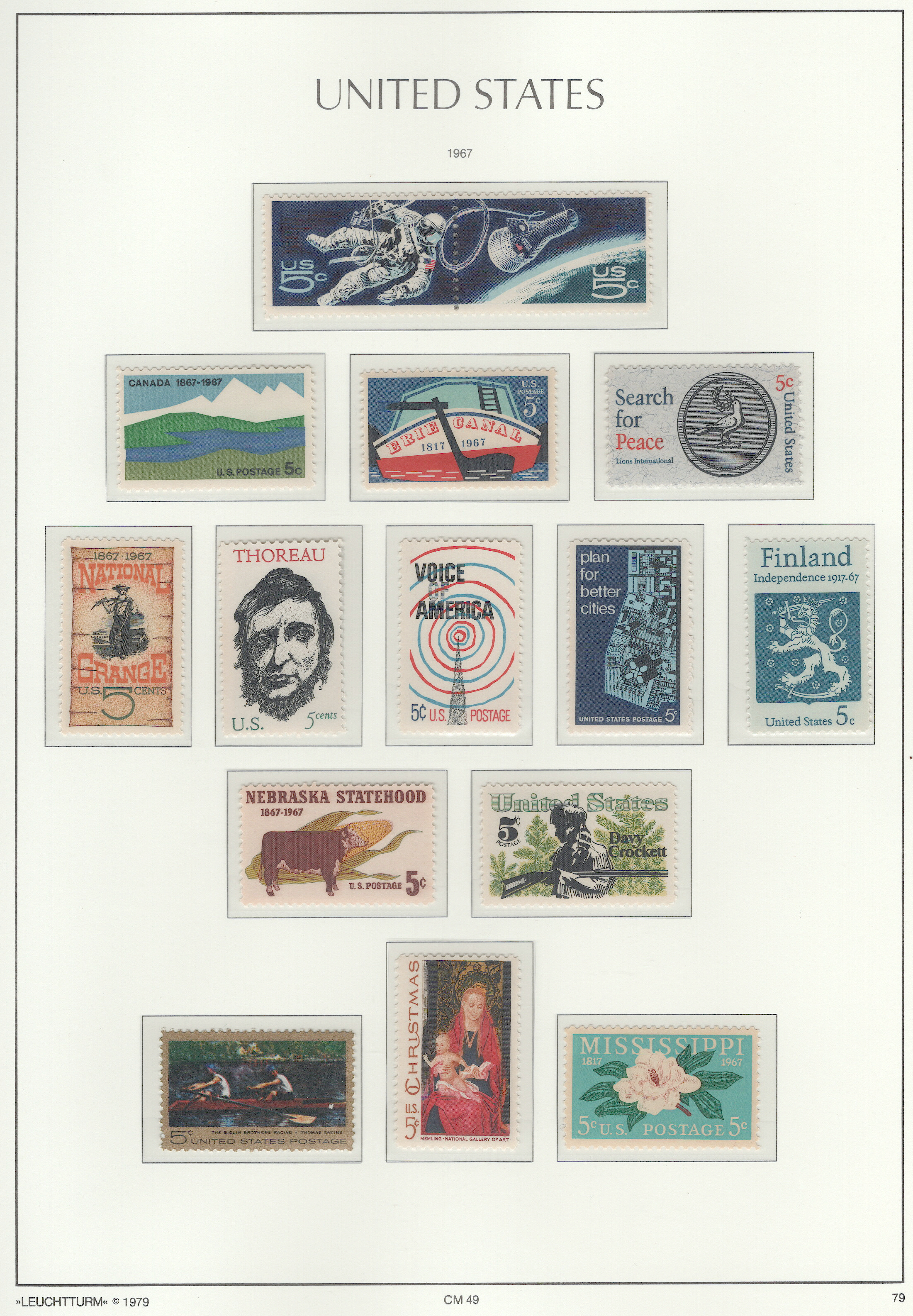
NASA had a goal in the 1960s to go to the Moon. The first step, though, was to send manned ships in orbit around the Earth. That was the mission of Project Mercury (see album page 71). The next step was Project Gemini.
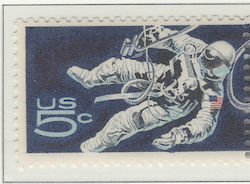
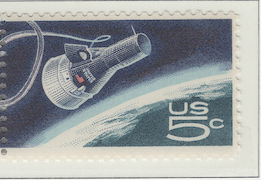
Gemini had a few objectives. The first was to develop equipment and techniques for space travel and navigation. Additionally, it sought to sustain a crew of at least two people to live in space for at least four days – the record was five days, set by the Soviets. The third objective was to try to perform extra-vehicular activities (i.e., EVAs or space walks). Another objective was to work through some methods for docking one spacecraft with another. Last, they wanted to land a spacecraft as close as possible to a target destination on Earth. The pair of stamps at the top of this album page show the Genimi IV with Astronaut Ed White performing the first space walk. They were in orbit for five days, having performed sixty-six orbits around the Earth.
The objectives of Gemini, all of the skills and developments from Gemini would be needed for the Apollo program with its mission to go to the Moon. The Apollo program was started at the same time as Gemini. The rocket and spacecraft that were being designed for traveling to the Moon and back was larger and more expensive. Gemini was small, simpler and cheaper. It was to focus on its limited objectives to inform the Appllo program.
Note
As a kid, I liked very much the Gemini IV stamps, but they were issued when I was only five years old. So I never bought them at the post office. Nor did I ever see them on envelops. They were too special and most people used definitive stamps. Still, I saw them in books and thought it would be neat to have them. It would not be until several years later that I would start collecting stamps and buy these.
Contains 15 spots: own 15 – 15 unused, 0 used.
Page is finished.
Album or Web Page Last changed Apr 26, 2025
Stamp Details
The table below lists information about the stamps shown on this page of Lighthouse’s stamp album. For more details about a particular stamp, click on its description. That will take you to the related web page of Colnect.
spot |
own |
catalog |
subject |
description |
comment |
|---|---|---|---|---|---|
✓ |
1331 |
5c (sep 1967) |
|||
✓ |
1332 |
5c (sep 1967) |
|||
✓ |
1324 |
5c (may 1967) |
|||
✓ |
1325 |
5c (jul 1967) |
|||
✓ |
1326 |
5c (jul 1967) |
|||
✓ |
1323 |
5c (apr 1967) |
|||
✓ |
1327 |
5c (jul 1967) |
|||
✓ |
1329 |
5c (aug 1967) |
|||
✓ |
1333 |
5c (oct 1967) |
|||
✓ |
1334 |
5c (oct 1967) |
|||
✓ |
1328 |
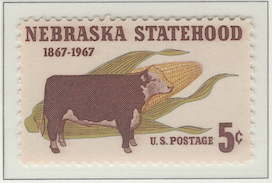
Nebraska Statehood |
5c (jul 1967) |
||
✓ |
1330 |
5c (aug 1967) |
|||
✓ |
1335 |
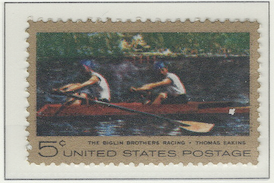
The Biglin Brothers Racing |
5c (nov 1967) |
||
✓ |
1336 |
Madonna & Child |
5c (nov 1967) |
||
✓ |
1337 |
5c (dec 1967) |



Footnotes
Spot refers to the postion of the stamp on the album page (e.g., 3.2 indicates row 3, position 2).
Amt. is an abbreviation for the face amount of the stamp.
Own indicates the stamp status: ✓ for unused; ✗ for used or canceled; ⭑ signifies I ordered one; ; ✨ indicates it was bought recently; ✠ means an auction bid is pending; and ◎ is used, and it costs too much for unused.
To search by catalog number, go to the search box and enter it in the catalog number box. However, it’s a bit broken; I need to fix it.














