Victory
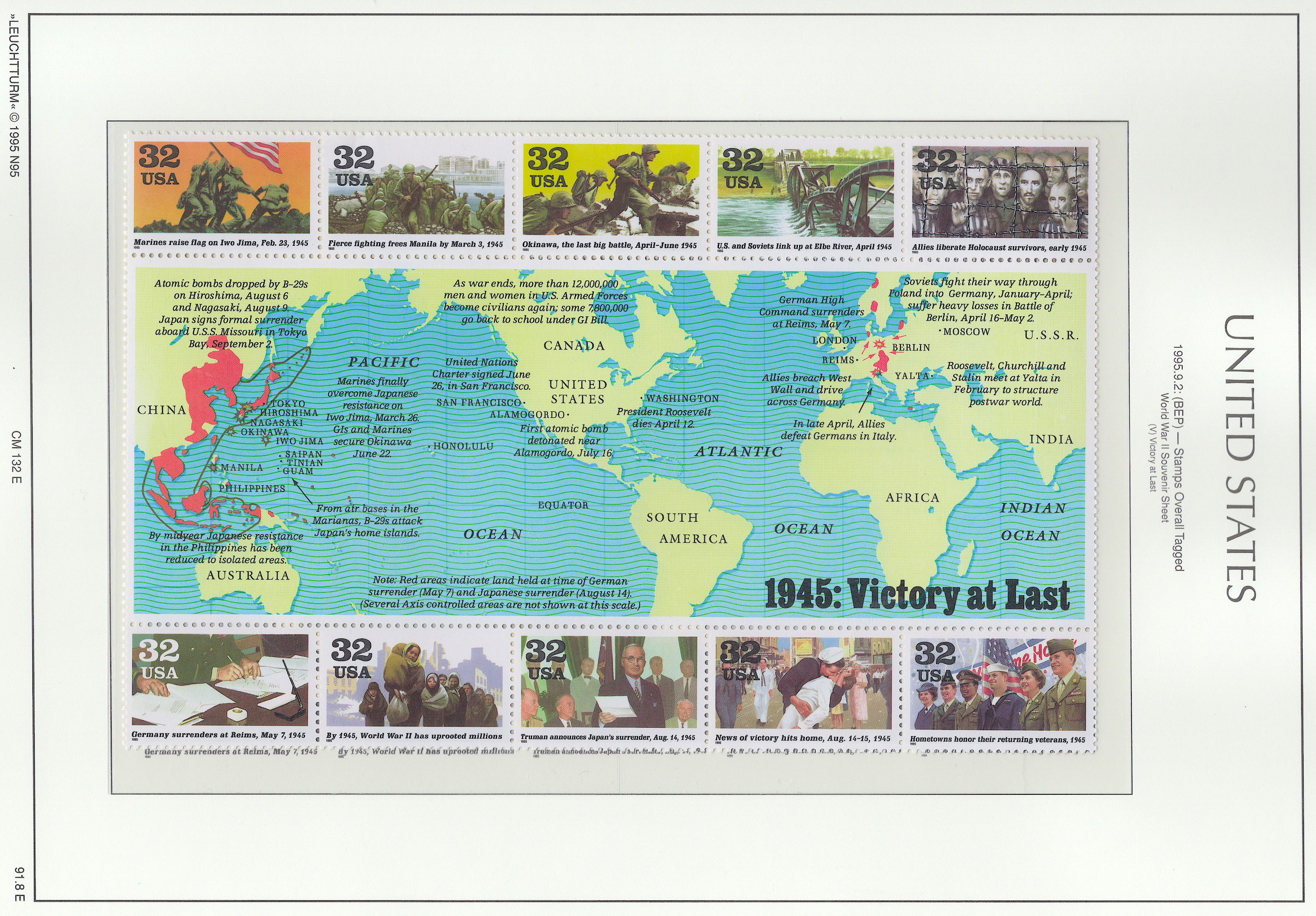
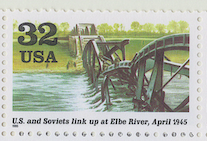
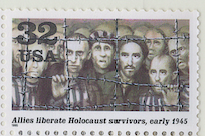
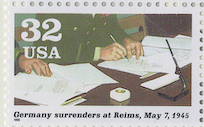
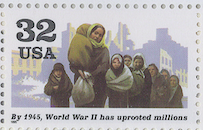
In February 1945, heavy bombing of Berlin begins. In April, the last German troops remaining in northern Italy are defeated. Soviet troops are quickly taking control of easternn European countries – the Baltic states, Hungary, Poland, etc. – with no intention of freeing them after the war ends. Allied Forces have pushed German forces that remain back into Germany, with the U.S., the U.K. and France entering from the west and the Soviets from the east. In May, Germany surrenders ending the war in Europe.
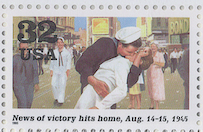
In the Pacific, in July the Philippines is liberated and returned to U.S. control. More and more direct attacks on Japan begin. The Soviets, who had not been part of the war on Japan, secretly negotiate a treaty to join forces with Japan against the Allies in the region. In August, the U.S. drops two nuclear bombs on Japan – one on Hiroshima, the other on Nagasaki. Two days later, the Soviets declare war on Japan and begin an assault on their forces still in Manchuria, China. The Emperor of Japan, seeing that a new player has entered the theater, surrenders.
Note
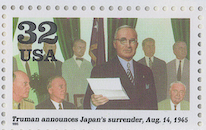
Franklin Roosevelt was President throughout the war, until the last few months. I’m surprised they didn’t include a stamp for that on this souvenir sheet. The do mention of his death in the text. The stamp at the bottom middle shows President Truman approving the surrender of Japan. There’s text on the map by San Francisco stating that the United Nations Charter was signed, starting the U.N. Some people are good at seizing the moment to make progress.
Contains 10 spots: own 10 – 10 unused, 0 used.
Page is finished.
Album or Web Page Last changed Jul 23, 2025
Stamp Details
The table below lists information about the stamps shown on this page of Lighthouse’s stamp album. For more details about a particular stamp, click on its description. That will take you to the related web page of Colnect.
spot |
own |
catalog |
subject |
description |
comment |
World War II
✓ |
2981a |
32c (sep 1995) |
|||
✓ |
2981b |
32c (sep 1995) |
|||
✓ |
2981c |
32c (sep 1995) |
|||
✓ |
2981d |
32c (sep 1995) |
|||
✓ |
2981e |
32c (sep 1995) |
|||
✓ |
2981f |
32c (sep 1995) |
|||
✓ |
2981g |
32c (sep 1995) |
|||
✓ |
2981h |
32c (sep 1995) |
|||
✓ |
2981i |
32c (sep 1995) |
|||
✓ |
2981j |
32c (sep 1995) |
Footnotes
Spot refers to the postion of the stamp on the album page (e.g., 3.2 indicates row 3, position 2).
Amt. is an abbreviation for the face amount of the stamp.
Own indicates the stamp status: ✓ for unused; ✗ for used or canceled; ⭑ signifies I ordered one; ; ✨ indicates it was bought recently; ✠ means an auction bid is pending; and ◎ is used, and it costs too much for unused.
To search by catalog number, go to the search box and enter it in the catalog number box. However, it’s a bit broken; I need to fix it.









