Giannini
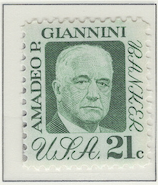
Amadeo Giannini was born in 1870 in San Jose at a time when California had only been a state for about twenty years. Most of it’s revenues came from agriculture such as wine and fruit, gold mining, and importing goods from Asia. Giannini’s father started in gold mining, but later his family had fruit and vegatable farms. When Giannini married a woman who’s father had a fruit distribution business, and was part owner of a savings and loan company. He ran his fruit business successfully, and then became a director at the S&L.
At that time, banks were mostly for wealthy men. There was no place for immigrants and women to go to deposit their savings, or a bank to lend them money for their businesses or other needs. To fill this market need, Giannini started the Bank of Italy in San Francisco to service Italian immigrants and others. He was successful and began buying smaller banks around the state to merge with the Bank of Italy. He also founded the large insurance company, Transamerica Corporation.
Giannini financed many businesses, such as wineries. He loaned Walt Disney the money for some his most successful films. He also financed the founding of the company, Hewlett-Packard, which started our making electronic parts and audio equipment used in film and in the military, before becoming a major computer maker. He provided financing for Kaiser metals businesses for the building of ships and airplanes during World War II. After the war, he financed the rebuilding of Fiat automotives in Italy.
In time, Giannini bought a small bank in Los Angeles called, Bank of America. After merging it into his bank, Giannini adopted its name as being more appealing to a more diverse group of people. Today, Bank of America is one of the largest banks in the U.S.
Note
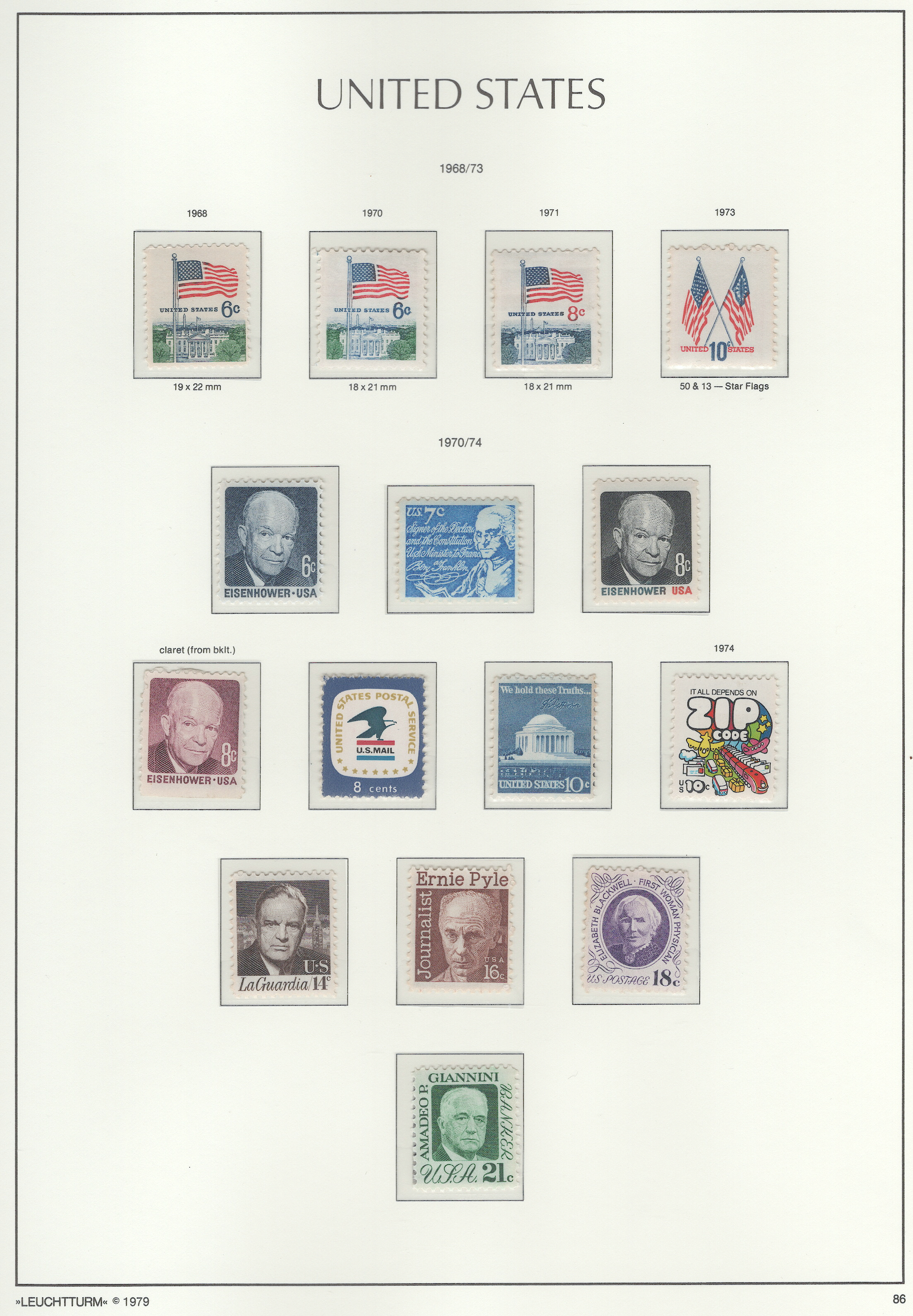
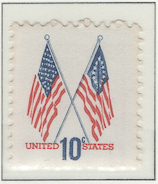
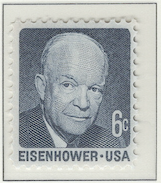
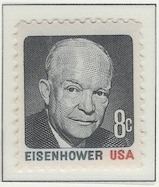
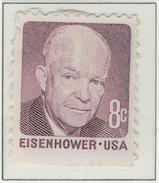
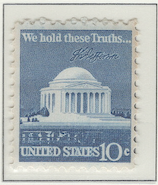
Some of these are the definitives that I saw most as a boy: the ones of President Eisenhower, the ones with the flags over the White House, and the blue one with the Jefferson Memorial. I was too young to know who was Eisenhower, or what was the building shown in the blue one. I didn’t question stamps at that time. I looked and wondered, but didn’t think to ask anyone.
Contains 15 spots: own 15 – 15 unused, 0 used.
Page is finished.
Album or Web Page Last changed May 2, 2025
Stamp Details
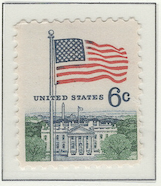
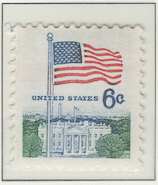
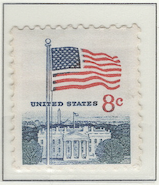
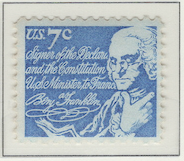
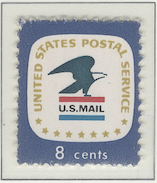
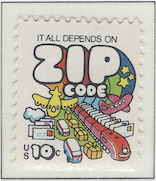
The table below lists information about the stamps shown on this page of Lighthouse’s stamp album. For more details about a particular stamp, click on its description. That will take you to the related web page of Colnect.
spot |
own |
catalog |
subject |
description |
comment |
Definitives
✓ |
1338 |
6c (jan 1968) |
|||
✓ |
1338D |
6c (aug 1970) |
|||
✓ |
1338F |
8c (may 1971) |
|||
✓ |
1509 |
10c (dec 1973) |
|||
✓ |
1393 |
6c (aug 1970) |
|||
✓ |
1393D |
7c (oct 1972) |
|||
✓ |
1394 |
8c (may 1971) |
|||
✓ |
1395 |
8c (may 1971) |
|||
✓ |
1396 |
8c (jul 1971) |
|||
✓ |
1510 |
10c (dec 1973) |
|||
✓ |
1511 |
10c (jan 1974) |
|||
✓ |
1397 |
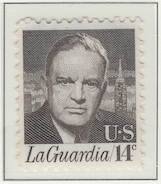
14c (apr 1972) |
|||
✓ |
1398 |
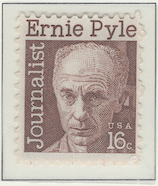
16c (may 1971) |
|||
✓ |
1399 |
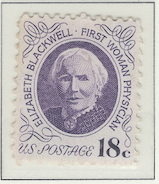
18c (jan 1974) |
|||
✓ |
1400 |
21c (jun 1973) |
Footnotes
Spot refers to the postion of the stamp on the album page (e.g., 3.2 indicates row 3, position 2).
Amt. is an abbreviation for the face amount of the stamp.
Own indicates the stamp status: ✓ for unused; ✗ for used or canceled; ⭑ signifies I ordered one; ; ✨ indicates it was bought recently; ✠ means an auction bid is pending; and ◎ is used, and it costs too much for unused.
To search by catalog number, go to the search box and enter it in the catalog number box. However, it’s a bit broken; I need to fix it.














