Legionnaires
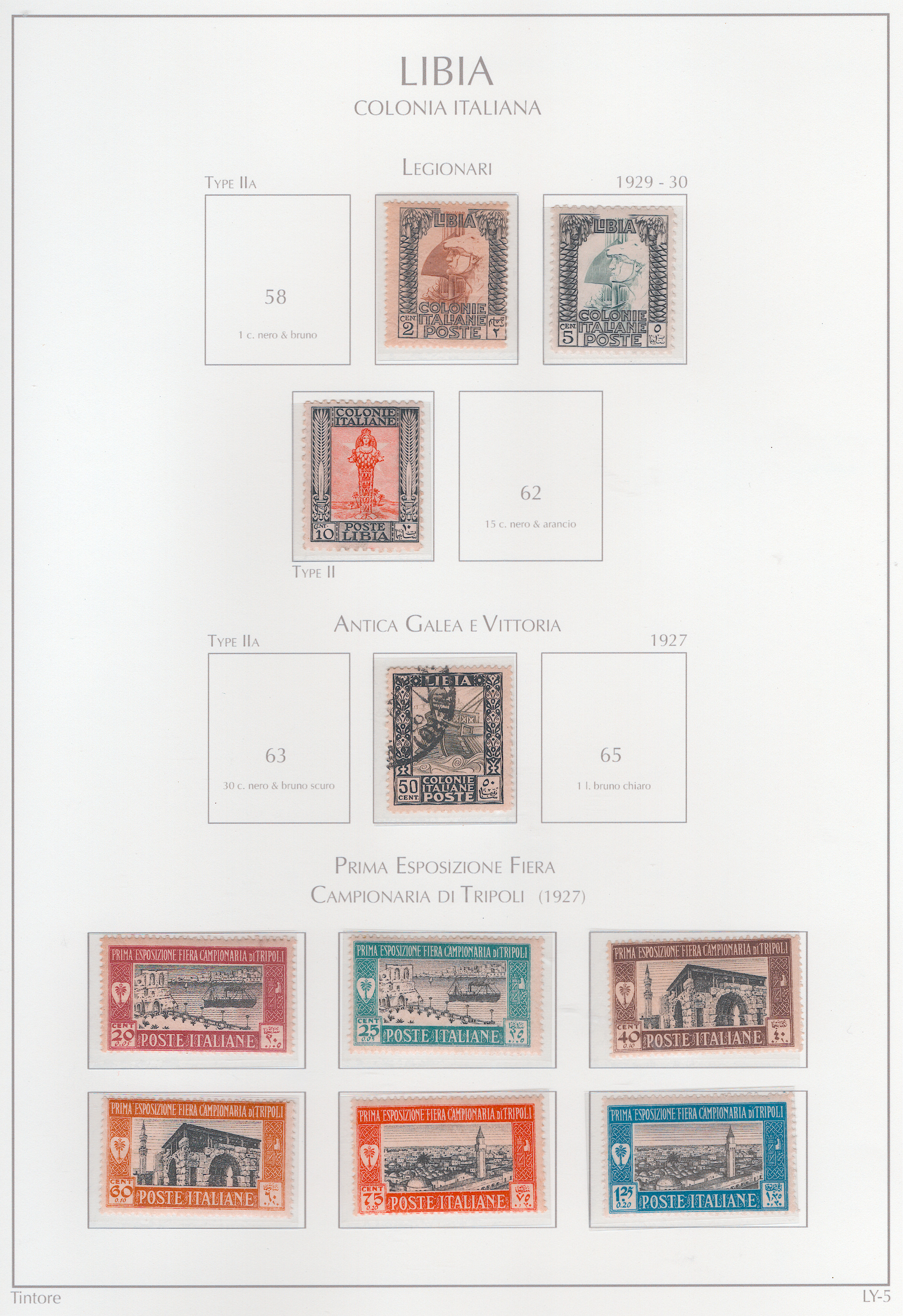
The top row of stamps on this album page have an image of a legionaire, a member of the Roman Legionary. The Legionaires were part of the Roman army. They were composed of Roman citizens, who first came from Rome, but eventually was made mostly of young men from the provinces, serving for twenty-five years.
The strategy for building the Roman empire was to use the Legionaires first to conquor new lands, then to maintain control, suppressing any rebellions over the years. From there, they would work on converting the locals to Roman ways through administering the territory. Plus, they would organize and assist in building many public facilities and services, such as roads, an irrigation system, and public buildings, including an arena. In time, perhaps over decades, the public accepted Roman rule and saw benefits to it – forgetting any losses and deaths from when they were conquered, often before many were born. They would then be offered Roman citizenship, requiring less taxes and more autonomy. Once that was approved by vote, the Legionnaires were free to move on to conquer new territories for the empire, leaving a minimal number of troops behind – but taking with them replacement recruits from the newly made citizens. It’s a strategy that served Rome well for hundreds of years.
The kings, Umberto I and Vittorio Emanuele III envisioned a renewal of this strategy with the Regio Corpo Truppe Coloniali (i.e., the Royal Corps of Colonial Troops). There was a separate such corps for each of the colonies, composed of soldiers from the colonies, but led primarily by Italian officers and non-commissioned officers.
Note
This newly redesigned page is a little sparse. It seems that not all Italian stamp enthusiasts collect the colonies and occupations. That’s good for me in that the prices are relatively low – if they all collected colonies, given how few were printed, I wouldn’t be able to afford them. Given the lack of interest, most dealers have a smattering of inventory in this area. As a result, it’s difficult to find the stamps from the first two sets.
Contains 14 spots: own 10 – 9 unused, 1 used.
Album or Web Page Last changed Feb 15, 2025
Stamp Details
The table below lists information about the stamps shown on this page of Lighthouse’s stamp album. For more details about a particular stamp, click on its description. That will take you to the related web page of Colnect.
spot |
own |
catalog |
subject |
description |
comment |
Libyan Pictorials IIa
58 |
1c (jan 1930) |
||||
✓ |
59 |
2c (jan 1930) |
|||
✓ |
60 |
5c (jan 1929) |
Libyan Pictorials II
✓ |
61 |
Diana Ephesina |
10c (jan 1926) |
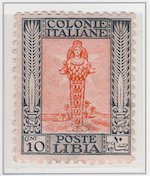
Libyan Pictorials IIa
62 |
Diana Ephesina |
15c (jan 1926) |
|||
63 |
30c (feb 1927) |
||||
✗ |
64 |
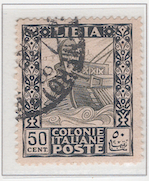
50c (feb 1927) |
|||
65 |
1₤ (feb 1926) |
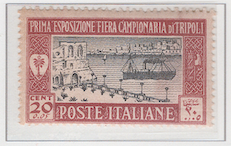
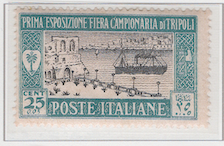
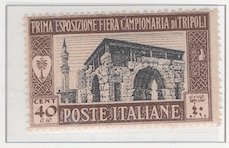
First Tripoli Trade Expo.
✓ |
66 |
20+5c (feb 1927) |
|||
✓ |
67 |
25+5c (feb 1927) |
|||
✓ |
68 |
40+10c (feb 1927) |
|||
✓ |
69 |
60+10c (feb 1927) |
|||
✓ |
70 |
75+20c (feb 1927) |
|||
✓ |
71 |
1.25+0.20₤ (feb 1927) |
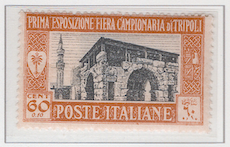
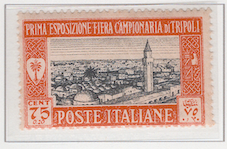
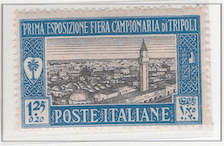
Footnotes
Spot refers to the postion of the stamp on the album page (e.g., 3.2 indicates row 3, position 2).
Amt. is an abbreviation for the face amount of the stamp.
Own indicates the stamp status: ✓ for unused; ✗ for used or canceled; ⭑ signifies I ordered one; ; ✨ indicates it was bought recently; ✠ means an auction bid is pending; and ◎ is used, and it costs too much for unused.
To search by catalog number, go to the search box and enter it in the catalog number box. However, it’s a bit broken; I need to fix it.













