Irrigation Channel
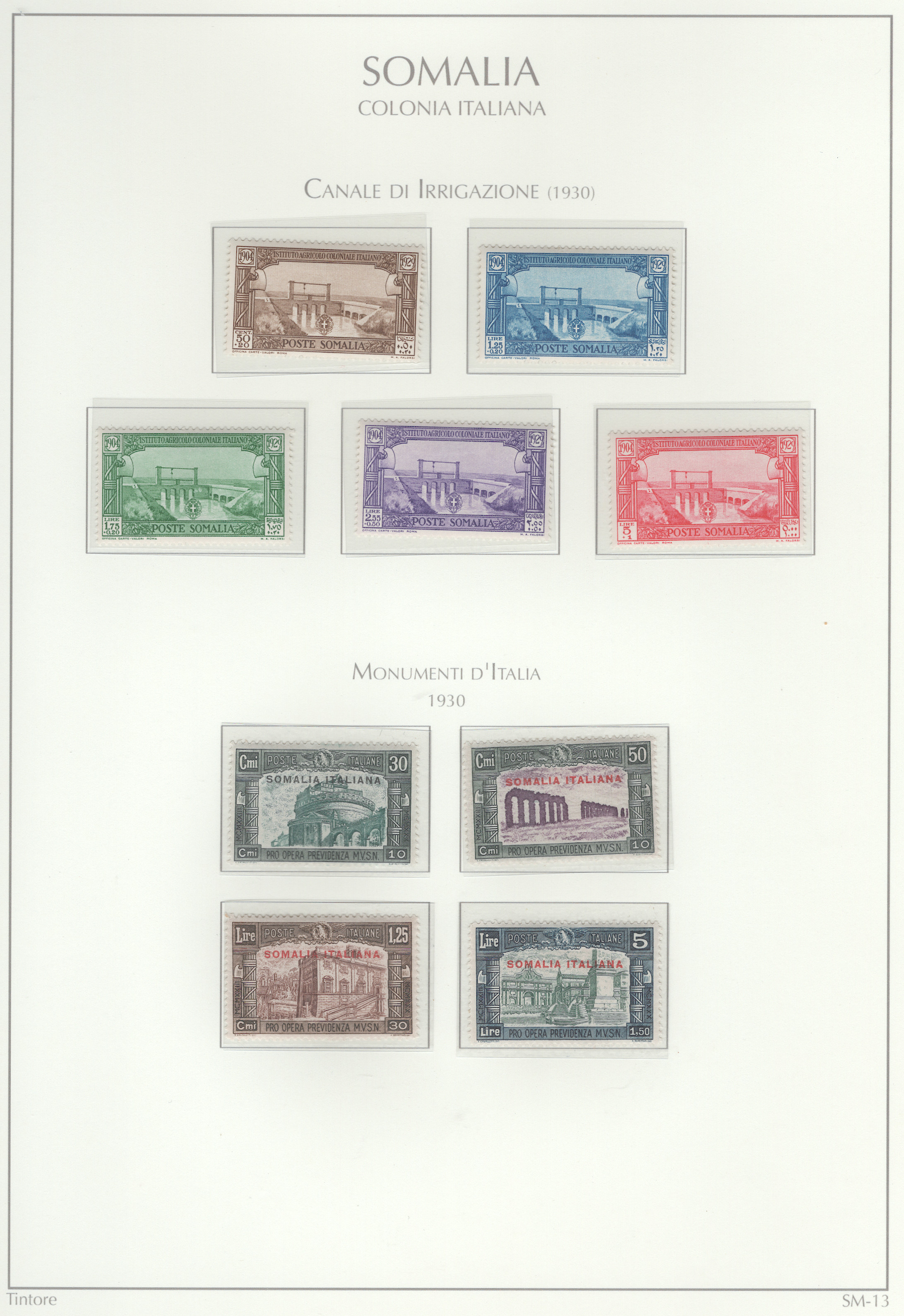
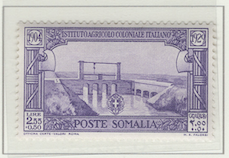
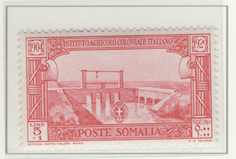
In 1926, under the direction of the Italian government, the Ganale Doria dam was built. It was constructed by about a thousand people, made of concrete without cranes or motorized digging equipment – just shovels. The materials were brought in from about fourteen kilometers away on camels, about three-hundred camels arriving each day. It took ten months to build, through heavy rains, fighting to tame the Shebelle river – the River of Leopards.
As part of the construction of the Ganale Doria dam, a network of irrigation canals were dug. They were eight meters wide and three meters deep to channel water to farm land through out the region. Previously, during the growing season, the water would be absorbed by a nearby desert, evaporate from the hot sun, or just flow into the Juba river and then the Indian Ocean. With the dam, it would be partially closed to fill the irrigation canals to feed water to where it was needed for growing crops when it was needed. The rest of the year it was left open for the river to flow freely.
Note
This page is complete, albeit just a little sparse. I could squeeze a small set of stamps, but I don’t have a set that needs a home. I think the layout is fine like this. This page is finished.
Contains 9 spots: own 9 – 9 unused, 0 used.
Page is finished.
Album or Web Page Last changed Feb 8, 2025
Stamp Details
The table below lists information about the stamps shown on this page of Lighthouse’s stamp album. For more details about a particular stamp, click on its description. That will take you to the related web page of Colnect.
spot |
own |
catalog |
subject |
description |
comment |
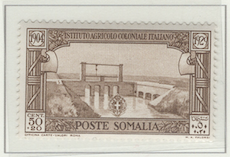
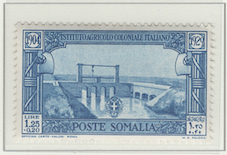
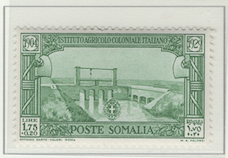
Italian Colonial Agriculture Institute
✓ |
144 |
50+20c (nov 1930) |
|||
✓ |
145 |
1.25₤+20c (nov 1930) |
|||
✓ |
146 |
1.75₤+20c (nov 1930) |
|||
✓ |
147 |
2.55₤+50c (nov 1930) |
|||
✓ |
148 |
5+1₤ (nov 1930) |
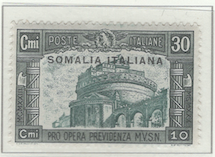
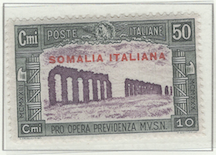
Voluntary Militia for National Security
✓ |
140 |
30+10c (oct 1930) |
|||
✓ |
141 |
50+10c (oct 1930) |
|||
✓ |
142 |
1.25₤+30c (oct 1930) |
|||
✓ |
143 |
5+1.50₤ (oct 1930) |
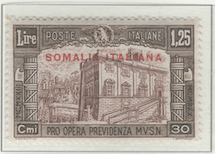
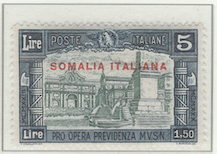
Footnotes
Spot refers to the postion of the stamp on the album page (e.g., 3.2 indicates row 3, position 2).
Amt. is an abbreviation for the face amount of the stamp.
Own indicates the stamp status: ✓ for unused; ✗ for used or canceled; ⭑ signifies I ordered one; ; ✨ indicates it was bought recently; ✠ means an auction bid is pending; and ◎ is used, and it costs too much for unused.
To search by catalog number, go to the search box and enter it in the catalog number box. However, it’s a bit broken; I need to fix it.








