Indigenous Art
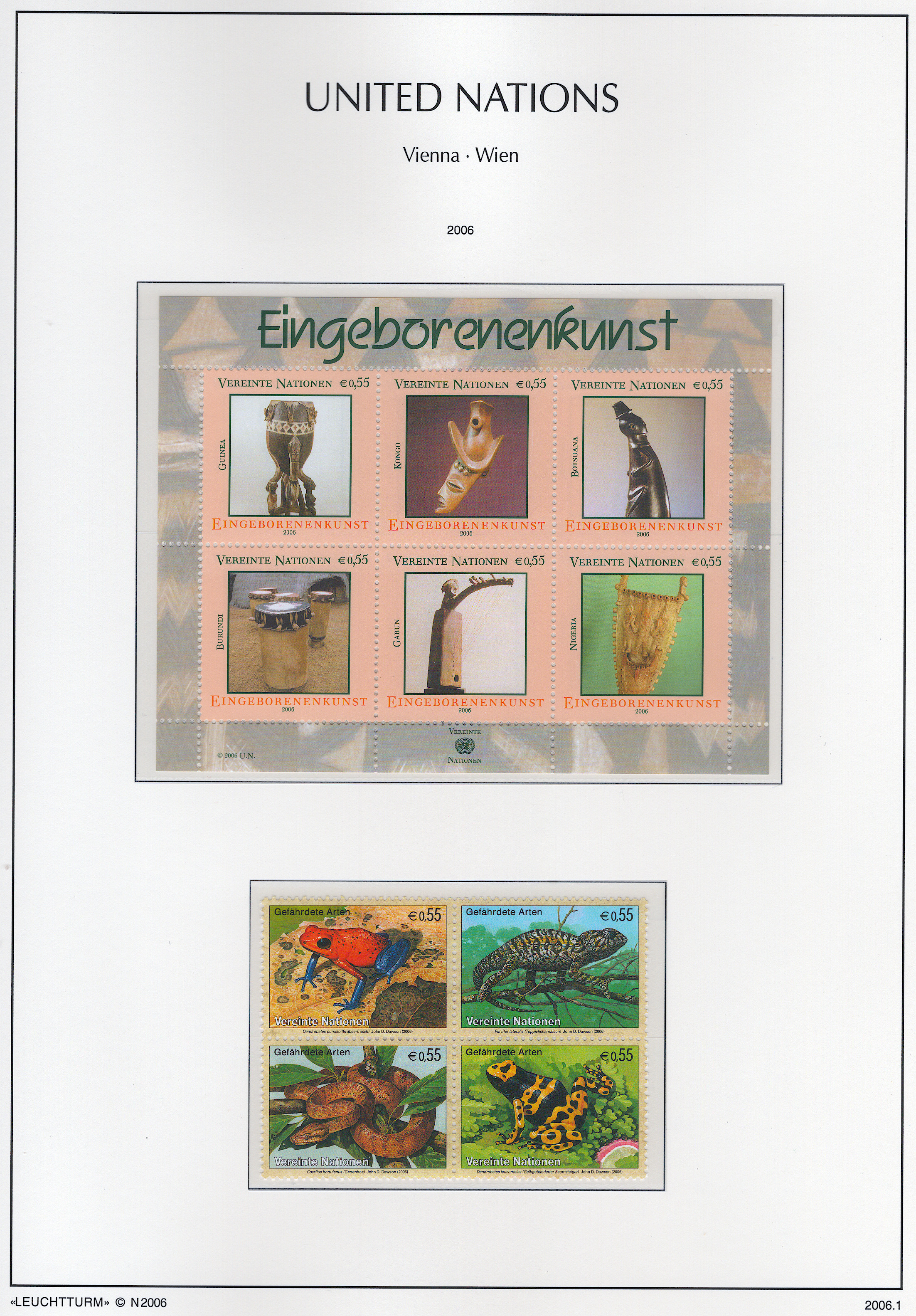
For this series of stamps of indigenous art, the three U.N. post office location issued sheets of six unique stamps each, for a total of eighteen stamps. They celebrate indigenous cultures, cultural heritage, and the rights of indigenous peoples. This set issued in 2006 highlights musical instruments from North Africa.
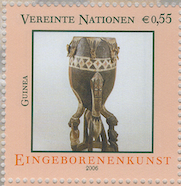
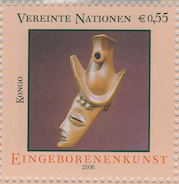
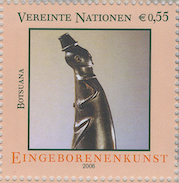
The first stamp in the sheet here shows a ceremonial drum carved from a single piece of wood that was made by the Baga people of Guinea. The second stamp shows a hunting whistle made of ivory from the Congo. Although used by hunters to communicate while hunting, they were also used as musical instruments during masquerade performances and ceremonies. The third stamp shows a horn carved from a cattle horn, possibly a water buffalo in Botswana.
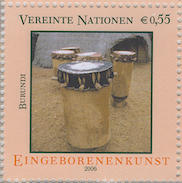
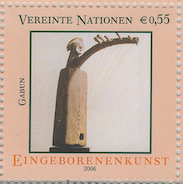
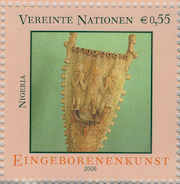
The first stamp on the second row depicts a karyenda, which drum and main symbol of Burundi and its Mwami or king, who could interpret the beatings of the karyenda to make rules for the kingdom. Next is a Ngombi arched harp used in Gabon. It includes a wooden resonator covered with a hide, and a curved neck with strings. The last stamp is a carved ivory clapper from the Benin Kingdom in Nigeria.
For more of these stamps depicting indigenous musical instruments from Africa, see the New York (UN-2006.1) and the Geneva (UNG-2006.1) albums. There are also stamps in this album of indigenous art from South America and Europe.
Note
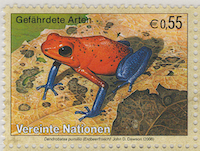
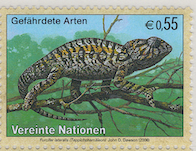
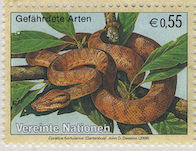
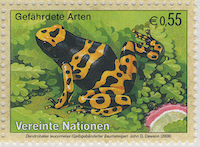
The indigenous art stamps are interesting, but I like the stamps of endangered species better – especially when they show pictures of birds. For the four here, there aren’t any bird stamps. Instead, these show a snake, a lizard and frogs. They’re important too, but I don’t like them on stamps.
Contains 10 spots: own 10 – 10 unused, 0 used.
Page is finished.
Album or Web Page Last changed Dec 19, 2025
Stamp Details
The table below lists information about the stamps shown on this page of Lighthouse’s stamp album. For more details about a particular stamp, click on its description. That will take you to the related web page of Colnect.
spot |
own |
catalog |
subject |
description |
comment |
Indigenous Art
✓ |
375a |
0.55 (feb 2006) |
|||
✓ |
375b |
0.55 (feb 2006) |
|||
✓ |
375c |
0.55 (feb 2006) |
|||
✓ |
375d |
0.55 (feb 2006) |
|||
✓ |
375e |
0.55 (feb 2006) |
|||
✓ |
375f |
0.55 (feb 2006) |
Endangered Species
✓ |
376 |
0.55 (mar 2006) |
|||
✓ |
377 |
0.55 (mar 2006) |
|||
✓ |
378 |
0.55 (mar 2006) |
|||
✓ |
379 |
0.55 (mar 2006) |
Footnotes
Spot refers to the postion of the stamp on the album page (e.g., 3.2 indicates row 3, position 2).
Amt. is an abbreviation for the face amount of the stamp.
Own indicates the stamp status: ✓ for unused; ✗ for used or canceled; ⭑ signifies I ordered one; ; ✨ indicates it was bought recently; ✠ means an auction bid is pending; and ◎ is used, and it costs too much for unused.
To search by catalog number, go to the search box and enter it in the catalog number box. However, it’s a bit broken; I need to fix it.










No Covers Found.