Scenes in Eritrea
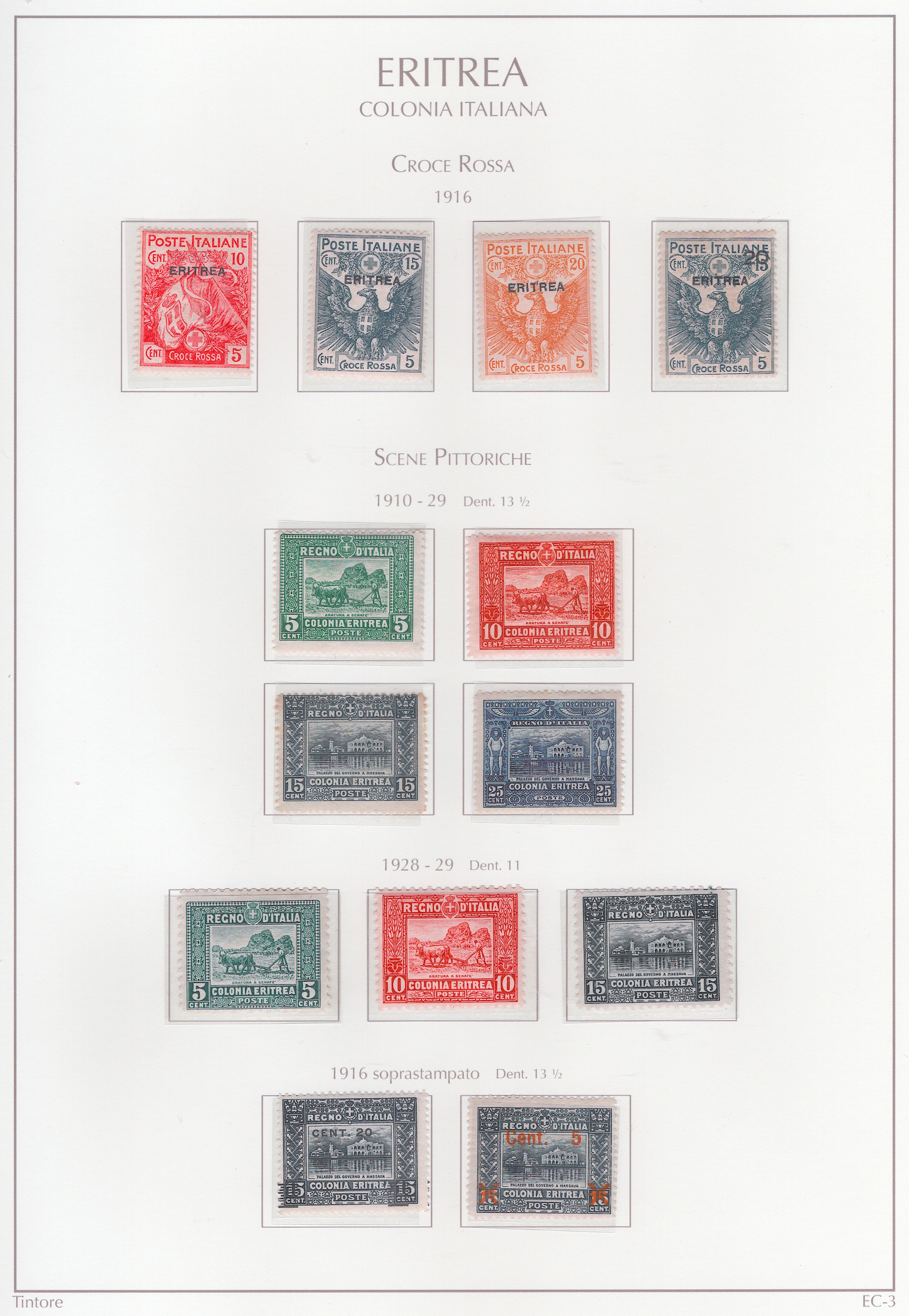
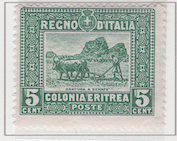
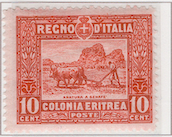
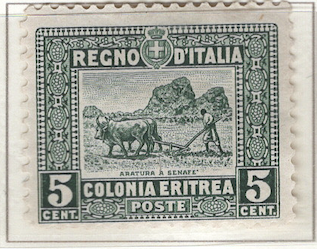
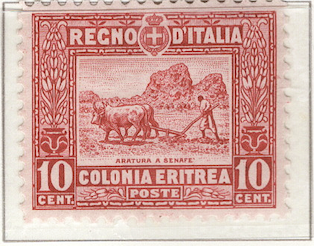
The second, third, and fouth set of stamps show a few scenes in Eritrea. The ones in green and red have the caption, Aratura A Senafe. This means Plowing Mustard. Apparently, mustard was grown in Eritrea – although it grows while in the region and some species of mustard are used as a cover crop in Europe. Given that the farm depicted with two oxen is plowing, he may be clearing the field of the mustard to prepare it for some other crop. Maybe that’s the metaphor: disrupting and clearing the land of wild elements to bring order and control for better growth of the people and industry.
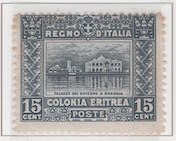
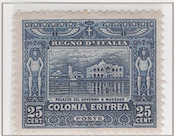
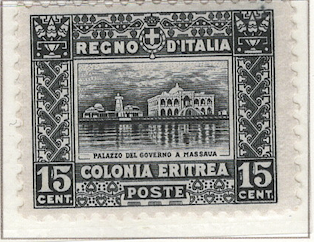
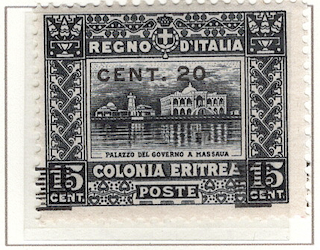
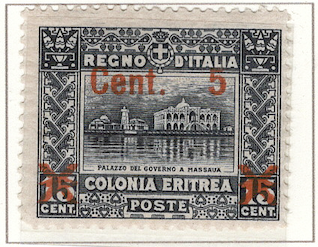
The blue and gray stamps in these sets show the government palace in Massawa, a port city in Eritrea. It was originally the capital of the Italian colony, but was moved in 1897 to Asmara where most of the Italians lived in the colony. It’s odd that they issued a stamp in 1910 for this government building since the capital was relocated thirteen years before. Perhaps it was still be used for administrative purposes.
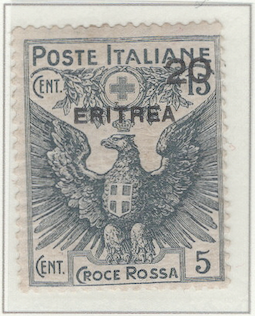
Red Cross
In June 1859, Jean-Henri Dunant of Switzerland, went to Soferino, Italy to see the French emperor, Napoleon III, who he was told was there at the time. He wanted to talk to him about doing business in Algeria. When he arrived, he discovered a battle had just ended. It was part of the second Italian war of independence, also known as the Franco-Austrian war, involving the two empires: France and the Austro-Hungarian empires. About 40,000 troops were killed or seriously injured. There was little or no medical services available for the wounded. Dunant was upset by what he saw and dropped his business plans and helped to organize medical assistance for the injured. Aftewards, he wrote a book called, A Memory of Soferino. That led eventually to the Geneva Convention of 1864 regarding the treatment of the injured in battle, which then led to the formation of the Red Cross. The first Nobel Peace Prize was awarded to Dunant for his work in this area.
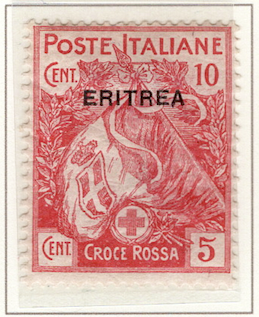
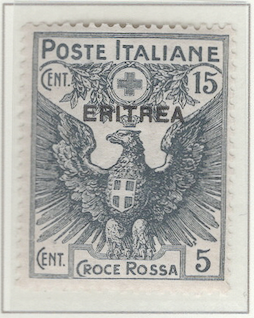
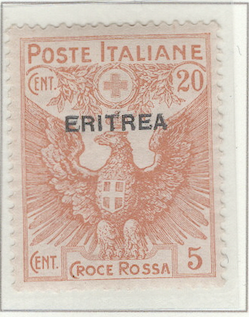
The top set of stamps on this album page are commemorating the Red Cross, which had been established about thirty years before. They were also made available back in the kingdom, on the Italian peninsula.
Note
This page is full, but not finished. The two on the second row are used. I haven’t been able to find unused ones for sale any where. The used ones I have are it good condition and their cancelation isn’t too bad. So I don’t mind so much; replacing them isn’t a priority.
Contains 13 spots: own 13 – 13 unused, 0 used.
Page is finished.
Album or Web Page Last changed Feb 4, 2025
Stamp Details
The table below lists information about the stamps shown on this page of Lighthouse’s stamp album. For more details about a particular stamp, click on its description. That will take you to the related web page of Colnect.
spot |
own |
catalog |
subject |
description |
comment |
Red Cross
✓ |
41 |
10+5c (apr 1916) |
|||
✓ |
42 |
15+5c (nov 1916) |
|||
✓ |
44 |
20+5c (jun 1916) |
|||
✓ |
43 |
20+5c (mar 1916) |
Eritrea Pictorials I
✓ |
34 |
5c (aug 1914) |
|||
✓ |
35 |
10c (sep 1914) |
|||
✓ |
36 |
15c (oct 1910) |
|||
✓ |
37 |
25c (mar 1910) |
|||
✓ |
129 |
5c (oct 1928) |
|||
✓ |
130 |
10c (dec 1928) |
|||
✓ |
131 |
15c (apr 1929) |
Eritrea Pictorials I - Surcharged
✓ |
45 |
5c (dec 1916) |
|||
✓ |
46 |
20c (jun 1916) |
Footnotes
Spot refers to the postion of the stamp on the album page (e.g., 3.2 indicates row 3, position 2).
Amt. is an abbreviation for the face amount of the stamp.
Own indicates the stamp status: ✓ for unused; ✗ for used or canceled; ⭑ signifies I ordered one; ; ✨ indicates it was bought recently; ✠ means an auction bid is pending; and ◎ is used, and it costs too much for unused.
To search by catalog number, go to the search box and enter it in the catalog number box. However, it’s a bit broken; I need to fix it.












