G Flags
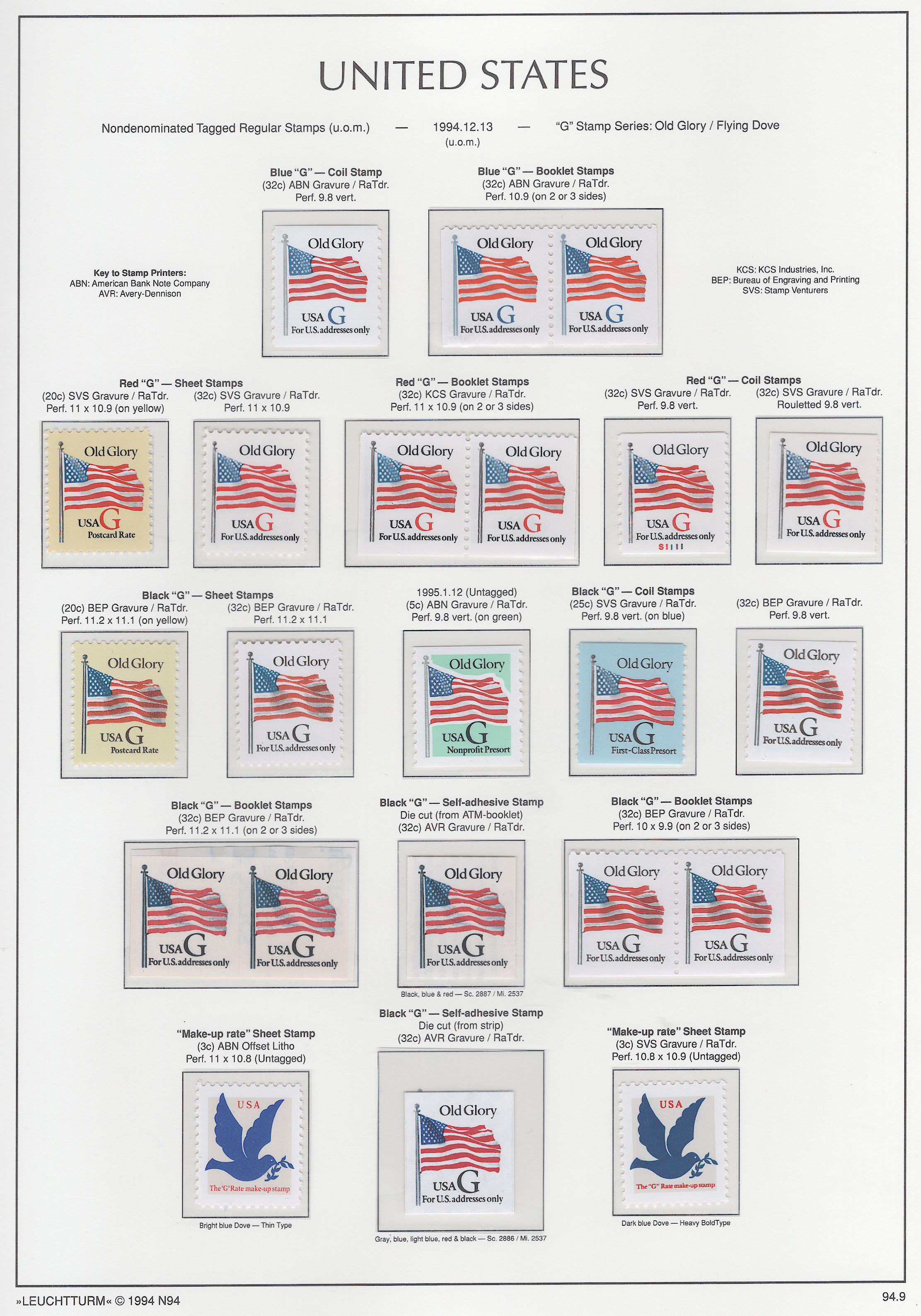
In 1978, the US Postal Service started issuing rate change stamps, which were also known as “contingency” stamps. The first was the A-rate stamp, which was fifteen cents. The idea was to always have stamps on hand for any rate change, gap in prices, or combination of the two. The B-rate stamps came out in early 1981 for eighteen cents, and the C-rate for twenty cents was issued at the end of that year. A few years went by before the D-rate came along in 1985. With the E-rate in 1988, collectors saw a shift from an eagle with a color to an image that matches the letter, which was an Earth. The F make-up-rate was only four cents and shows a tulip. The G-rate was issued in 1995 and the H-rate followed in 1999. Collectors thought the series would continue through the rest of the alphabet, but the H-rate was the last. Many joked that the Postal Service didn’t want to issue an I-rate stamp – the real reason it ended was never clear.
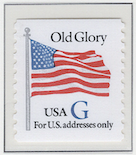
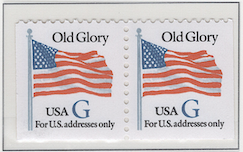
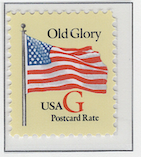
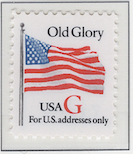
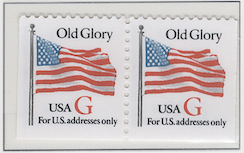
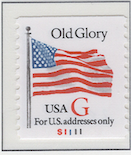
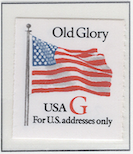
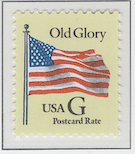
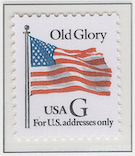
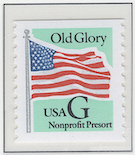
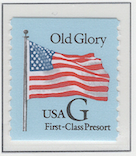
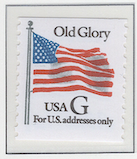
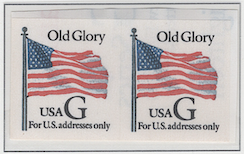
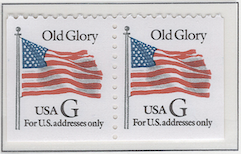
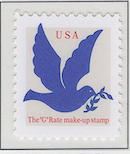
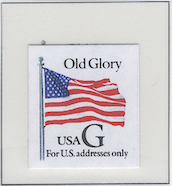
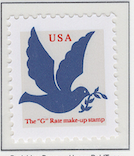
The G-rate stamps were issued to help with the transition to a new postal rate. There are eighteen different versions, which means they came from more printers and in more formats than any previous rate change stamp. They came in five different rates from five different printers, and include six sheet stamps, six coils, four booklets, and two self-adhesives. All but two show the US flag with “Old Glory” in text above it. The other two are blue doves.
The “G” on each first-class rate stamp is a different color depending on the printer. For instance, a red “G” means it was printed by Stamp Venturers, a blue “G” means American Banknote Corporation, and a black “G” means the Bureau of Engraving and Printing (BEP). The one exception is Avery Dennison, which also used a black “G”, but since its stamps are the only self-adhesives, they are easy to tell apart from the BEP stamps.
Note
It’s amazing to me that I managed to find and buy all of these flag stamps. It was quite a challenge. Not only did I have to hunt for each one on stamp dealer sites, but I had to look carefully at the images of each on their sites to be sure they had the right stamps. Some dealers miscategorize stamps like these because the difference are so subtle.
Contains 18 spots: own 18 – 18 unused, 0 used.
Page is finished.
Album or Web Page Last changed Mar 7, 2025
Stamp Details
The table below lists information about the stamps shown on this page of Lighthouse’s stamp album. For more details about a particular stamp, click on its description. That will take you to the related web page of Colnect.
spot |
own |
catalog |
subject |
description |
comment |
Flag Series
✓ |
2890 |
G (dec 1994) |
|||
✓ |
2884 |
G (dec 1994) |
|||
✓ |
2880 |
Flag - G Stamp |
G (dec 1994) |
||
✓ |
2882 |
G (dec 1994) |
|||
✓ |
2885 |
G (dec 1994) |
|||
✓ |
2891 |
G (dec 1994) |
|||
✓ |
2892 |
G (dec 1994) |
|||
✓ |
2879 |
Flag - G Stamp |
G (dec 1994) |
||
✓ |
2881 |
G (dec 1994) |
|||
✓ |
2893 |
Flag - G Stamp |
G (jan 1995) |
||
✓ |
2888 |
Flag - G Stamp |
G (dec 1994) |
||
✓ |
2889 |
G (dec 1994) |
|||
✓ |
2887a |
G (dec 1994) |
|||
✓ |
2887 |
G (dec 1994) |
|||
✓ |
2883 |
G (dec 1994) |
|||
✓ |
2877 |
G (dec 1994) |
|||
✓ |
2886 |
G (dec 1994) |
|||
✓ |
2878 |
G (dec 1994) |

Footnotes
Spot refers to the postion of the stamp on the album page (e.g., 3.2 indicates row 3, position 2).
Amt. is an abbreviation for the face amount of the stamp.
Own indicates the stamp status: ✓ for unused; ✗ for used or canceled; ⭑ signifies I ordered one; ; ✨ indicates it was bought recently; ✠ means an auction bid is pending; and ◎ is used, and it costs too much for unused.
To search by catalog number, go to the search box and enter it in the catalog number box. However, it’s a bit broken; I need to fix it.

















