World War II
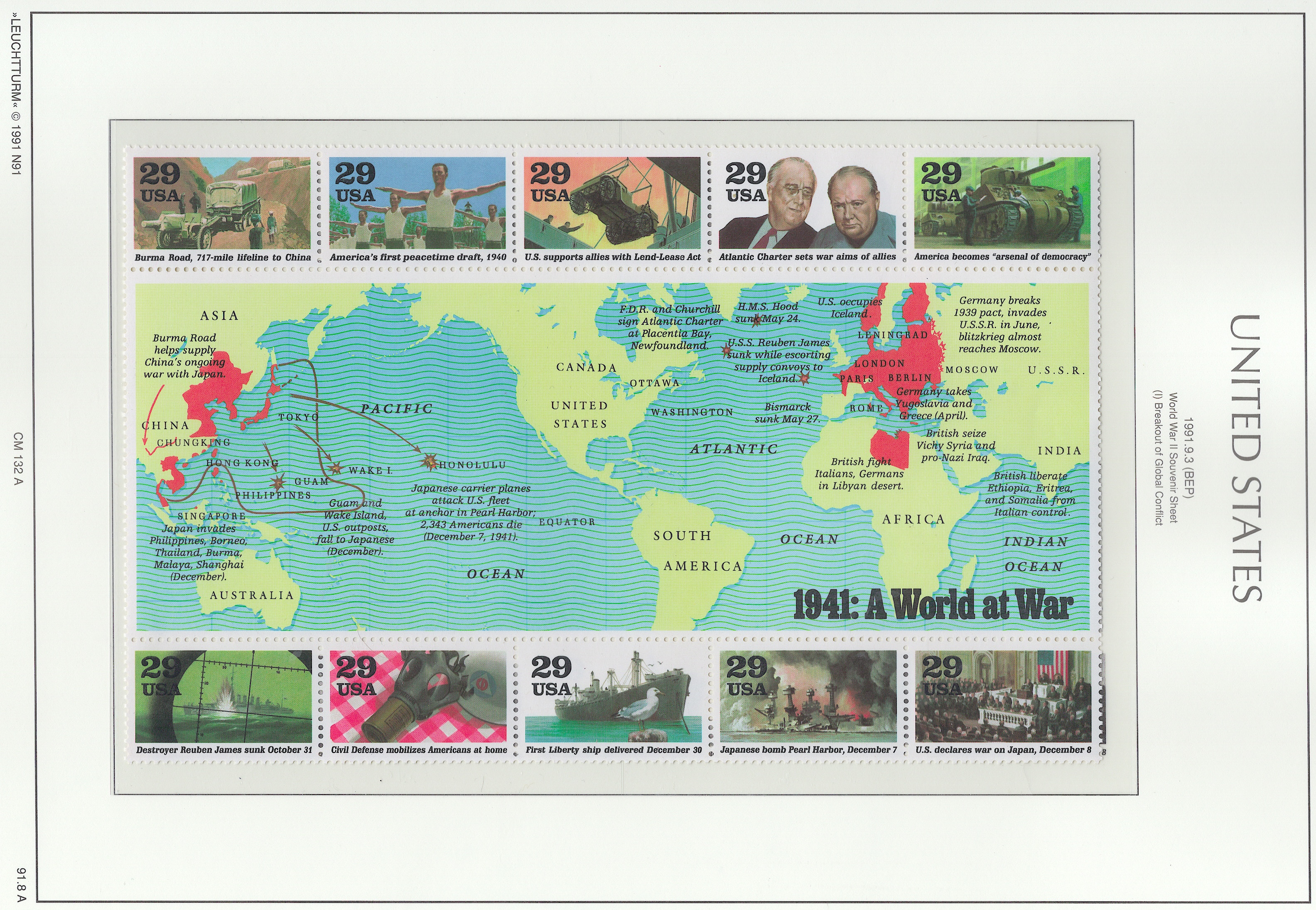
In March 1938, German troops entered Czechoslovakia, specifically in the Sudetenland – a German speaking part of the country. The justification was that the Sudetens were basically Germans who had been separated from Germany. With no military opposition, they were victorious. It wasn’t long before they were in control of the whole country. From there, Germany, along with their Axis partner Italy, justified attacking and conquering other neighboring countries with nominalal resistance such as Denmark, Belgium, and others.
In time Germany and Italy took all of eastern Europe and France, although they fought hard, and began attacking French and other colonies in northern Africa. They met more serious opposition when they began attacking England and Russia. While this was going on, the third major member of the Axis Powers, Japan was making headway conquering neighboring island nations in the Pacific and countries on the eastern coast of Asia.
The United States had mostly stayed out of the war for the first two or three years, although there was growing support for the U.S. entering the war. It was obvious that it was only a matter of time before the U.S. would have to be involved, if only for its own protection.
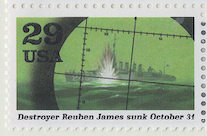
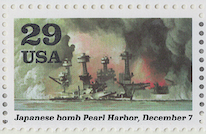
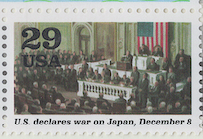
At the end of October 1941, the USS Reuben James, was sunk near Iceland by a torpedo launch from a German U-Boat (i.e., submarine). One hundred crewmen died in that attack. On the other side of the globe, in December 1941, Japan attacked Hawaii, bombing many naval vessels at anchor, killing over two thousand American sailors and soldiers. That same month, Japan took Guam and invaded the Philippines, both territories of the U.S., as well as other smaller islands the U.S. controled. As a result of all of this, the U.S. declared war on the Axis Powers and joined the war.
Note
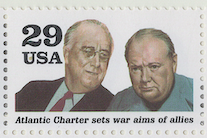
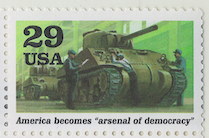
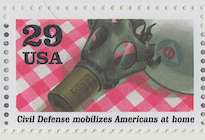
You can see a stamp regarding the USS Reuben James at the bottom left of this souvenir sheet. There’s one regarding the attack on Hawaii at the bottom, second from the right. If you look at the map, you can see in red how much territory the Axis Powers had taken. However, Italy had control of Libya before the war started. If they’re including existing colonies, they should color Ethiopia, Eritrea, and Somalia and islands near Greece, too. These maps are completely well annotated. Maybe they’re highlighting it because it says that the British were fighting with the Italians and Germans there.
Contains 10 spots: own 10 – 10 unused, 0 used.
Page is finished.
Album or Web Page Last changed Jul 23, 2025
Stamp Details
The table below lists information about the stamps shown on this page of Lighthouse’s stamp album. For more details about a particular stamp, click on its description. That will take you to the related web page of Colnect.
spot |
own |
catalog |
subject |
description |
comment |
World War II
✓ |
2559a |
29c (sep 1991) |
|||
✓ |
2559b |
29c (sep 1991) |
|||
✓ |
2559c |
29c (sep 1991) |
|||
✓ |
2559d |
29c (sep 1991) |
|||
✓ |
2559e |
29c (sep 1991) |
|||
✓ |
2559f |
29c (sep 1991) |
|||
✓ |
2559g |
29c (sep 1991) |
|||
✓ |
2559h |
29c (sep 1991) |
|||
✓ |
2559i |
29c (sep 1991) |
|||
✓ |
2559j |
29c (sep 1991) |
Footnotes
Spot refers to the postion of the stamp on the album page (e.g., 3.2 indicates row 3, position 2).
Amt. is an abbreviation for the face amount of the stamp.
Own indicates the stamp status: ✓ for unused; ✗ for used or canceled; ⭑ signifies I ordered one; ; ✨ indicates it was bought recently; ✠ means an auction bid is pending; and ◎ is used, and it costs too much for unused.
To search by catalog number, go to the search box and enter it in the catalog number box. However, it’s a bit broken; I need to fix it.









