Old Transports
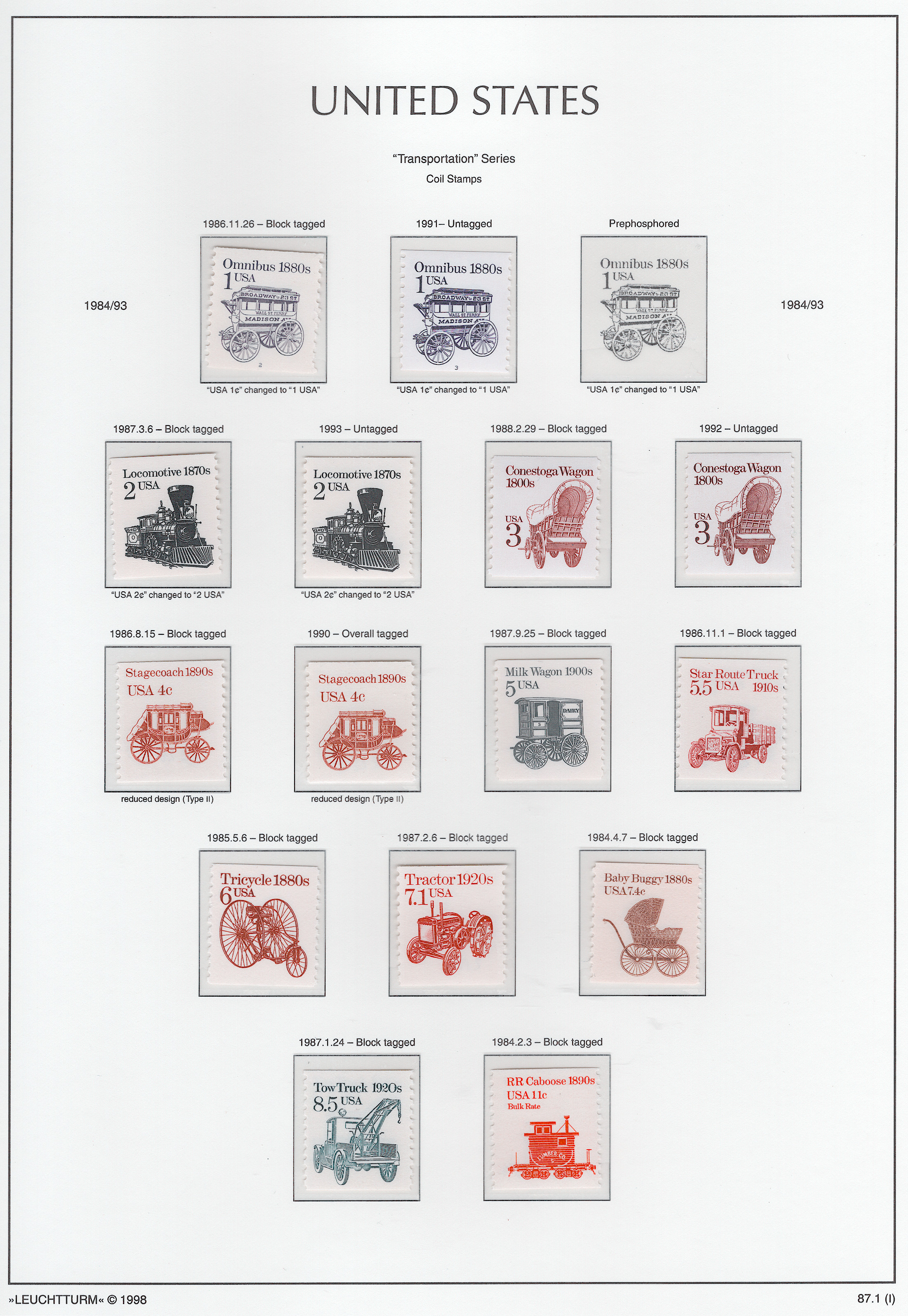
Starting in the middle of 1981, the Post Office issued several definitive stamps as part of a Transportation series – which was composed of over fifty stamps issued over fifteen years. The denominations were set for specific uses, rather than having the sender use several one-cent and other smaller denomination stamps to add up to the right postage. Some services allowed for fractional amounts, which would have required overpaying without precise stamp amounts.
This is the first series to have so many franctional denominations. Another unique aspect of this series is that these were the first coil stamps that didn’t have a sheet stamp with the same design. Also, many were tagged and some were precanceled for expedited processing, allowing for reduced rates.
For the descriptions of stamps on these album pages, I’ve chosen one or two for each page. It’s too much to write about all of them.
Star Route Truck
In the early 1800s, the U.S. was expanding into many new areas of the continent, in particular into the western territories. It wasn’t economically viable for the U.S. Post Office to transport mail exclusively to those areas where there were so few people and so few letters and packages to be delivered. However, there were companies that were transporting people and cargo into these areas by stage coaches and horse-drawn wagons. It wouldn’t cost them much more to transport mail to towns and smaller settlements along their routes, with someone local (i.e., a general store owner) who would was designated by the Post Office to hand-over mail to the recipents when they came for it.
In the Post Office’s registry of all routes, those for which sub-contractors were used were noted with three asterisks – or stars. These became known as star routes.
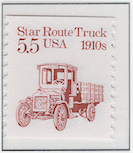
By the second decade of the Twentieth Century, mail on these star routes were no longer being transported by horses or horse-drawn vehicles. Instead, they were handled by special trucks for transporting mail, known as star trucks. You can see an ink drawing of one of these on the stamp at the end of the third row on this album page.
Note
With so many stamps in this series, some used by relatively few people or organizations, and plenty with minor deviations (e.g., tagged and untagged), it’s not easy to find these stamps. When I do find one for sale on-line, I’m concerned that the seller may have misclassified the stamp with one with the same design, but a slight difference. I look at their rating or some other factor to make me feel confident in what I will receive is what I ordered.
Contains 16 spots: own 15 – 15 unused, 0 used.
Album or Web Page Last changed Jul 21, 2025
Stamp Details
The table below lists information about the stamps shown on this page of Lighthouse’s stamp album. For more details about a particular stamp, click on its description. That will take you to the related web page of Colnect.
spot |
own |
catalog |
subject |
description |
comment |
Transportation
✓ |
2225 |
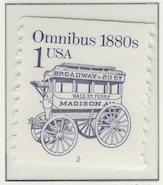
Omnibus 1880s |
1c (nov 1986) |
||
✓ |
2225b |
Omnibus 1880s |
1c (nov 1986) |
||
2225c |
Omnibus |
1c (nov 1993) |
|||
✓ |
2226 |
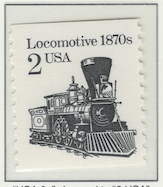
Locomotive 1870s |
2c (mar 1987) |
||
✓ |
2226a |
Locomotive 1870s |
2c (mar 1987) |
||
✓ |
2252 |
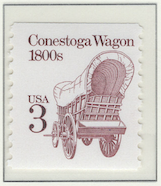
Conestoga Wagon 1800s |
3c (feb 1988) |
||
✓ |
2252a |
Conestoga Wagon 1800s |
3c (feb 1988) |
||
✓ |
2228 |
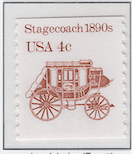
Stagecoach 1890s |
4c (jul 1986) |
||
✓ |
2228a |
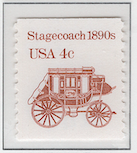
Stagecoach |
4c (jul 1993) |
||
✓ |
2253 |
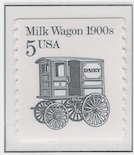
Milk Wagon 1900s |
5c (sep 1987) |
||
✓ |
2125 |
Star Route Truck 1910s |
5.50c (nov 1986) |
||
✓ |
2126 |
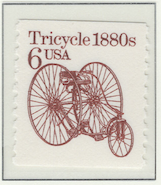
Tricycle 1880s |
6c (may 1985) |
||
✓ |
2127 |
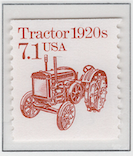
Tractor 1920s |
7.10c (feb 1987) |
||
✓ |
1902 |
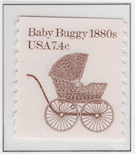
Baby Buggy |
7.40c (apr 1984) |
||
✓ |
2129 |
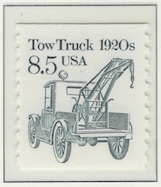
Tow Truck 1920s |
8.50c (jan 1987) |
||
✓ |
1905 |
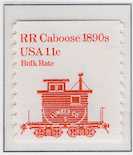
Railroad Caboose 1890s |
11c (feb 1984) |
Footnotes
Spot refers to the postion of the stamp on the album page (e.g., 3.2 indicates row 3, position 2).
Amt. is an abbreviation for the face amount of the stamp.
Own indicates the stamp status: ✓ for unused; ✗ for used or canceled; ⭑ signifies I ordered one; ; ✨ indicates it was bought recently; ✠ means an auction bid is pending; and ◎ is used, and it costs too much for unused.
To search by catalog number, go to the search box and enter it in the catalog number box. However, it’s a bit broken; I need to fix it.















