Frank Lloyd Wright
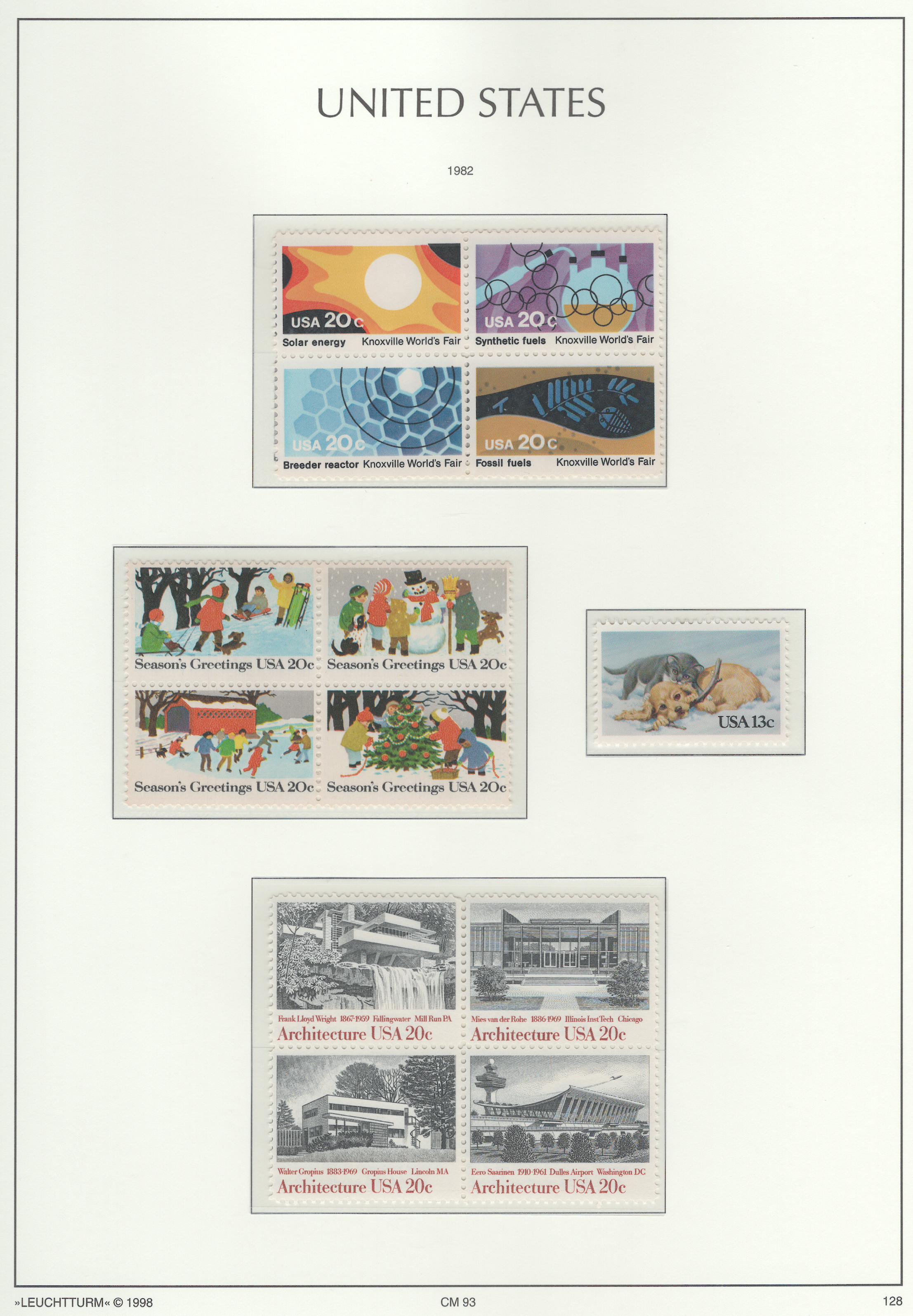
Wright was an American architect, perhaps the best of his time. He was brilliant. Besides designing homes, he designed many public buildings: museums, churches, office buildings, etc. He also designed the interiors and furniture of some places.
An excellent example of his work is the Meyer May House in Grand Rapids, Michigan. It was designed and built in 1908 and 1909. In 1985, the Steelcase company bought and restored it. See the Meyer May House web site for plenty of photographs of the interior to include furnishings.
The Meyer May House is in the Prairie Style, a style Wright primarily created. Common to this style are structures that are wider, with horizontal lines, than high. They also have flat roofs and overhanding eaves. They’re made with natural and native materials as much as possible, and the landscape is meant to be part of the overall design
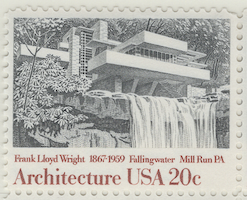
In the first stamp of the set of four depicting famous architecture of the U.S., it shows one of Wright’s houses, called Falling Water in Pennsylvania. Wright designed it in the mid-1930s. It’s huge and was the most elaborate home designed by him. There’s another U.S. stamp in honor Wright (see Prominent Americans). It shows a drawing of him with the Guggenheim Museum in New York that he designed in the late 1950s.
Wright has been a major influence on thousands of architects and architecture in the U.S. I love his style of homes and public structures. I wish more houses and buildings were made in his style. I’m assuming they’re not because they cost more to make, or it’s too intimidating for architects and construction companies to build. My mother’s house outside of New Orleans had some Wright influences. I like that house and own it now with my siblings. I sometimes wish I could buy it outright and live in it again.
Note
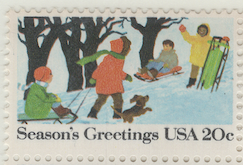
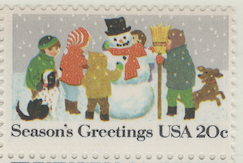
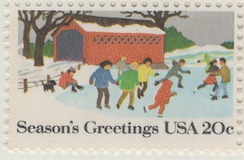
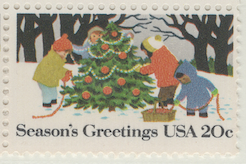
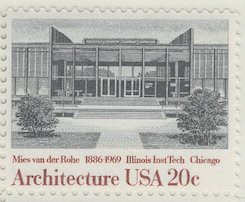
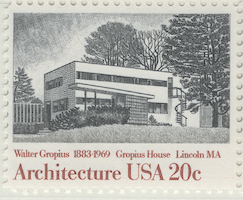
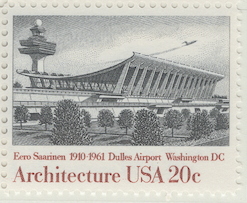
The stamps here of famous architecture are very nice and true to the subject matter. I should think the architects honored in these stamps would have approved. I don’t care too much, though, for the design of the other stamps on this page. The Christmas stamps are meant to be playful and child-like, but I still prefer something more realistic looking – someone might say, more boring.
Contains 13 spots: own 13 – 13 unused, 0 used.
Page is finished.
Album or Web Page Last changed May 18, 2025
Stamp Details
The table below lists information about the stamps shown on this page of Lighthouse’s stamp album. For more details about a particular stamp, click on its description. That will take you to the related web page of Colnect.
spot |
own |
catalog |
subject |
description |
comment |
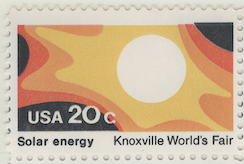
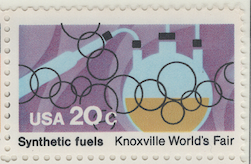
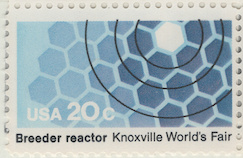
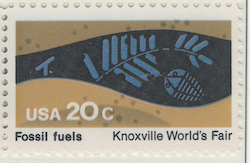
Energy & Energy Conservation
✓ |
2006 |
20c (apr 1982) |
|||
✓ |
2007 |
20c (apr 1982) |
|||
✓ |
2008 |
20c (apr 1982) |
|||
✓ |
2009 |
20c (apr 1982) |
Christmas & Holidays
✓ |
2027 |
20c (oct 1982) |
|||
✓ |
2028 |
20c (oct 1982) |
|||
✓ |
2029 |
20c (oct 1982) |
|||
✓ |
2030 |
20c (oct 1982) |
Other
✓ |
2025 |
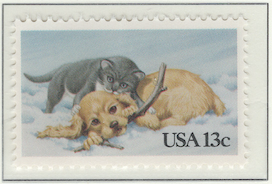
13c (nov 1982) |
Architects & Architecture
✓ |
2019 |
Fallingwater |
20c (sep 1982) |
||
✓ |
2020 |
Illinois Institute of Technology |
20c (sep 1982) |
||
✓ |
2021 |
Gropius House |
20c (sep 1982) |
||
✓ |
2022 |
Dulles Airport |
20c (sep 1982) |
Footnotes
Spot refers to the postion of the stamp on the album page (e.g., 3.2 indicates row 3, position 2).
Amt. is an abbreviation for the face amount of the stamp.
Own indicates the stamp status: ✓ for unused; ✗ for used or canceled; ⭑ signifies I ordered one; ; ✨ indicates it was bought recently; ✠ means an auction bid is pending; and ◎ is used, and it costs too much for unused.
To search by catalog number, go to the search box and enter it in the catalog number box. However, it’s a bit broken; I need to fix it.












