Virgil & St. Anthony
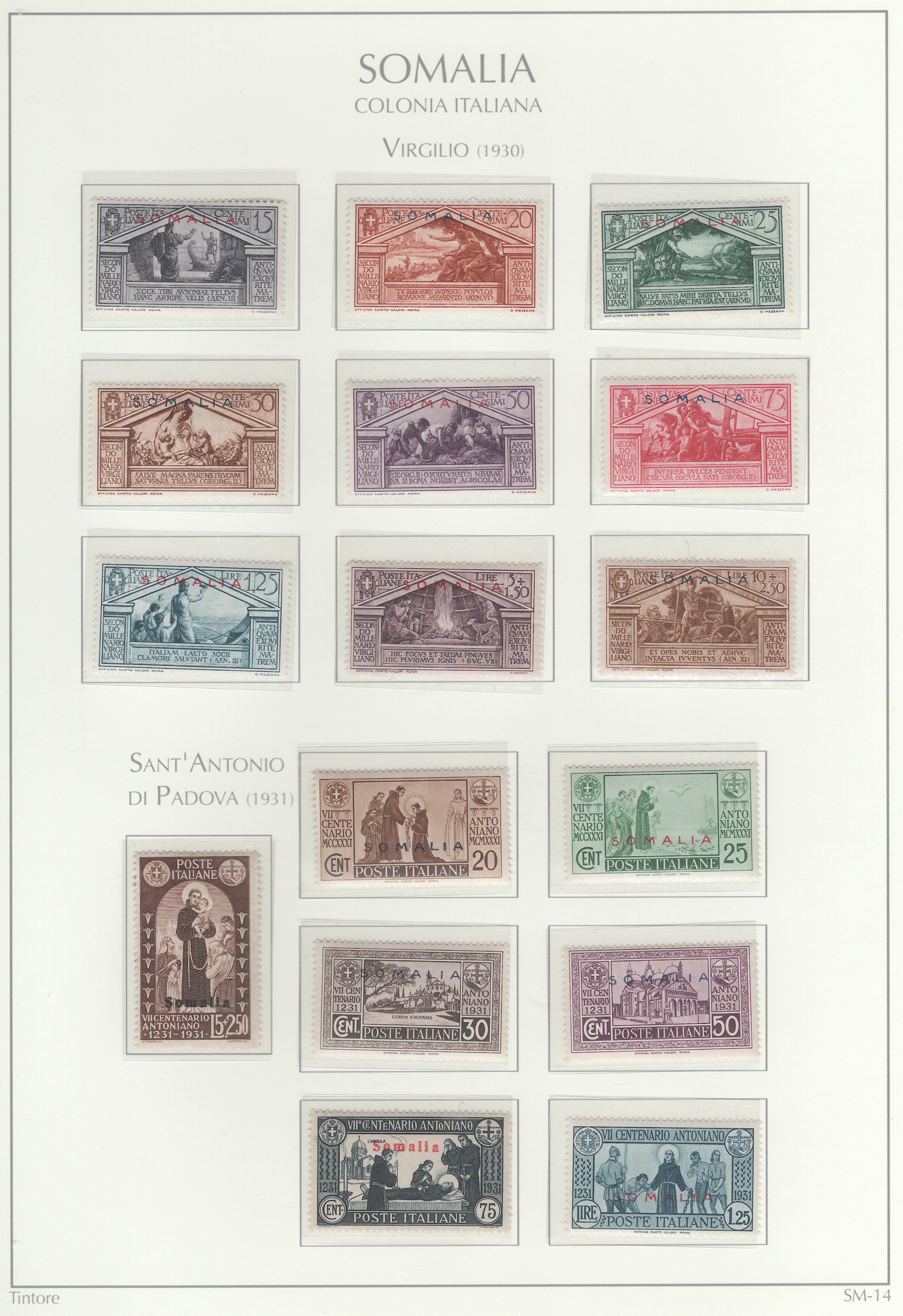
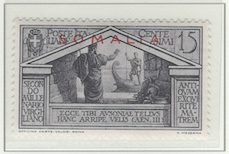
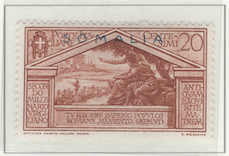
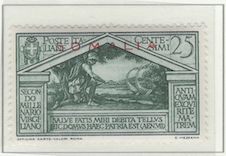
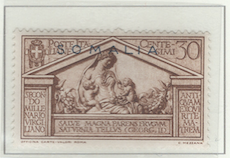
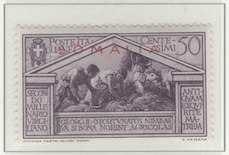
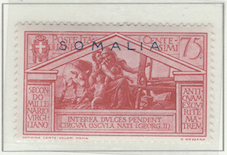
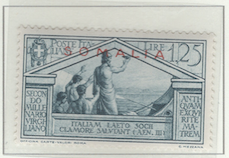
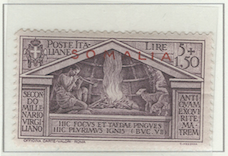
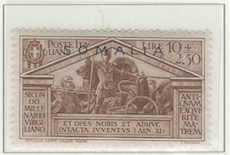
These stamps page showing ancient scenes are related in some way to Publius Vergilius Maro, better known as Virgil. He was from Ancient Rome, from what is now Mantua, Italy. He lived from 70 to 19 b.c.e. and was a famous writer, a poet of his time – and still famous, although I’ve never read anything he wrote. One of his best works, written in Latin, was the Aeneid. It’s an epic poem about the legendary Aeneas, a Trojan who left Troy when it fell and went to Rome. He was the ancestor of Romulus and Remus, the founders of Rome.
There are a few standard postage stamps, but there are also a couple of semi-postal stamps and some air mail stamps, two of which are semi-post air mail stamps. All of these stamps depict scenes from the Aenid. The semi-postal and semi-postal air mail stamps cost more than the normal price to raise funds for the restoration of Virgil monuments around the country – which was a big thing the Fascists like to do, restore and herald key places and figures of the old empire. This also seemed to have been a common thing for the Italian post office, to raise money for something or other.
St. Anthony
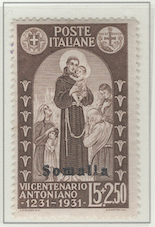
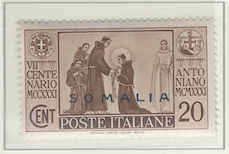
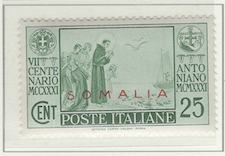
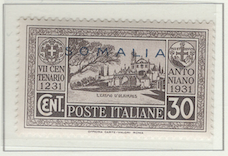
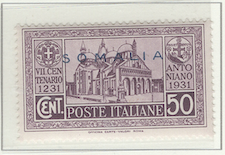
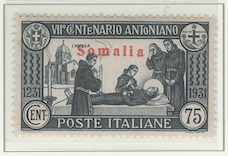
St. Anthony of Padua, also known as St. Anthony of Lisbon since that’s where he was born, was a Franciscan priest. In 1226, he became the Provincial Superior of Northern Italy, apppointed by Pope Gregory IX. He decided to reside in Padua, which is somewhat the center of Northern Italy, if you consider the weight of Venice compared to that of Milan and Torino combined.
He was a well liked saint amongst Italians, in his day and still today. He was liked by St. Francis of Assisi, founder of his order. St. Anthony was known for being a bible scholar and writing inspiring sermons, some of which have been published. St. Francis had him teach new members of their order. He occasionally visited Rome and preach to the papal court. He died at age 35 in the year 1231. He was so admired that the pope listed him as a saint a year afterwards in 1232, the same year they started building a huge basillica in his honor in Padua.
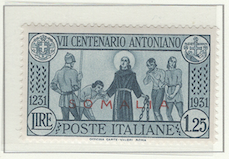
The first set of stamps on this album page, the top eight depict the life of St. Anthony. They are in commemoration of the 700th anniversary of his death. They depict scenes from his life, such as when he entered the Franciscan Order.
Note
This page is finished and pretty full. There’s no room for any more. However, they’re a little too spaced apart. I could move them closer together within each set and move the two sets further away from each other.
Contains 16 spots: own 16 – 16 unused, 0 used.
Page is finished.
Album or Web Page Last changed Feb 5, 2025
Stamp Details
The table below lists information about the stamps shown on this page of Lighthouse’s stamp album. For more details about a particular stamp, click on its description. That will take you to the related web page of Colnect.
spot |
own |
catalog |
subject |
description |
comment |
Virgil
✓ |
149 |
15c (dec 1930) |
|||
✓ |
150 |
20c (dec 1930) |
|||
✓ |
151 |
25c (dec 1930) |
|||
✓ |
152 |
30c (dec 1930) |
|||
✓ |
153 |
50c (dec 1930) |
|||
✓ |
154 |
75c (dec 1930) |
|||
✓ |
155 |
1.25₤ (dec 1930) |
|||
✓ |
156 |
5+1.50₤ (dec 1930) |
|||
✓ |
157 |
10+2.50₤ (dec 1930) |
St. Anthony of Padua
✓ |
164 |
5+2.50₤ (may 1931) |
|||
✓ |
158 |
20c (may 1931) |
|||
✓ |
159 |
25c (may 1931) |
|||
✓ |
160 |
30c (may 1931) |
|||
✓ |
161 |
50c (may 1931) |
|||
✓ |
162 |
75c (may 1931) |
|||
✓ |
163 |
1.25₤ (may 1931) |
Footnotes
Spot refers to the postion of the stamp on the album page (e.g., 3.2 indicates row 3, position 2).
Amt. is an abbreviation for the face amount of the stamp.
Own indicates the stamp status: ✓ for unused; ✗ for used or canceled; ⭑ signifies I ordered one; ; ✨ indicates it was bought recently; ✠ means an auction bid is pending; and ◎ is used, and it costs too much for unused.
To search by catalog number, go to the search box and enter it in the catalog number box. However, it’s a bit broken; I need to fix it.















