Scent Hounds
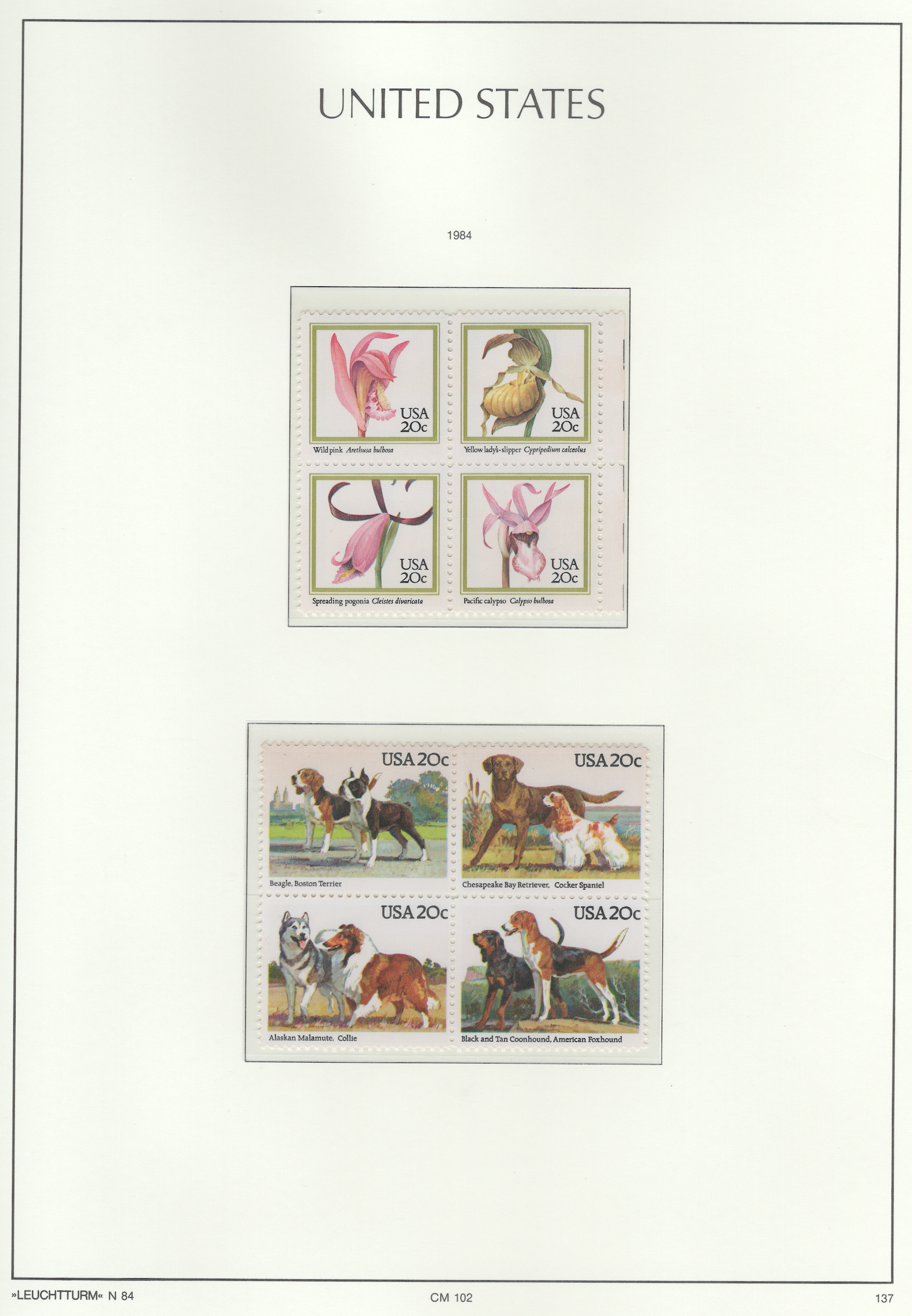
Dogs are classified into a few catagories and sub-categories. One main category is hunting dog. As part of that category, the scent hound is a dog that assists its owners in hunting by using primarily its sense of smell to track prey.
The main characteristic of scent hounds is a large nasal cavities that allows them a greater and finer sense of smell. At the same time, scent hounds typically have large drooping ears, and loose, slobery lips. It’s believed that both their ears and lips help them to take in more particles that work with scenting prey.
Another characteristic of scent hounds is that when they’re on a scent, they get excited and let out a deep-throated howl. This informs the hunter that they’re on the trail and that they need to come quickly to take the prey – hounds don’t attack prey, they just corner them in some way for their master to shoot.
American Foxhound
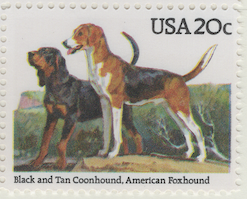
In 1650, Robert Brooke, Sr. was governor of colonial Maryland. He brought from England several hunting dogs, foxhounds known as Brooke Hounds. Decades later, George Washington crossed Brooke Hounds with Grand Bleu de Gascogne hounds that the Marquis de Lafayette gave him. The result was the American Foxhound. A picture of one can be seen on one of the dog stamps here, the last stamp on this album page.
Black & Tan Coonhound
The Coonhound is a scent hound; it’s part bloodhound. A bloudhound has a much stronger sense of smell and can distinguish a particular human scent from far away and days after a person has passed through a forest. The police use them for tracking escaped prisoners. The Black & Tan Coonhound is typically used, however, for hunting racoons and other small animals. Being large, though, it’s sometimes used to hunt deer, cougars, and bears.
Beagle
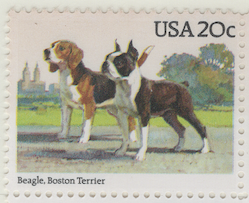
The Beagle is a small scent hound used typically for hunting rabbits, but can be used for hunting game birds, deer, bobcats, coyote, and wild boar. It’s also often used by the police to sniff bags of travelers to find drugs and other banned items.
When my sons were boys, we bought a beagle that was a few years old. We named her Tegan. She had been trained by the previous owner for hunting rabbits and squirels. If she spotted a cat and got loose, she would chase it, herding it from left to right and back until it went up a tree the dog had chosen – usually to the top of the tree. Once the cat was treed, Tegan would howl to let me know she had cornered the cat for me to shoot – which I wouldn’t. She would stand at the base of the tree watching the cat, howling and wagging her tail proudly and happily.
Note
These stamps, in particular the ones of dogs, are very much multiple-color stamps. They’re well designed, but the use of colors is something that could not have been done before the 1960s – not this well.
Contains 8 spots: own 8 – 8 unused, 0 used.
Page is finished.
Album or Web Page Last changed May 17, 2025
Stamp Details
The table below lists information about the stamps shown on this page of Lighthouse’s stamp album. For more details about a particular stamp, click on its description. That will take you to the related web page of Colnect.
spot |
own |
catalog |
subject |
description |
comment |
Flowers & Blossoms
✓ |
2076 |
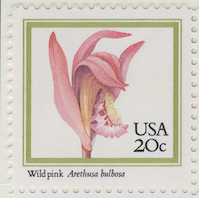
Wild Pink |
20c (mar 1984) |
||
✓ |
2077 |
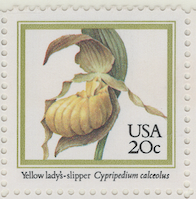
Yellow Lady’s-Slipper Orchid |
20c (mar 1984) |
||
✓ |
2078 |
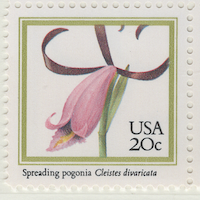
Spreading Pogonia Orchid |
20c (mar 1984) |
||
✓ |
2079 |
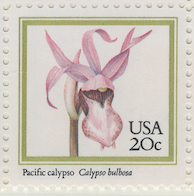
Pacific Calypso |
20c (mar 1984) |
Dogs
✓ |
2098 |
20c (sep 1984) |
|||
✓ |
2099 |
20c (sep 1984) |
|||
✓ |
2100 |
20c (sep 1984) |
|||
✓ |
2101 |
20c (sep 1984) |
Footnotes
Spot refers to the postion of the stamp on the album page (e.g., 3.2 indicates row 3, position 2).
Amt. is an abbreviation for the face amount of the stamp.
Own indicates the stamp status: ✓ for unused; ✗ for used or canceled; ⭑ signifies I ordered one; ; ✨ indicates it was bought recently; ✠ means an auction bid is pending; and ◎ is used, and it costs too much for unused.
To search by catalog number, go to the search box and enter it in the catalog number box. However, it’s a bit broken; I need to fix it.







