Black Shirts & Manzoni
The words fascism and fascist bring to mind negative connotations, as well as Benito Mussolini and his followers – which included his most famous admirer, Adolph Hitler.
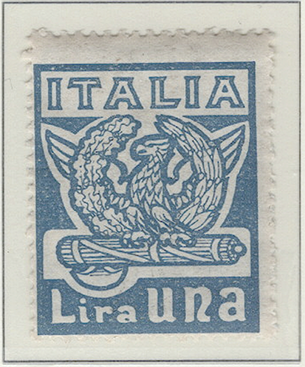
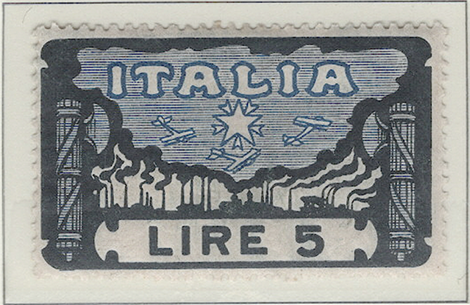
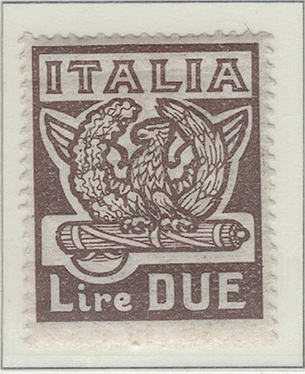
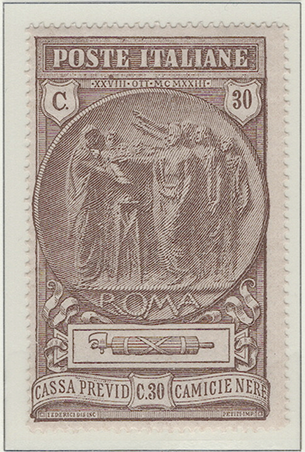
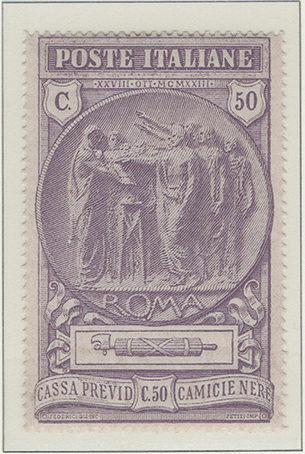
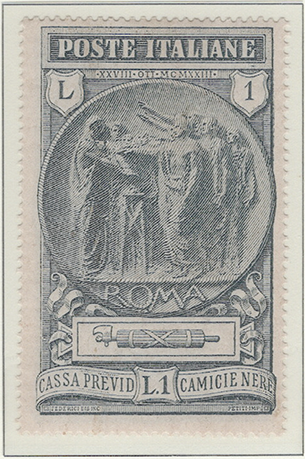
The origin of the term is the symbol of fascist movement: fasces. The word fasces comes from the Latin word meaning bundle. Back in the Roman times, they would take a bundle of wooden rods, insert in the middle a metal rod with an axe head, usually a double headed axe. They would tie these rods and axe together tightly with rope or leather straps. During battle, a large man would carry it by the staps, swinging it back in forth with great force. Such a warrior with a fasces weapon was devastating and a sign of power within a squad of Roman soldiers. Hence, it became the symbol of strength. This is why many governments use it and why Mussolini’s political party, known as the Black Shirts used it as their logo.
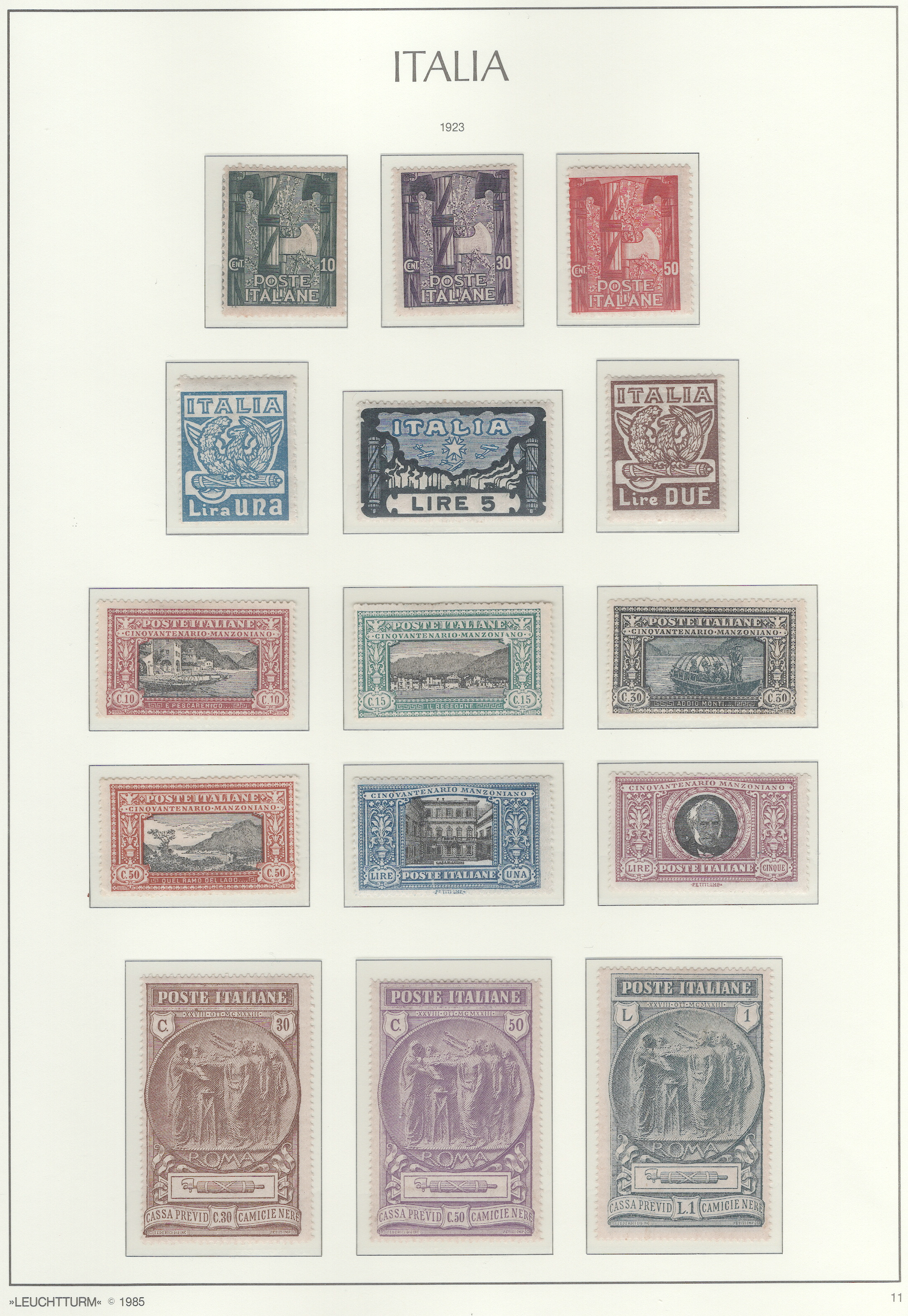
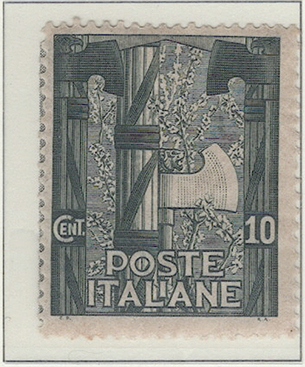
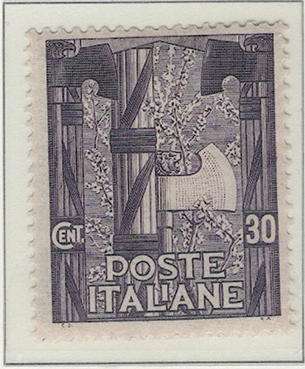
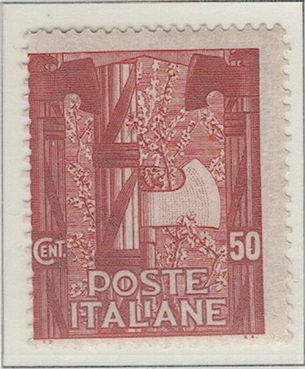
You can see examples of fasces on the stamps in the first two rows of this album, very prominantly on the first three stamps. Notice the date of issuance is 1923, just two years after Mussolini founded the National Fascist Party and one year after his party took control of the Italian Parliament and he became prime minister. From this point forward in this stamp album, you’ll see plenty of stamps with the fasces symbol. They appear for the rest of the album because this album ends at the end of World War II when the Fascist party was ended and outlawed by the replacement government.
The Betrothed
One of the most famous Italian novels is The Betrothed (i.e., I Promessi Sposi) by Alessandro Manzoni. It’s a classic for Italian: the equivalent of Mark Twain for Americans. Unfortunately, because they had to read it when they were children in school and because of its length – the Penguin Classics paperback is 720 pages – Italians often tell me they hated it. Perhaps they should take it off the required reading list and trust in the writing itself will attrack adult readers. I read it in English when I was about 30 years old. I enjoyed it very much and thought it one of best novels ever.
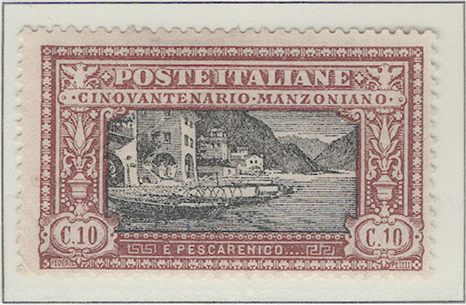
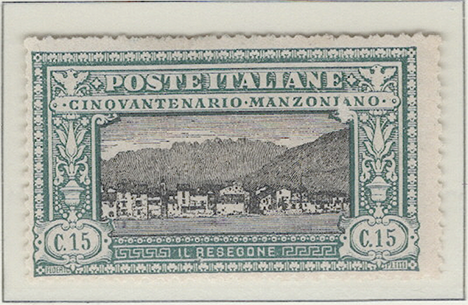
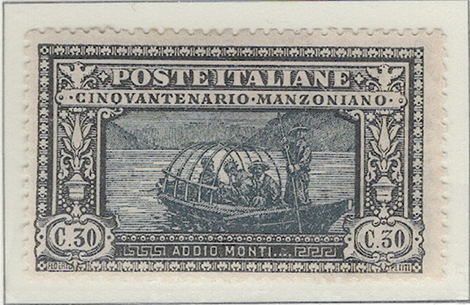
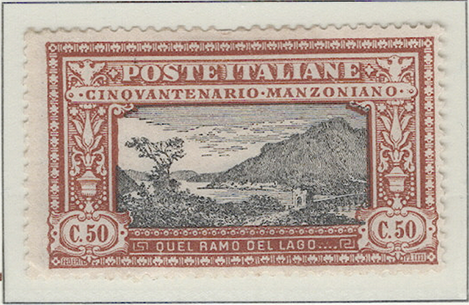
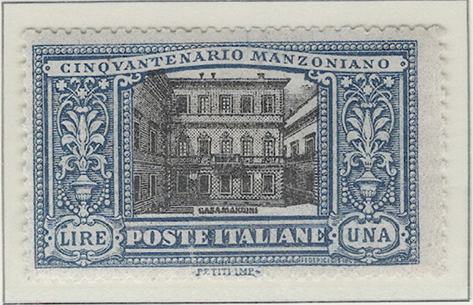
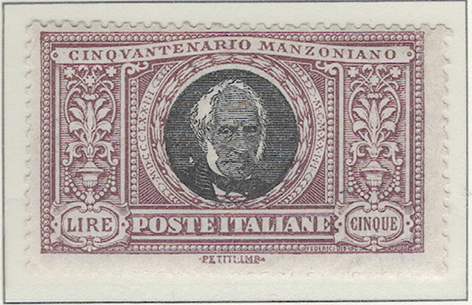
The stamps on the third and fourth row are related to Manzoni and his novel, The Betrothed. The first four show scenes from the novel, including the heroine of the story, Lucia Mondella. The last two show Manzoni’s home and an image of him. Incidentally, there’s a great statue of Manzoni in Milan near where I live.
Black Shirts
The last row of stamps are related to the Blackshirts (Camicie Nero, as it’s written on the stamps). It shows men doing the Nazi salute and taking the Roman oath. They were issued on the anniversary of the March on Rome by the Fascists, which led to Mussolini and them taking control of Parliament.
The cost of these stamps, sold only in regional capitals, included a surcharge which went to a pension fund they administered. Part of the fascist and nationalist (i.e., Nazi) movement in the early days was to take care of the elderly and retired. It was a way to get the public to like them, by pretending they were good people.
Note
This page took several months to fill. I had two of the first set from many years ago. I found the one I was missing fairly easily; it didn’t cost much. I bought the bottom set together back in the Autumn of 2022. It was a little costly, but not absurdly high. I acquired the second set, individually. The third set was a problem. I bought a couple of them at a time, rather than the whole set at once. The last one of Alessandro Manzoni was expensive, so it’s often sold separately – I guess some people get unused copies of all except it, and settle on a used one of the last one.
The Manzoni stamp is difficult to find at an affordable price. Many that I saw online had prices from three-hundred to a thousand euros. I did see for a short time someone selling the whole set for about ninety euros. Even though I needed only the one, I should have bought it, kept the one I needed and discarded the others. However, that plan, to buy stamps I already have to get at one in the set, bothered me. It caused me to wait too long in the hopes of finding it by itself at a low price; someone else bought it.
Fortunately, a few weeks ago I found one from a dealer I’ve never used, at a price I could stomach. It was leftover from a stamp auction. As soon as I had the cash, I bought and now have it. Achieving the hunt and overcoming the obstacles are part of the satisfaction in completing a set and an album page – and eventually an album.
Contains 15 spots: own 15 – 15 unused, 0 used.
Page is finished.
Album or Web Page Last changed Apr 3, 2023
Stamp Details
The table below lists information about the stamps shown on this page of Lighthouse’s stamp album. For more details about a particular stamp, click on its description. That will take you to the related web page of Colnect.
spot |
own |
catalog |
subject |
description |
comment |
March on Rome: 10 Years
✓ |
141 |
10c (oct 1923) |
|||
✓ |
142 |
30c (oct 1923) |
|||
✓ |
143 |
50c (oct 1923) |
|||
✓ |
144 |
1₤ (oct 1923) |
|||
✓ |
146 |
5₤ (oct 1923) |
|||
✓ |
145 |
2₤ (oct 1923) |
Alessandro Manzoni
✓ |
151 |
10c (dec 1923) |
|||
✓ |
152 |
15c (dec 1923) |
|||
✓ |
153 |
30c (dec 1923) |
|||
✓ |
154 |
50c (dec 1923) |
|||
✓ |
155 |
1₤ (dec 1923) |
|||
✓ |
156 |
5₤ (dec 1923) |
Pensions & Blackshirts
✓ |
147 |
30+30c (oct 1923) |
|||
✓ |
148 |
50+50c (oct 1923) |
|||
✓ |
149 |
1+1₤ (oct 1923) |
Footnotes
Spot refers to the postion of the stamp on the album page (e.g., 3.2 indicates row 3, position 2).
Amt. is an abbreviation for the face amount of the stamp.
Own indicates the stamp status: ✓ for unused; ✗ for used or canceled; ⭑ signifies I ordered one; ; ✨ indicates it was bought recently; ✠ means an auction bid is pending; and ◎ is used, and it costs too much for unused.
To search by catalog number, go to the search box and enter it in the catalog number box. However, it’s a bit broken; I need to fix it.














