Iceboats & Cable Cars
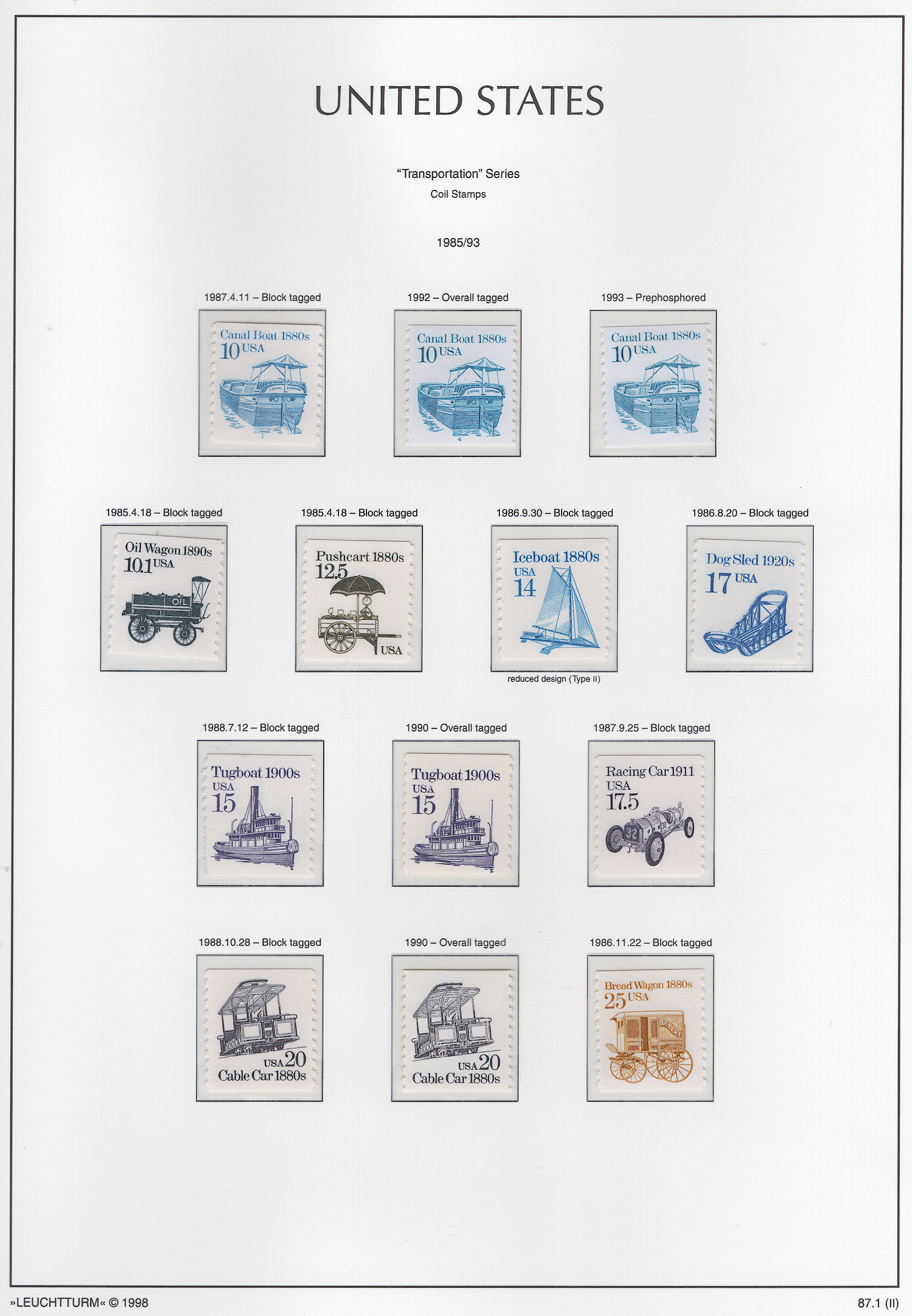
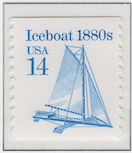
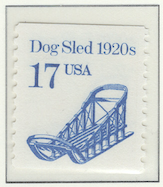
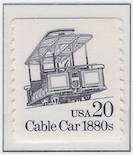
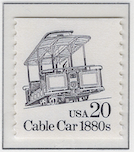
There are several stamps to describe here. I chose the iceboat, which you can see on the third stamp on the second row. Perhaps I should have also chosen the dog sled next to it. Instead, I chose the cable car on the stamps at the bottom of the page.
Iceboat
Iceboats are sail boats with runners attached to them that look like minature toboggans. Originally, they were used for transportation in Riga, Latvia. Now, they’re used for fun or racing across lakes or on rivers.
In the past, they would take an old wooden row boat – a sail boat couldln’t be used because of the keel – and add a single mast, and attach a mainsail and a jib. They would remove the rudder and add a rear blade for steering instead.
In recent decades, the sails were modified, the rear blade was extended further back, the hull replaced with just a basket or seat for the driver – no longer even using an old boat – and anything else to reduce drag. They can now reach speeds of over sixty miles per hour.
Cable Cars
Cable Cars use a weird method to move a car carrying passengers across town – they’re mostly know for being used in San Francisco. Under the streets is a channel in which a cable – actually four cables in an elongated loop – is pulled continuously. The car has a mechanism to grab the cable and be pulled along – it has no propulsion of its own. When the driver wants to stop the car, he releases the car’s grip and the car stops moving. It’s similar to funiculars, except they’re permaenently connected to the cable. To resume motion, the driver moves a lever to grab the cable. The cables are pulled by a large engine in a station near the end or beginning of the line.
The cars move at about nine and a half miles per hour. They’re so heavy, though, when the collide with another vehicle they can do much damage. Plus, they can’t reverse. The wreckage and injured must be removed from the street before it can proceed, or the cable car must be lifted and removed by a crane or something similar.
Note
I need just two more stamps to complete this page: the cable car stamps at the bottom. Because of that, maybe I should have written about a different stamp image. But I’m confident I’ll eventually find these stamps.
Contains 13 spots: own 13 – 13 unused, 0 used.
Page is finished.
Album or Web Page Last changed Jul 23, 2025
Stamp Details
The table below lists information about the stamps shown on this page of Lighthouse’s stamp album. For more details about a particular stamp, click on its description. That will take you to the related web page of Colnect.
spot |
own |
catalog |
subject |
description |
comment |
Transportation
✓ |
2257 |
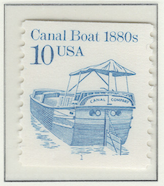
Canal Boat 1880s |
10c (apr 1987) |
||
✓ |
2257a |
Canal Boat |
10c (apr 1992) |
||
✓ |
2257b |
Canal Boat |
10c (apr 1993) |
||
✓ |
2130 |
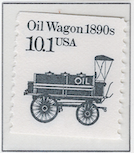
Oil Wagon 1890s |
10.1c (apr 1985) |
||
✓ |
2133 |
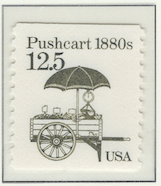
Pushcart 1880s |
12.50c (apr 1985) |
||
✓ |
2134b |
Iceboat 1880s |
14c (sep 1986) |
||
✓ |
2135 |
Dog Sled 1920s |
17c (aug 1986) |
||
✓ |
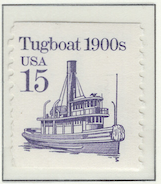
2260 |
Tugboat 1900s |
15c (jul 1988) |
||
✓ |
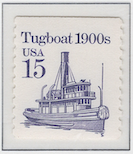
2260a |
Tugboat |
15c (jul 1990) |
||
✓ |
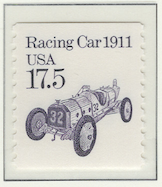
2262 |
Racing Car 1911 |
17.50c (sep 1987) |
||
✓ |
2263 |
Cable Car 1880s |
20c (oct 1988) |
||
✓ |
2263b |
Cable Car |
15c (oct 1990) |
||
✓ |
2136 |
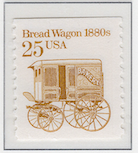
Bread Wagon |
25c (aug 1986) |
Footnotes
Spot refers to the postion of the stamp on the album page (e.g., 3.2 indicates row 3, position 2).
Amt. is an abbreviation for the face amount of the stamp.
Own indicates the stamp status: ✓ for unused; ✗ for used or canceled; ⭑ signifies I ordered one; ; ✨ indicates it was bought recently; ✠ means an auction bid is pending; and ◎ is used, and it costs too much for unused.
To search by catalog number, go to the search box and enter it in the catalog number box. However, it’s a bit broken; I need to fix it.












