Lakes & Coast
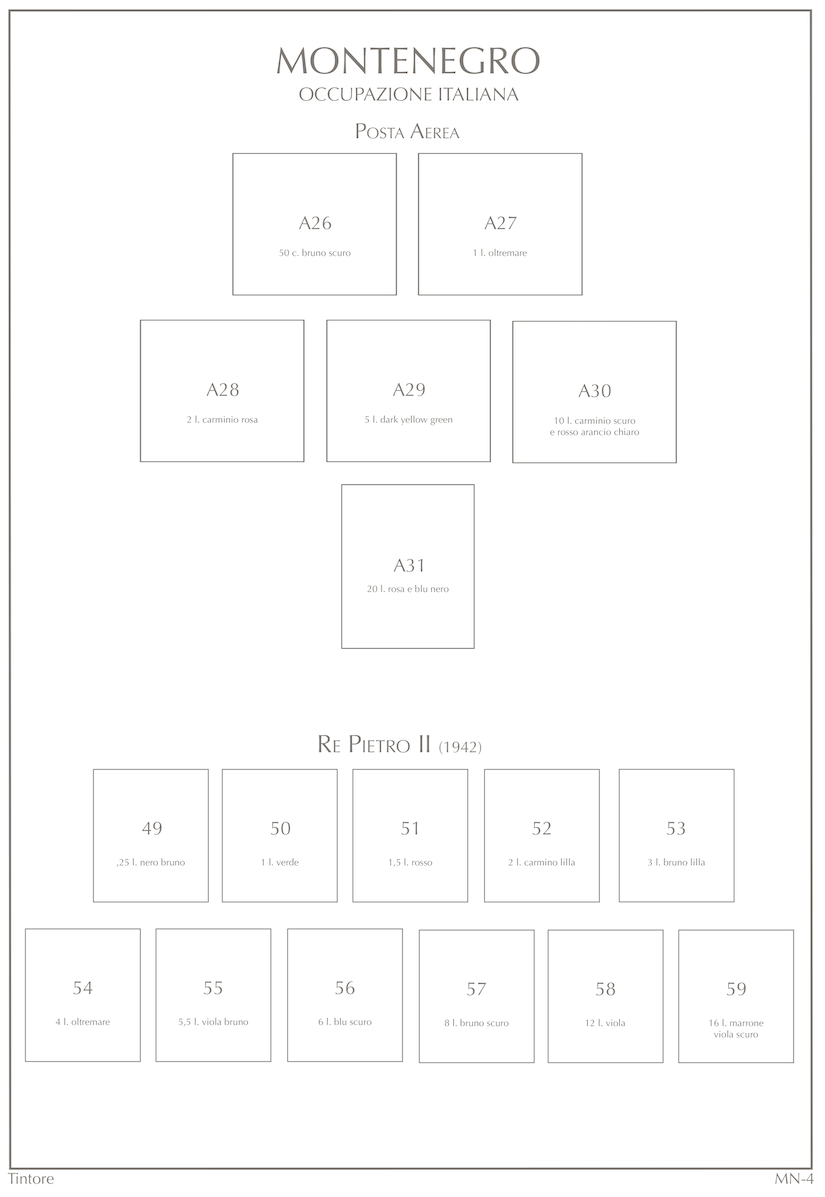
There are several scenes depicted on these Yugoslavian stamps. Below are descriptions of two of them.
Lake Skadar
Lake Skadar (also called Lake Scutari, Lake Shkodra and Lake Shkodër) is the largest lake in the Balkan Peninsula. It sits on the border between Montenegro and Albania, with about two thirds of it in Montenegro. The lake is named after the city of Shkodër, which lies on its southeastern shore. The Morača River feeds it and the Buna River carries its water out to the Adriatic Sea. The Montenegrin section is a national park, while the Albanian section is a nature reserve and a Ramsar site (a wetland of international importance). It is also home to many species found nowhere else, e.g., freshwater snails, and to birds such as the Dalmatian pelican. In World War II the village of Virpazar, on the lake, saw the first Partisan uprising in Montenegro.
Adriatic Coast
The Adriatic Sea lies between Italy on its western side and the Balkans on its eastern side. The eastern coast is highly indented, with the Dinaric Alps rising close to the water and more than 600 islands lining the shore. After Austria-Hungary collapsed in 1918, control of this coast passed to Yugoslavia and Albania. Yugoslavia and Italy agreed on their maritime boundary in 1975. Tourism grew from the 1960s through the 1980s, and by the 1980s the coast had become a destination for mass tourism. Croatia alone accounted for about 75% of the foreign tourist revenue of Yugoslavia. When Yugoslavia broke up in the 1990s, four coastal states were left: Slovenia, Croatia, Bosnia and Herzegovina, and Montenegro. They still recognize the old border with Italy, though they have disputed the borders between themselves.
Note
As I said in the note on the previous page, I may change the layout of these pages. I may put the air mail stamps from the previous page with these air mail stamps. The postage due set can get paired with some other stamps. It’s difficult for me to plan these things without the stamps. Sometimes I have to guess the size of the stamps. Once I get many of the stamps, a good sampling of them, I can better rearrange them that’s more pleasing for viewing while still keeping the type of stamps together without throwing off the chronological ordering too much.
Contains 17 spots: own 0 – 0 unused, 0 used.
Stamp Details
The table below lists information about the stamps shown on this page of Lighthouse’s stamp album. For more details about a particular stamp, click on its description. That will take you to the related web page of Colnect.
spot |
own |
catalog |
subject |
description |
comment |
|---|---|---|---|---|---|
A26 |
50c (jan 1943) |
||||
A27 |
1₤ (jan 1943) |
||||
A28 |
2₤ (jan 1943) |
||||
A29 |
5₤ (jan 1943) |
||||
A30 |
10₤ (jan 1943) |
||||
A31 |
20₤ (jan 1943) |
||||
49 |
King Peter II |
0.25₤ (jan 1942) |
|||
50 |
King Peter II |
1₤ (jan 1942) |
|||
51 |
King Peter II |
1.50₤ (jan 1942) |
|||
52 |
King Peter II |
2₤ (jan 1942) |
|||
53 |
King Peter II |
3₤ (jan 1942) |
|||
54 |
King Peter II |
4₤ (jan 1942) |
|||
55 |
King Peter II |
5.50₤ (jan 1942) |
|||
56 |
King Peter II |
6₤ (jan 1942) |
|||
57 |
King Peter II |
8₤ (jan 1942) |
|||
58 |
King Peter II |
12₤ (jan 1942) |
|||
59 |
King Peter II |
16₤ (jan 1942) |
Footnotes
Spot refers to the postion of the stamp on the album page (e.g., 3.2 indicates row 3, position 2).
Amt. is an abbreviation for the face amount of the stamp.
Own indicates the stamp status: ✓ for unused; ✗ for used or canceled; ⭑ signifies I ordered one; ; ✨ indicates it was bought recently; ✠ means an auction bid is pending; and ◎ is used, and it costs too much for unused.
To search by catalog number, go to the search box and enter it in the catalog number box. However, it’s a bit broken; I need to fix it.
















