Trans-Atlantic
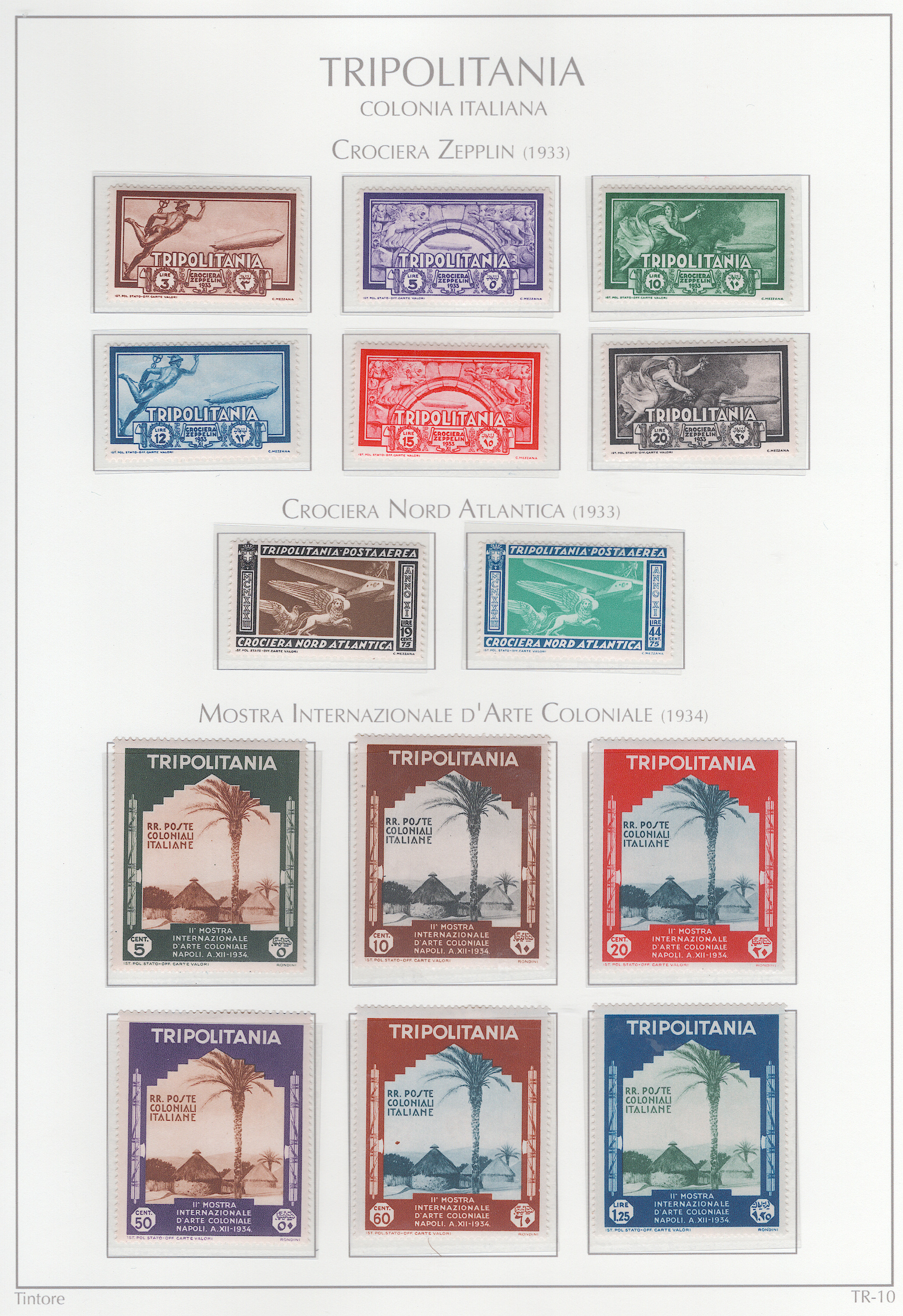
Aviation wasn’t completely new to the world. There had been many single-air-vehicle firsts – such as the first planes crossing the Atlantic. What was still just getting started was the idea of commercial aviation. So countries and companies organized spectacles involving flights with many planes together to demonstrate lengthy trips could be done multiple times – but all at once – and dependably.
Graf Zeppelin Airship’s Voyage
Graf (i.e., Count) Ferdinand von Zeppelin was a German military general and an inventor. While in the U.S. during its Civil War, he rode in a hot air balloon used by the military to observe troop movements. The problem he observed with hot air balloons was that they cannot be directed. Still, he was inspired by their potential. This led to the development of an airship that included engines, a keel, and a rudder to be able to steer and propel it forward. He also added a long, large cabin for the transporting of several people. The LZ 127 Graf Zeppelin air ship was one of those airships.
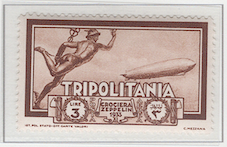
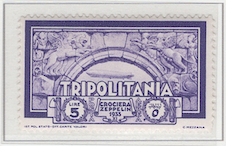
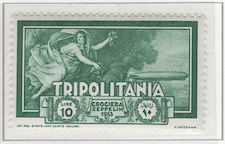
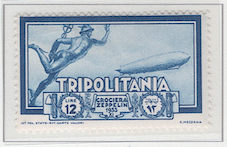
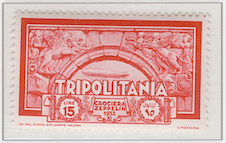
During the 1930s, the Graf Zeppelin airship flew over much of Europe, as well as went to the U.S. and South America. The first two rows of stamps on this album page commemorate its flight over Italy, showing the airship flying over historical sites in Italy and the Italian colonies.
North Atlantic Cruise
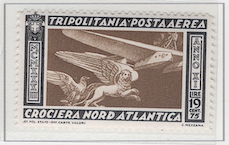
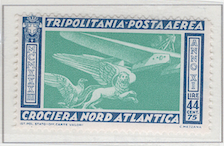
In 1933, the Italian Air Force headed by General Italo Balbo. Balbo organized a series of flights accross the Atlantic Ocean. His style was not to fly one plane, but a squadron of seaplanes to show the might of the Italian Air Force, which he founded, and to promote Italy to the world. His first flight was in 1930 with twelve seaplanes flying from the Orbetello Seaplane Base, located near Rome, to Rio de Janeiro, Brazil and then back.
The pair of stamps on the third row of this album page are in commemoration of that expedition.
Note
This page feels packed with the large stamps at the bottom. I don’t like their style and can’t imagine using them to mail a letter or a post card. They’re too big for practical use. There are some air mail versions of them on the Rome to Mogadishu page. There’s a description of what they commemorate on that page.
Contains 14 spots: own 14 – 14 unused, 0 used.
Page is finished.
Album or Web Page Last changed Jul 10, 2025
Stamp Details
The table below lists information about the stamps shown on this page of Lighthouse’s stamp album. For more details about a particular stamp, click on its description. That will take you to the related web page of Colnect.
spot |
own |
catalog |
subject |
description |
comment |
Zeppelin Cruise
✓ |
A22 |
3₤ (may 1933) |
|||
✓ |
A23 |
5₤ (may 1933) |
|||
✓ |
A24 |
Zeppelin and The Aurora |
10₤ (may 1933) |
||
✓ |
A25 |
12₤ (may 1933) |
|||
✓ |
A26 |
15₤ (may 1933) |
|||
✓ |
A27 |
Zeppelin and The Aurora |
20₤ (may 1933) |

North Atlantic Flight of Italo Balbo
✓ |
A28 |
19.75₤ (jun 1933) |
|||
✓ |
A29 |
44.75₤ (jun 1933) |
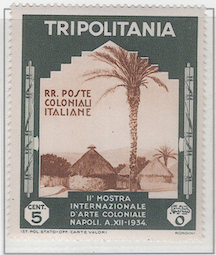
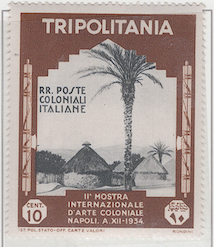
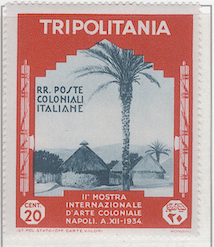
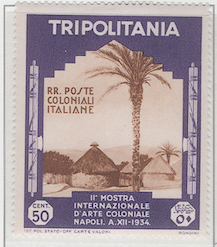
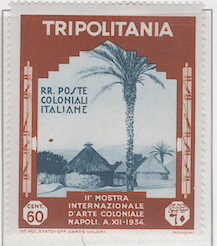
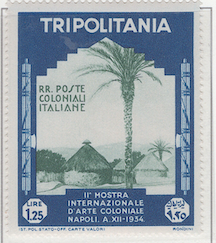
Intertional Colonial Art Show
✓ |
94 |
5c (oct 1934) |
|||
✓ |
95 |
10c (oct 1934) |
|||
✓ |
96 |
20c (oct 1934) |
|||
✓ |
97 |
50c (oct 1934) |
|||
✓ |
98 |
60c (oct 1934) |
|||
✓ |
99 |
1.25₤ (oct 1934) |
Footnotes
Spot refers to the postion of the stamp on the album page (e.g., 3.2 indicates row 3, position 2).
Amt. is an abbreviation for the face amount of the stamp.
Own indicates the stamp status: ✓ for unused; ✗ for used or canceled; ⭑ signifies I ordered one; ; ✨ indicates it was bought recently; ✠ means an auction bid is pending; and ◎ is used, and it costs too much for unused.
To search by catalog number, go to the search box and enter it in the catalog number box. However, it’s a bit broken; I need to fix it.













