Refugee Agency & 55th Anniversary
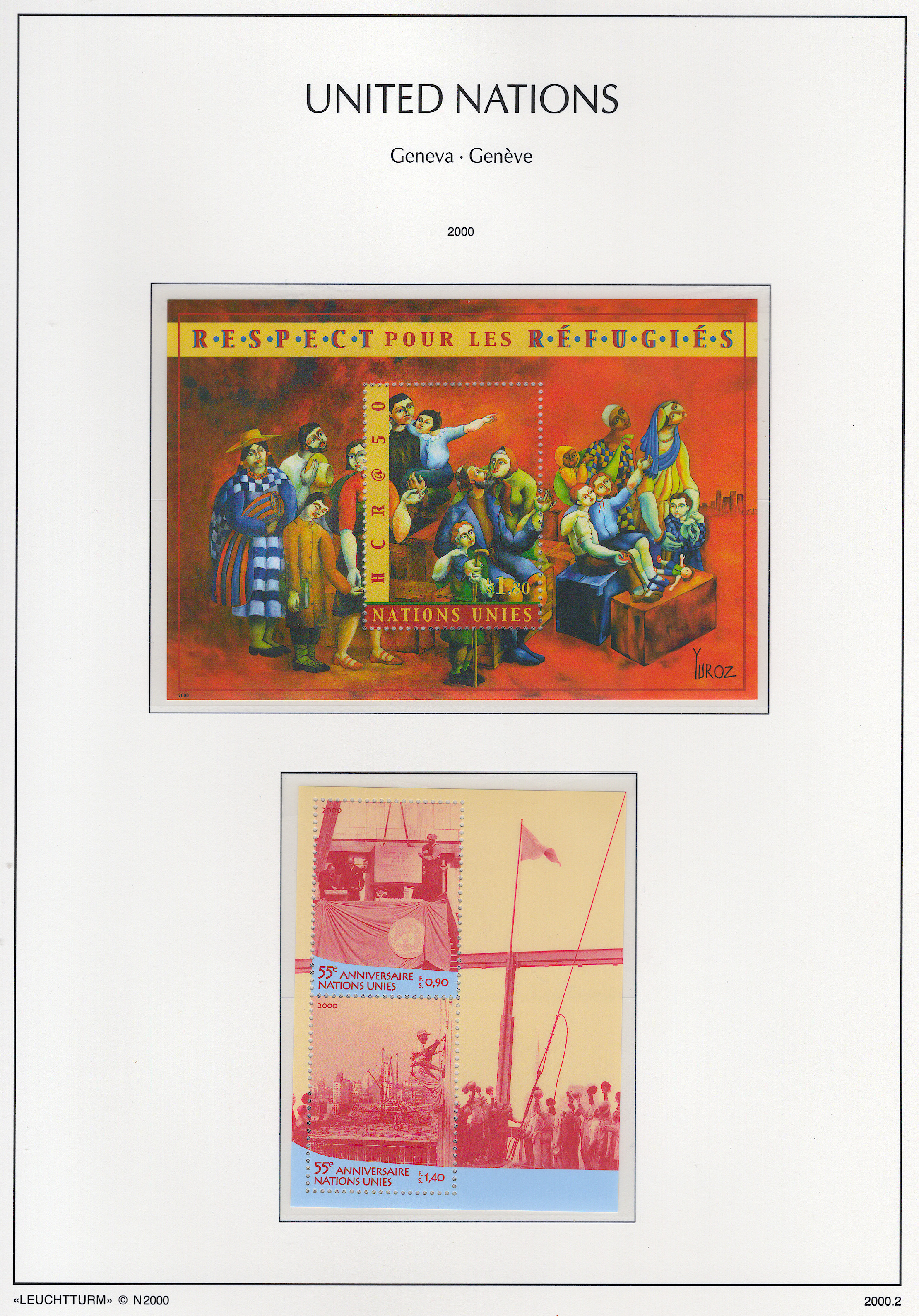
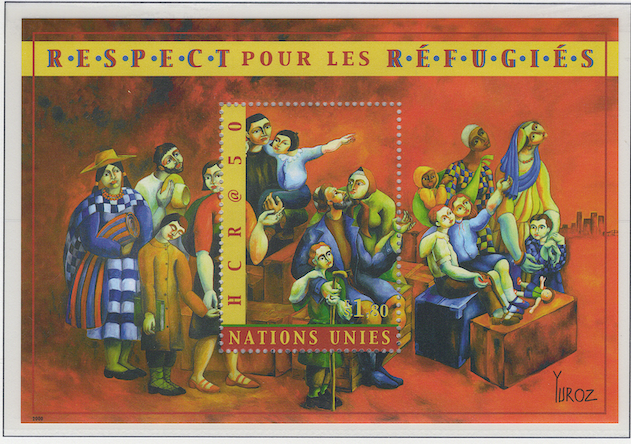
The U.N. High Commissioner for Refugees was made part of the U.N. in 1950 to assist and protect refugeees, stateless people, as well as forcibly displaced communities. The agency is meant to assist in voluntary repatriation, or resettlement in a new country to include local integration.
The predecessor to the UNHCR was the International Refugee Organization, which was founded in 1946 to assist refugees from World War II. Actually, the High Commissioner for Refugees existed since 1921 under the League of Nations. It wasn’t until 1952 it took over the responsibility of the IRO when it dissolved in 1952.
The UNHCR is involved in resolving refugee problems at the highest lavel, negotiating with home countries to end conflict that are the cause, as well as neighboring countries and third countries for accepting and protecting displaced people. UNHCR also includes providing food, shelter, medical assistance and other basic needs.
Fifty-Fifth Anniversary of U.N.
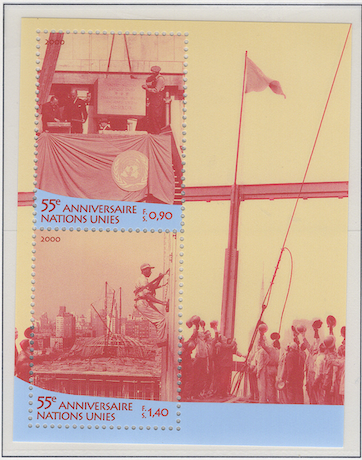
Only a few countries were added since the last five-year enniversary of the United Nations. Three were added in mid-September of 1999: Kiribati, Nauru, and Tonga. The following year, in September 2000, Tuvalu was added.
All four new member nations are small and located in the Pacific Ocean, relatively close to New Zealand. All four are members of the British Commonwealth of Nations – former colonies and territories of the British empire. These are small countries: Tuvalu has the second least smallest population with about ten thousand people – only the Vatican has less; Nauru is the third smallest in size at twenty-one square kilometers or about eight square miles – only Monaco and the Vatican are smaller. The other two island nations have populations around one-hundred thousand, and are around eight-hundred square kilometers – which are still small, but not as small.
Note
The souvenir sheet for refugee agency is nice: it’s colorful and the art work is well done. I also like that the stamp at the center has its own borders that make it look like a well design stamp on its own, and not looking too much like it’s part of a larger picture – although it is. The souvenir sheet for the fifty-fifth anniversary of the U.N., though, is confusing. The two stamps they contain aren’t in line with the scene behind them, although they have no border. It looks like two photos dropped on top of a larger third photo that are at least related. The top inset photo shows the laying of the cornerstone when they started building the U.N. building in New York. The second photo shows the construction after some progress. The larger background photo shows them reaching the top of the construction, celebrating with the raising of the U.N. flag. They’re interesting photos, but organized poorly in a souvenir sheet.
Contains 2 spots: own 2 – 2 unused, 0 used.
Page is finished.
Album or Web Page Last changed Sep 20, 2025
Stamp Details
The table below lists information about the stamps shown on this page of Lighthouse’s stamp album. For more details about a particular stamp, click on its description. That will take you to the related web page of Colnect.
spot |
own |
catalog |
subject |
description |
comment |
|---|---|---|---|---|---|
✓ |
366 |
1.80 (nov 2000) |
|||
✓ |
360 |
2.30 (jul 2000) |
Footnotes
Spot refers to the postion of the stamp on the album page (e.g., 3.2 indicates row 3, position 2).
Amt. is an abbreviation for the face amount of the stamp.
Own indicates the stamp status: ✓ for unused; ✗ for used or canceled; ⭑ signifies I ordered one; ; ✨ indicates it was bought recently; ✠ means an auction bid is pending; and ◎ is used, and it costs too much for unused.
To search by catalog number, go to the search box and enter it in the catalog number box. However, it’s a bit broken; I need to fix it.


No Covers Found.