Penny-Farthing
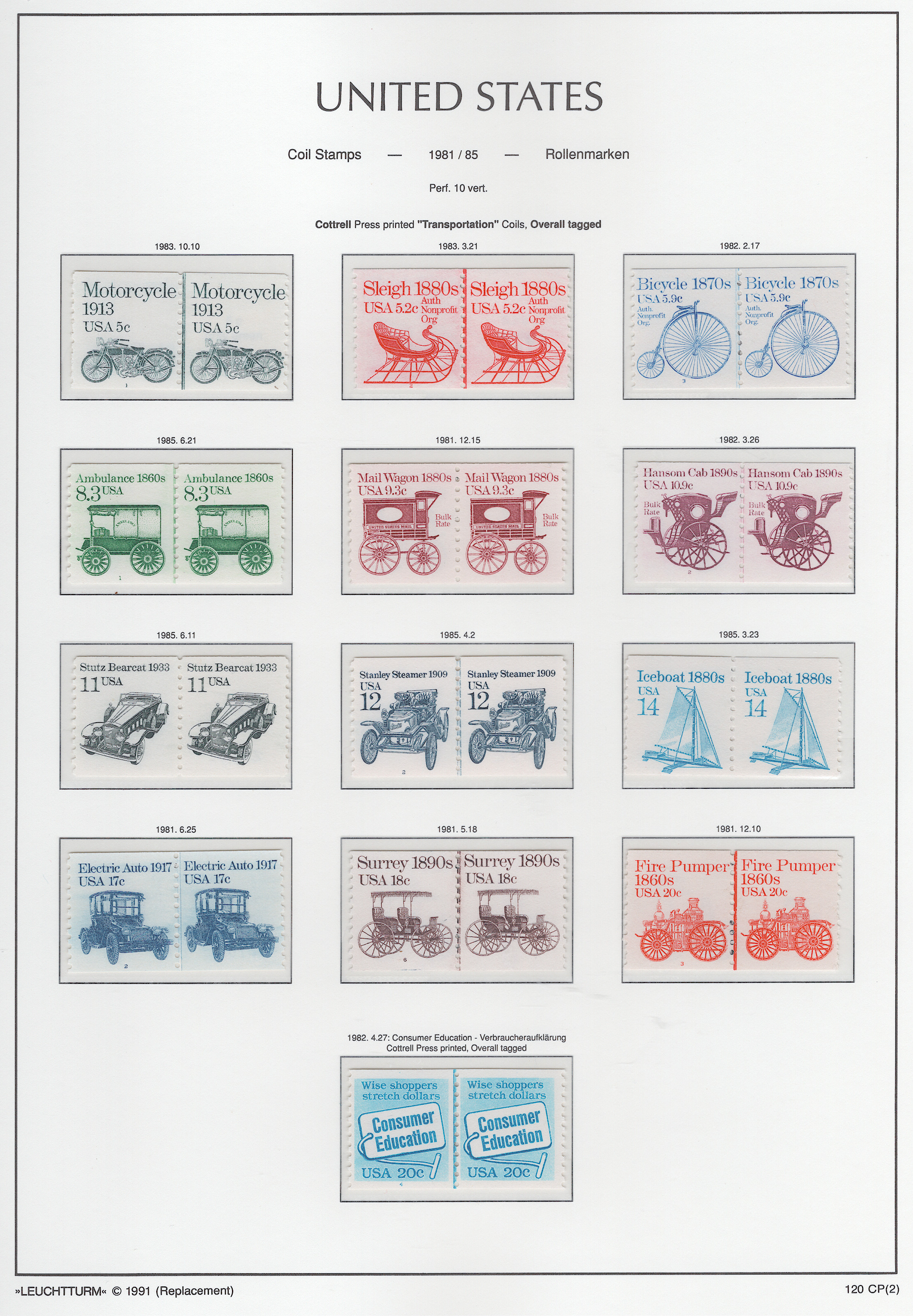
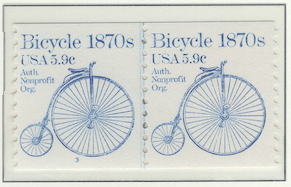
The Penny-Farthing or high-wheel bicycle was the original bicycle. It was a direct-drive bicycle, meaning when the rider pedals the bike, they are directly turning one of the wheels, the front wheel. The back wheel is only for balance and stability. The larger the front wheel, the more distance traveled in the same amount of time to turn the wheel at its axel. Since the back wheel doesn’t effect speed, smaller is better.
It was originally called just a bicycle since it was all there was. When the more modern bicycle was invented – its pedal was in the middle of the frame, and the rear wheel was turned by a chain, similar to a pulley, making it faster and safer – the high-wheel bicycle needed an ajective like old or ordinary, but eventually penny-farthing stuck. It was called that because at the time, the British penny was large and the farthing, worth one-forth a penny, was much smaller: from the side it looked vaguely and proportionally like a penny followed by a farthing.
As a boy, when I was about five years old, I remember a neighbor, someone with whom my family and I never spoke, had a penny-farthing. He didn’t ride it often, but when he did, I watched him in awe. I thought it was so amazing. I knew it was a bicycle from long ago because I saw it in television shows set in the late 1800s. When he rode it, especially since he had a handle-bar moustache, I thought he was somehow from the Nineteenth Century. I didn’t understand well the diference between fiction and reality. I thought people from long ago overlapped somehow with our world and he was one of them.
Note
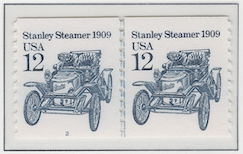
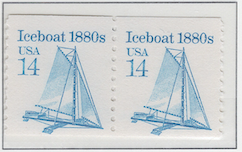
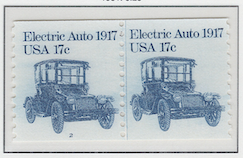
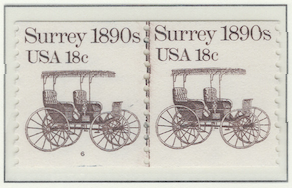
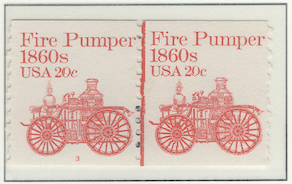
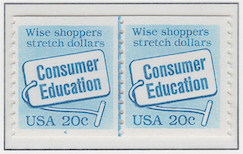
These stamps were not easy to find in unused pairs, especially line-pairs. I ordered them over many months from about five dealers around the U.S. Three of them I couldn’t find in line-pairs. I gave up and took what I cuold get to complete the page. Having line-pairs aren’t too important to me.
Contains 13 spots: own 13 – 13 unused, 0 used.
Page is finished.
Album or Web Page Last changed May 10, 2025
Stamp Details
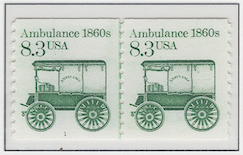
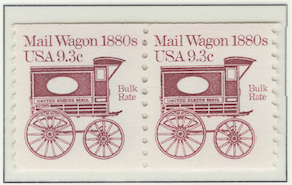
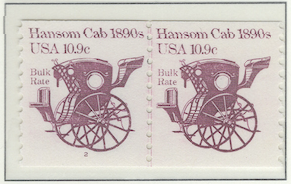
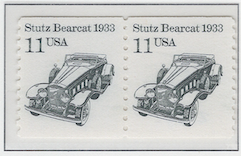
The table below lists information about the stamps shown on this page of Lighthouse’s stamp album. For more details about a particular stamp, click on its description. That will take you to the related web page of Colnect.
spot |
own |
catalog |
subject |
description |
comment |
Transportation Definitives
✓ |
1899 |
5c (oct 1983) |
|||
✓ |
1900 |
5.20c (mar 1983) |
|||
✓ |
1901 |
5.90c (feb 1982) |
|||
✓ |
2128 |
8.30c (jun 1985) |
|||
✓ |
1903 |
9.30c (dec 1981) |
|||
✓ |
1904 |
10.90c (mar 1982) |
|||
✓ |
2131 |
11c (jun 1985) |
|||
✓ |
2132 |
12c (apr 1985) |
|||
✓ |
2134 |
14c (mar 1985) |
|||
✓ |
1906 |
17c (jun 1981) |
|||
✓ |
1907 |
18c (may 1981) |
|||
✓ |
1908 |
20c (dec 1981) |
Other
✓ |
2005 |
20c (apr 1982) |
Footnotes
Spot refers to the postion of the stamp on the album page (e.g., 3.2 indicates row 3, position 2).
Amt. is an abbreviation for the face amount of the stamp.
Own indicates the stamp status: ✓ for unused; ✗ for used or canceled; ⭑ signifies I ordered one; ; ✨ indicates it was bought recently; ✠ means an auction bid is pending; and ◎ is used, and it costs too much for unused.
To search by catalog number, go to the search box and enter it in the catalog number box. However, it’s a bit broken; I need to fix it.












