Sardegna
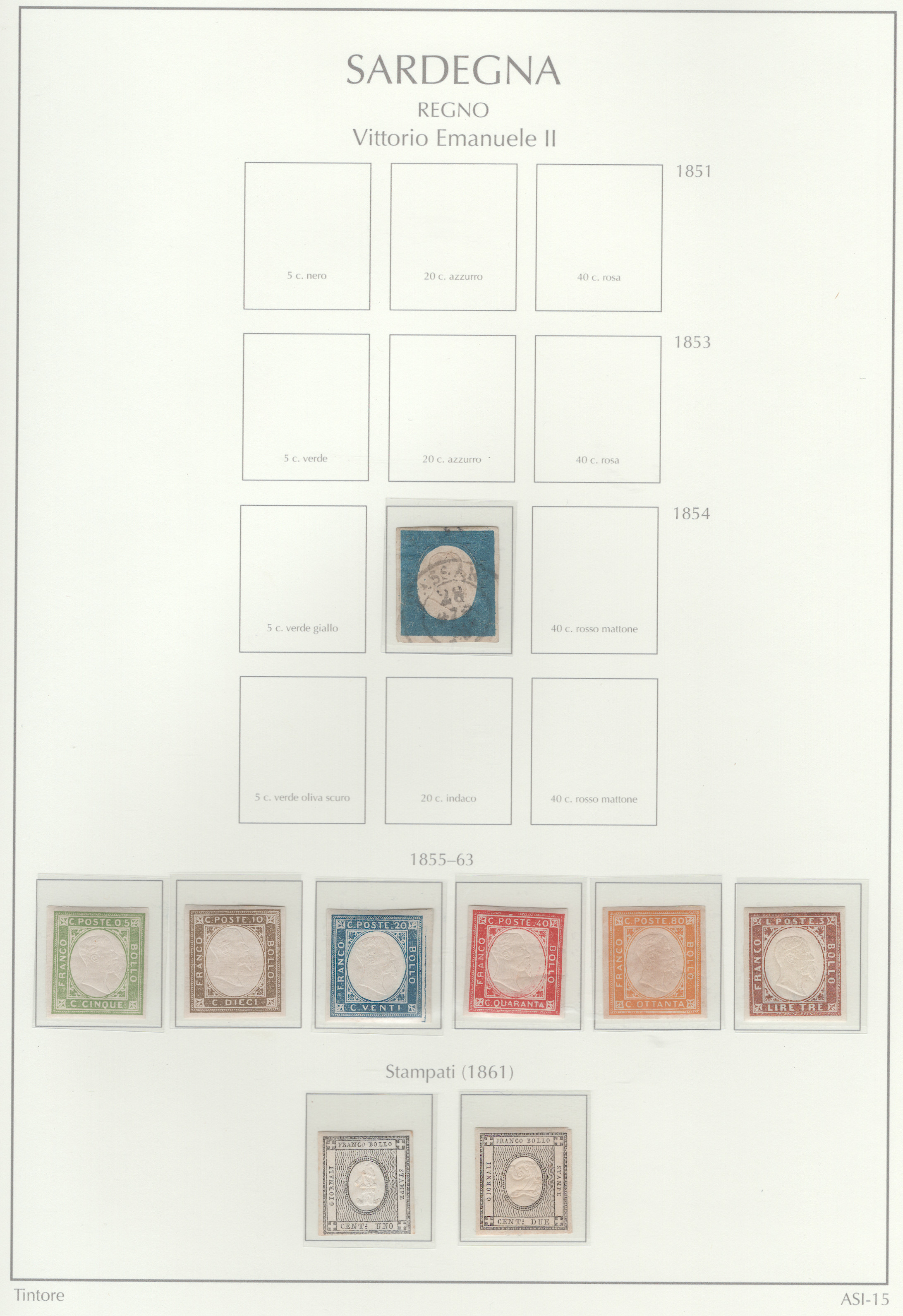
Giuseppe Garibaldi conquered the Italian peninsula in the 1860s under the standard of the Kingdom of Sardegna and King Vittorio Emanuele II.
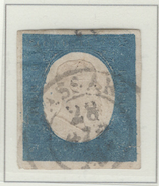
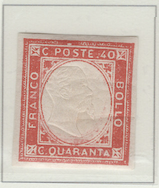
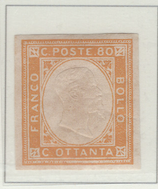
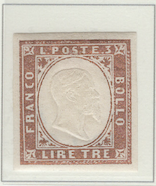
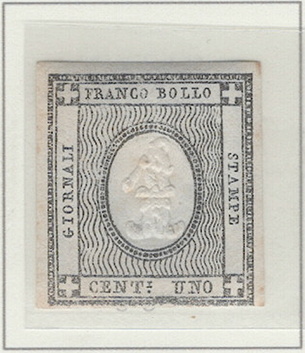
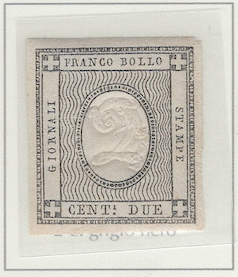
These stamps are from Sardegna, issued in the 1850s before Garibaldi started his conquest. They have the king’s image embossed on them. They seem to be experimenting with different methods of embossing and printing, trying to twart counterfeiters. The results in these early years are not very attractive. They eventually improve their methods.
The stamps issued in 1861, on the fifth row are much better looking. They resolved their design bugs and produced a nice looking and more colorful set of stamps before conquering the Italian peninsula. They improved on them a bit more once the new kingdom was formed, by perforating them. You can see those stamps on first stamps of Italy page.
Note
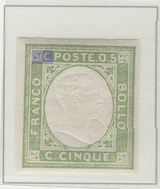
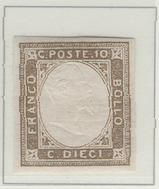
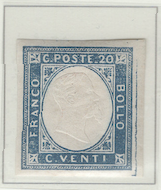
The stamps on the third row have been confusing to me, but I’ve piece together a coherent history of them. They were designed by Francesco Matraire and engraved by Giuseppe Ferraris in Torino – they designed and engraved most of the stamps for the King Vittorio Emanuele II of Piemonte over the Kingdom of Sardegna and later over the Kingdom of Italy. However, these stamps were printed in Naples for use in the then occupied regions that were then the peninsula and island of the Kingdom of Two Sicilies. These were issued in April 1861 and replaced the stamps issued in February 1861 (see Naples Provisional), with the currency of Sardegna, centessimo, or the plural, centessimi – smaller denominations of the lira.
The confusion is with the Sassone catalog numbers, which are actually PN-1 through PN-5. As best I can determine, Sassone misidentified and miscataloged these five stamps as issued by the Kindom of Italy for use all over the peninsula and islands, wherever King Vittorio II ruled. After all, they had his image on them and were issued around the same time as other similar stamps at the time. If you look at Vittorio Emanuele II, the first page of stamps for the Kingdom of Italy, you’ll see these other stamps. Notice there that the catalog numbers are from 1 to 4 and then jump to 10. It seems that Sassone had originally cataloged the stamps on this page, 5 to 9 – thinking they were part of the Kingdom of Italy. However, later they realized they were not issue or used in the Kingdom, but only in the occupied territory of the former Kingdom of Two Sicilies.
Contains 20 spots: own 9 – 8 unused, 1 used.
Album or Web Page Last changed Jun 30, 2025
Stamp Details
The table below lists information about the stamps shown on this page of Lighthouse’s stamp album. For more details about a particular stamp, click on its description. That will take you to the related web page of Colnect.
spot |
own |
catalog |
subject |
description |
comment |
Kingdom
1 |
5c (1851) |
||||
2 |
20c (1851) |
||||
3 |
40c (1851) |
||||
4 |
5c (1853) |
||||
5 |
20c (1853) |
||||
6 |
40c (1853) |
||||
7 |
5c (1854) |
||||
✗ |
8 |
20c (1854) |
bought 20 years ago |
||
9 |
40c (1854) |
||||
10 |
5c (1854) |
||||
11 |
20c (1854) |
||||
12 |
40c (1854) |
Occupied Two Sicilies
✓ |
1 |
5c (1861) |
|||
✓ |
2 |
10c (1861) |
|||
✓ |
3 |
20c (1861) |
|||
✓ |
4 |
40c (1861) |
|||
✓ |
5 |
80c (1861) |
New Kingdom
✓ |
18 |
3₤ (1861) |
Newspapers
✓ |
19 |
1c (may 1861) |
|||
✓ |
20 |
2c (may 1861) |
Footnotes
Spot refers to the postion of the stamp on the album page (e.g., 3.2 indicates row 3, position 2).
Amt. is an abbreviation for the face amount of the stamp.
Own indicates the stamp status: ✓ for unused; ✗ for used or canceled; ⭑ signifies I ordered one; ; ✨ indicates it was bought recently; ✠ means an auction bid is pending; and ◎ is used, and it costs too much for unused.
To search by catalog number, go to the search box and enter it in the catalog number box. However, it’s a bit broken; I need to fix it.



















