New Constitution
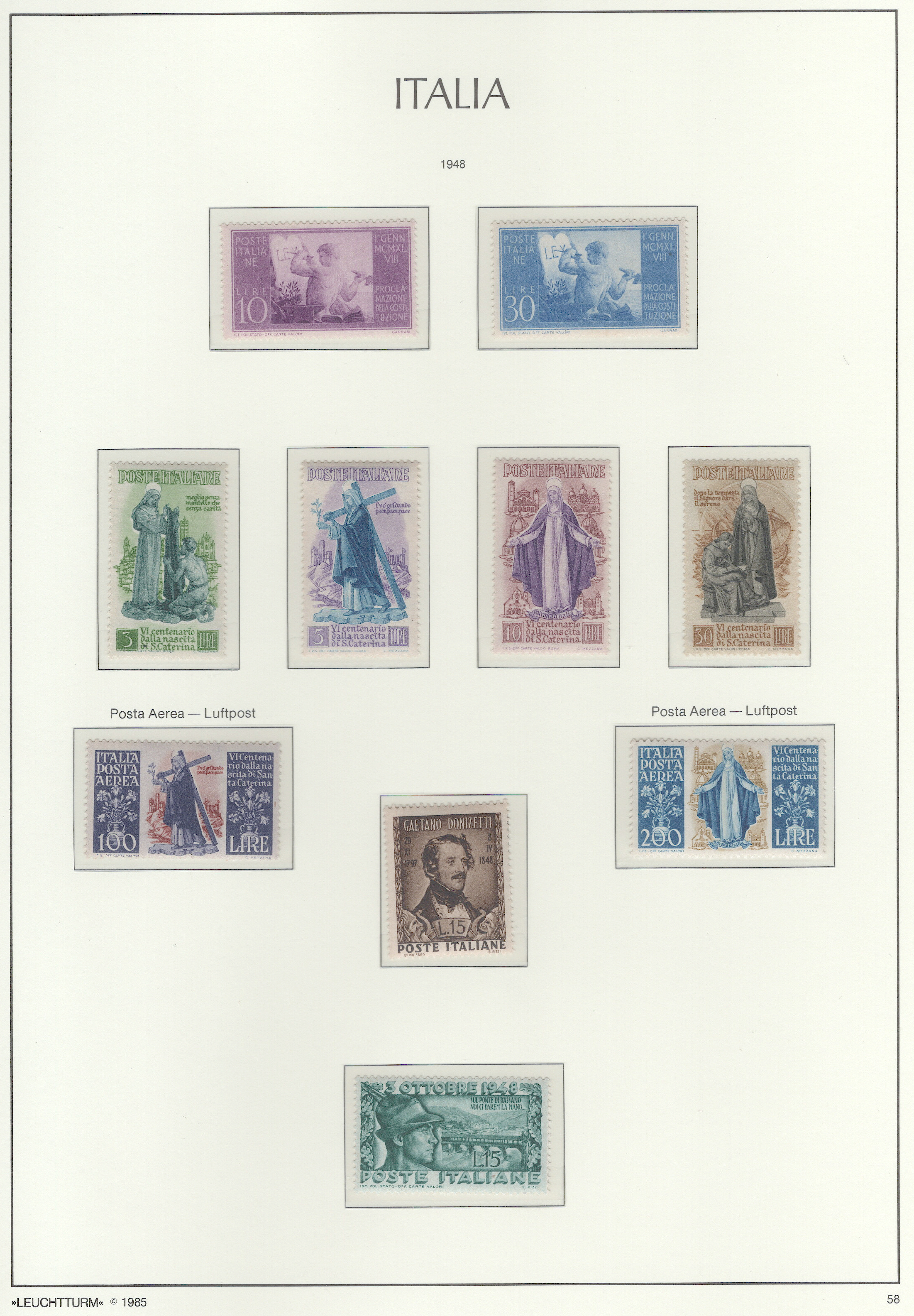
On January 1, 1948, the Constitution of the Italian Republic (Costituzione della Repubblica Italiana) came into force. It was approved on December 22, 1947 by the Constituent Assembly, with 453 votes in favor and 62 against, and promulgated in the Gazzetta Ufficiale on December 27. It replaced the Statuto Albertino, which had been enacted exactly one century earlier.
The Assembly was elected on June 2, 1946, the same day as the referendum on the abolition of the monarchy. It had 556 members, including 21 women, and came from all the anti-fascist forces that had contributed to the liberation of Italy. Three groups prevailed: Christian democrats, liberals and leftists. As a result, everyone agreed they did not want an authoritarian constitution. They put more emphasis on the legislative power and made the executive dependent on it. The final text was a compromise between these views, as the protections for marriage and the family reflect Catholic ideas, while those for workers’ rights reflect socialist and communist ideas.
The Constitution has 139 articles in three main parts: the Fundamental Principles, the Rights and Duties of Citizens, and the Organisation of the Republic. These are followed by 18 transitory and final provisions. One of those provisions banned the reorganization of the Fascist party. Another kept the male descendants of the House of Savoy out of the country until it was amended in 2002.
It is also meant to be difficult to change. Article 139 says the republican form of government cannot be amended, so the monarchy can never be restored. Other changes need two readings in each House of Parliament, and in some cases a referendum. It has still been amended 16 times, most recently in 2022.
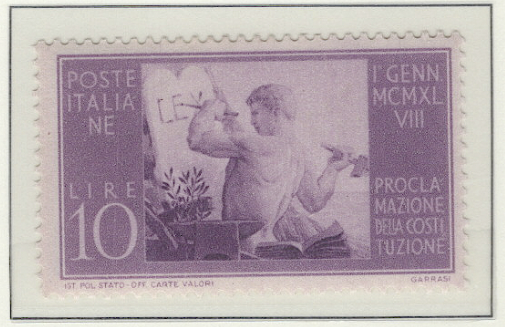
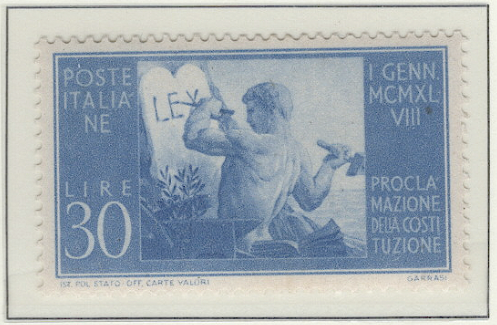
The two stamps on the top row commemorate the new constitution. The inscription reads “Proclamazione della Costituzione” (Proclamation of the Constitution), and the date, January 1, 1948, is written in Roman numerals. As you can see, that is the day it came into force, not the day it was approved or promulgated, which were a few days earlier in December 1947.
Note
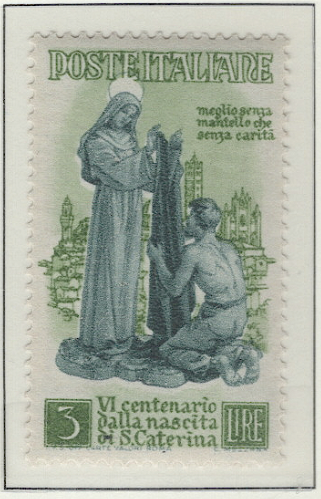
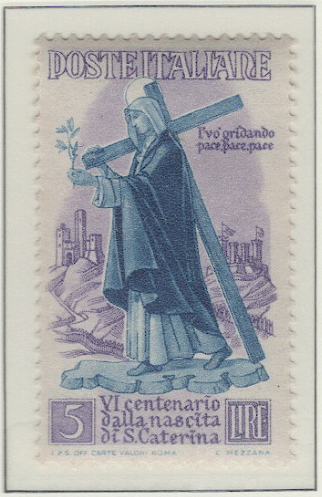
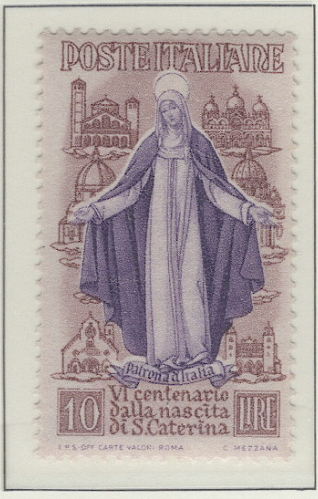
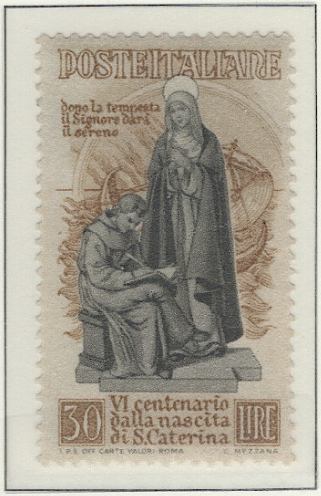
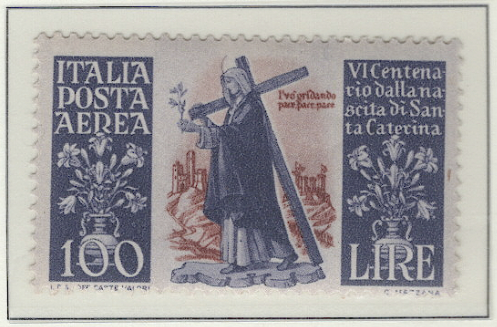
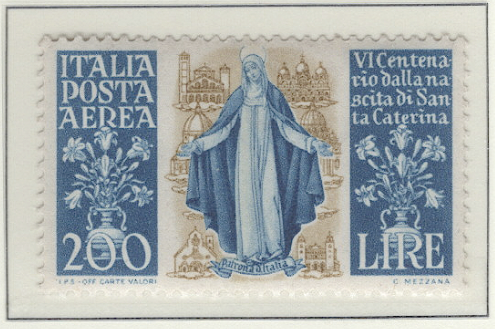
The Catherine of Sienna stamps aren’t very attractive and are a little pricey. But I’m committed to getting all of them, so I bought them.
Contains 10 spots: own 10 – 10 unused, 0 used.
Page is finished.
Album or Web Page Last changed Oct 17, 2026
Stamp Details
The table below lists information about the stamps shown on this page of Lighthouse’s stamp album. For more details about a particular stamp, click on its description. That will take you to the related web page of Colnect.
spot |
own |
catalog |
subject |
description |
comment |
New Constition
✓ |
578 |
10₤ (apr 1948) |
|||
✓ |
579 |
30₤ (apr 1948) |
St. Catherine of Siena
✓ |
574 |
3₤ (mar 1948) |
|||
✓ |
575 |
5₤ (mar 1948) |
|||
✓ |
576 |
10₤ (mar 1948) |
|||
✓ |
577 |
30₤ (mar 1948) |
|||
✓ |
A146 |
100₤ (mar 1948) |
|||
✓ |
A147 |
200₤ (mar 1948) |
Other
✓ |
593 |
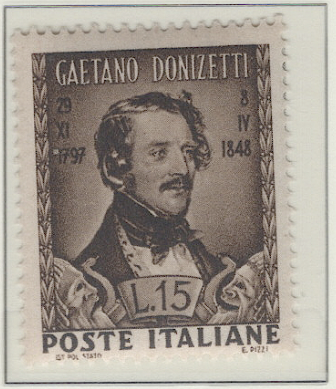
15₤ (oct 1948) |
|||
✓ |
592 |
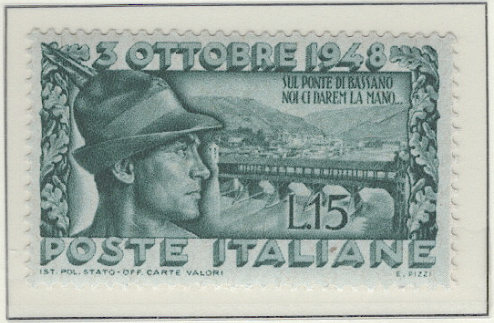
Rebuilding Alpine Bridge |
15₤ (oct 1948) |
Footnotes
Spot refers to the postion of the stamp on the album page (e.g., 3.2 indicates row 3, position 2).
Amt. is an abbreviation for the face amount of the stamp.
Own indicates the stamp status: ✓ for unused; ✗ for used or canceled; ⭑ signifies I ordered one; ; ✨ indicates it was bought recently; ✠ means an auction bid is pending; and ◎ is used, and it costs too much for unused.
To search by catalog number, go to the search box and enter it in the catalog number box. However, it’s a bit broken; I need to fix it.









