Alexander Calder
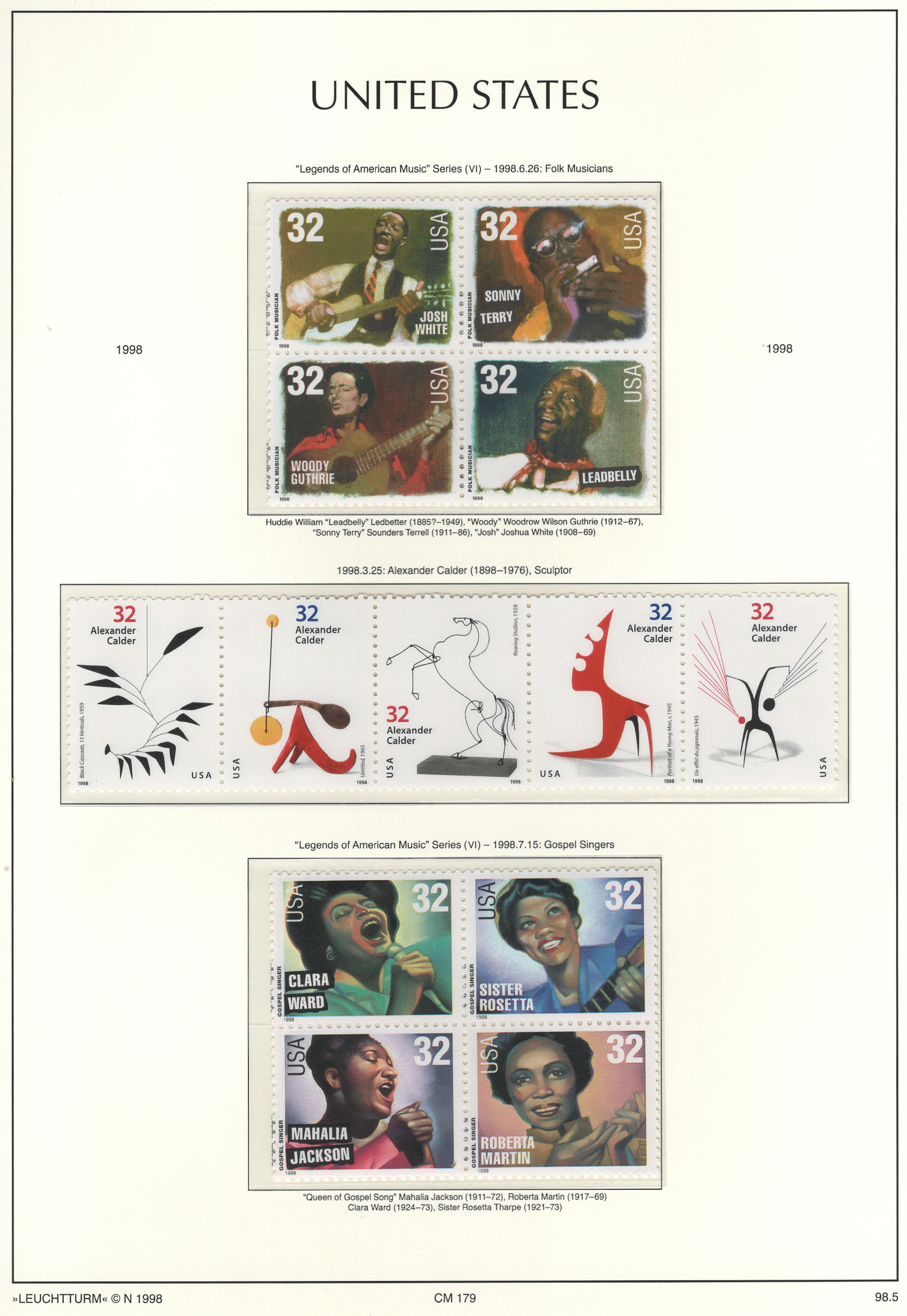
Alexander Calder was born in Philadelphia, Pennsylvania on July 22, 1898, though his mother remembered the date as August 22. He came from a family of sculptors, as his father and grandfather both made well-known public works in the city. Even so, he studied mechanical engineering at Stevens Institute of Technology, graduating in 1919, and only then took classes at the Art Students League in New York. In 1926 he moved to Paris, where he became friends with avant-garde artists (e.g., Joan Miró, Jean Arp, and Marcel Duchamp).
In Paris he made the Cirque Calder, a miniature circus built from wire, cloth, cork, and other found objects. It was designed to be portable and filled five suitcases. He also invented wire sculpture, which he described as “drawing in space.” After visiting the studio of Piet Mondrian in 1930, he committed fully to abstraction. Duchamp named his early motorized works “mobiles” in 1931, and Arp named his static, self-supporting works “stabiles” in 1932. Calder later moved away from motors, so his mobiles were set moving by touch or air currents instead.
His work grew larger as his career went on. El Sol Rojo, made for Mexico City in 1968, stands 25.8 meters tall and is his largest piece. La Grande Vitesse, in Grand Rapids, Michigan, followed in 1969 and was the first civic sculpture in the United States funded by the National Endowment for the Arts. Calder died in New York City on November 11, 1976, shortly after a major retrospective opened at the Whitney Museum. He was awarded the Presidential Medal of Freedom the following year, and the Calder Foundation, established by his family in 1987, now holds more than 600 of his sculptures.
Note
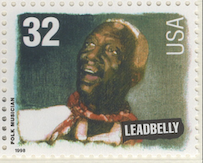
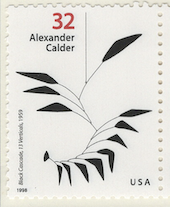
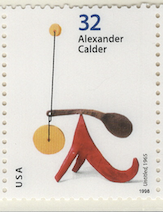
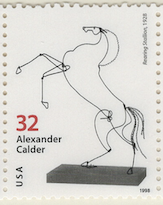
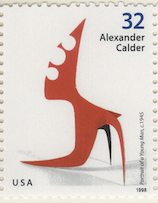
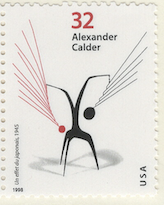
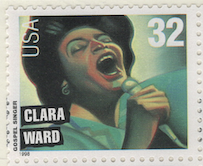
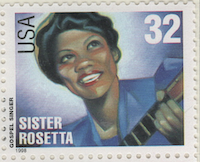
The middle row of stamps here show some of the artwork of Alexander Calder. I’m not a big fan of this type of art. However, I like it better than the art used for the images of singers and musicians on the other stamps on this album page.
Contains 13 spots: own 13 – 13 unused, 0 used.
Page is finished.
Stamp Details
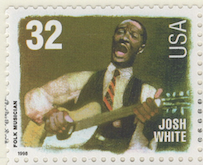
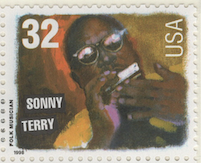
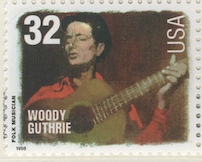
The table below lists information about the stamps shown on this page of Lighthouse’s stamp album. For more details about a particular stamp, click on its description. That will take you to the related web page of Colnect.
spot |
own |
catalog |
subject |
description |
comment |
|---|---|---|---|---|---|
✓ |
3215 |
32¢ (06 1998) |
|||
✓ |
3214 |
32¢ (06 1998) |
|||
✓ |
3213 |
32¢ (06 1998) |
|||
✓ |
3212 |
32¢ (06 1998) |
|||
✓ |
3198 |
Black Cascade |
32¢ (03 1998) |
||
✓ |
3199 |
Untitled |
32¢ (03 1998) |
||
✓ |
3200 |
Rearing Stallion |
32¢ (03 1998) |
||
✓ |
3201 |
Portrait of a Young Man |
32¢ (03 1998) |
||
✓ |
3202 |
Un Effet du Japanais |
32¢ (03 1998) |
||
✓ |
3218 |
32¢ (07 1998) |
|||
✓ |
3219 |
32¢ (07 1998) |
|||
✓ |
3216 |
32¢ (07 1998) |
|||
✓ |
3217 |
32¢ (07 1998) |
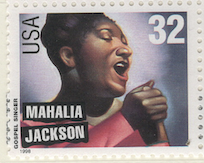
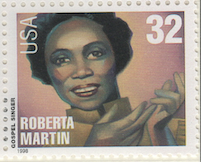
Footnotes
Spot refers to the postion of the stamp on the album page (e.g., 3.2 indicates row 3, position 2).
Amt. is an abbreviation for the face amount of the stamp.
Own indicates the stamp status: ✓ for unused; ✗ for used or canceled; ⭑ signifies I ordered one; ; ✨ indicates it was bought recently; ✠ means an auction bid is pending; and ◎ is used, and it costs too much for unused.
To search by catalog number, go to the search box and enter it in the catalog number box. However, it’s a bit broken; I need to fix it.












