Roman Oil
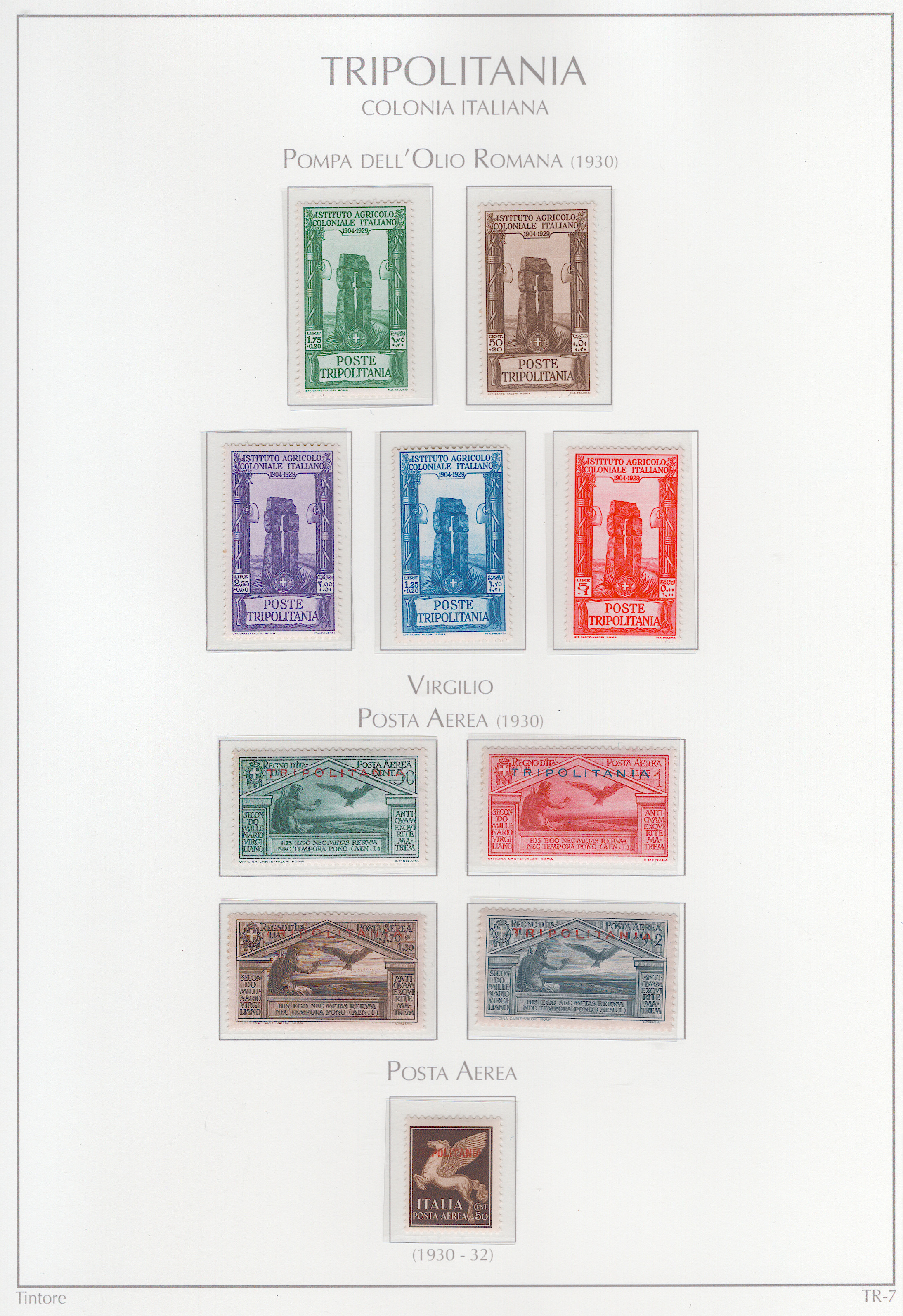
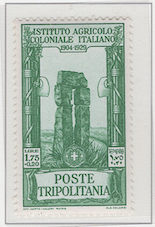
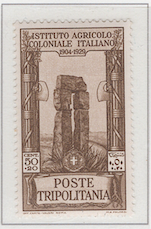
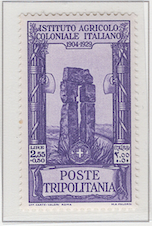
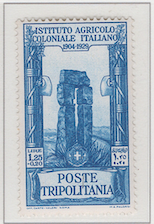
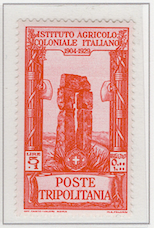
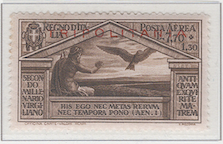
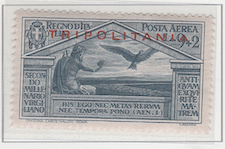
During Roman times, they would crush olives to extract oil from them. That oil would be used for cooking and for lamps. The first set of stamps on this album page show part of an ancient olive oil press. The structure shown is the axis of the press. The rest of the press is not visible. So it may be difficult to understand how it works.
A log or lever at least a few meters long would be placed with one end between these two stone columns, between the arch. The lever would be fastened with a pin like an axel to be able to raise the lever up and down. A meter or two in front of this axis would be a basket of olives, sitting in stone bowl or basin. Attached to the lever above the basin would be circular stone to fit inside it, fairly precisely. The basin would have notched at one end to direct the oil to another recepticle.
At the other end of the lever, heavy rocks were attached to press down, so as to crush the olives. Someone would stand at that end of the lever, to lift and lower it – and apply extra, leveraged pressure to squeeze the juice from the olives. Someone might also stand by the basket to stir the olives, occasionally.
The juice squeezed from the olives would contain water and oil. They would leave the juice in the recepticle mentioned until the two separated, with the oil floating to the top. They would then skim the oil from the top and put it in terracotta jugs for storage and distribution.
The arch structure shown in these stamps is also the same as that of a direct pressure screw press. For that configuration, a stone basis is placed between the two columns. A rod or screw – but not threaded – is inserted at the top of the structure, through the cross beam, and down into a large, heavy, circular stone where it’s attached. That stone is used to crush the olives in the basin. Another rod is attached to the top of the screw, above the beam, acting as a handle or lever. Someone stands, holding the handle of the screw and turns it to crush the olives.
Note
It took quite some time to determine what was shown in the images of the first set of stamps. At first glance, I thought it was some sort of ancient monument, like Stonehenge. Then I found in a stamp catalog that it has to do with Roman oil – but no other information. This made me think it was some sort of structure for boring into the ground for petroleum. That was an absurd notion given the technology of that time period. Then it occurred to me that it had something to do with olive oil since that was the kind of oil used for cooking and lamps. After much searching on that premise, I found some archaeological articles on olive oil presses from the time of the Romans.
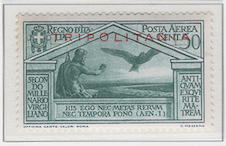
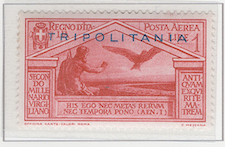
As for the other set of stamps on this page, they commemorate the ancient Roman writer, Virgil. They’re described on the next page.
Contains 10 spots: own 10 – 10 unused, 0 used.
Page is finished.
Album or Web Page Last changed Jul 10, 2025
Stamp Details
The table below lists information about the stamps shown on this page of Lighthouse’s stamp album. For more details about a particular stamp, click on its description. That will take you to the related web page of Colnect.
spot |
own |
catalog |
subject |
description |
comment |
Italian Colonial Agriculture Institute
✓ |
73 |
50+20c (nov 1930) |
|||
✓ |
74 |
1.25+0.20₤ (nov 1930) |
|||
✓ |
75 |
1.75+0.20₤ (nov 1930) |
|||
✓ |
76 |
2.55+0.50₤ (nov 1930) |
|||
✓ |
77 |
5+1₤ (nov 1930) |
Virgil - Air Mail
✓ |
A4 |
50c (dec 1930) |
|||
✓ |
A5 |
1₤ (dec 1930) |
|||
✓ |
A6 |
7.70+1.30₤ (dec 1930) |
|||
✓ |
A7 |
9+2₤ (dec 1930) |
Imperforated Definitives
✓ |
A8 |
50c (dec 1930) |
Footnotes
Spot refers to the postion of the stamp on the album page (e.g., 3.2 indicates row 3, position 2).
Amt. is an abbreviation for the face amount of the stamp.
Own indicates the stamp status: ✓ for unused; ✗ for used or canceled; ⭑ signifies I ordered one; ; ✨ indicates it was bought recently; ✠ means an auction bid is pending; and ◎ is used, and it costs too much for unused.
To search by catalog number, go to the search box and enter it in the catalog number box. However, it’s a bit broken; I need to fix it.









