Admiral Byrd
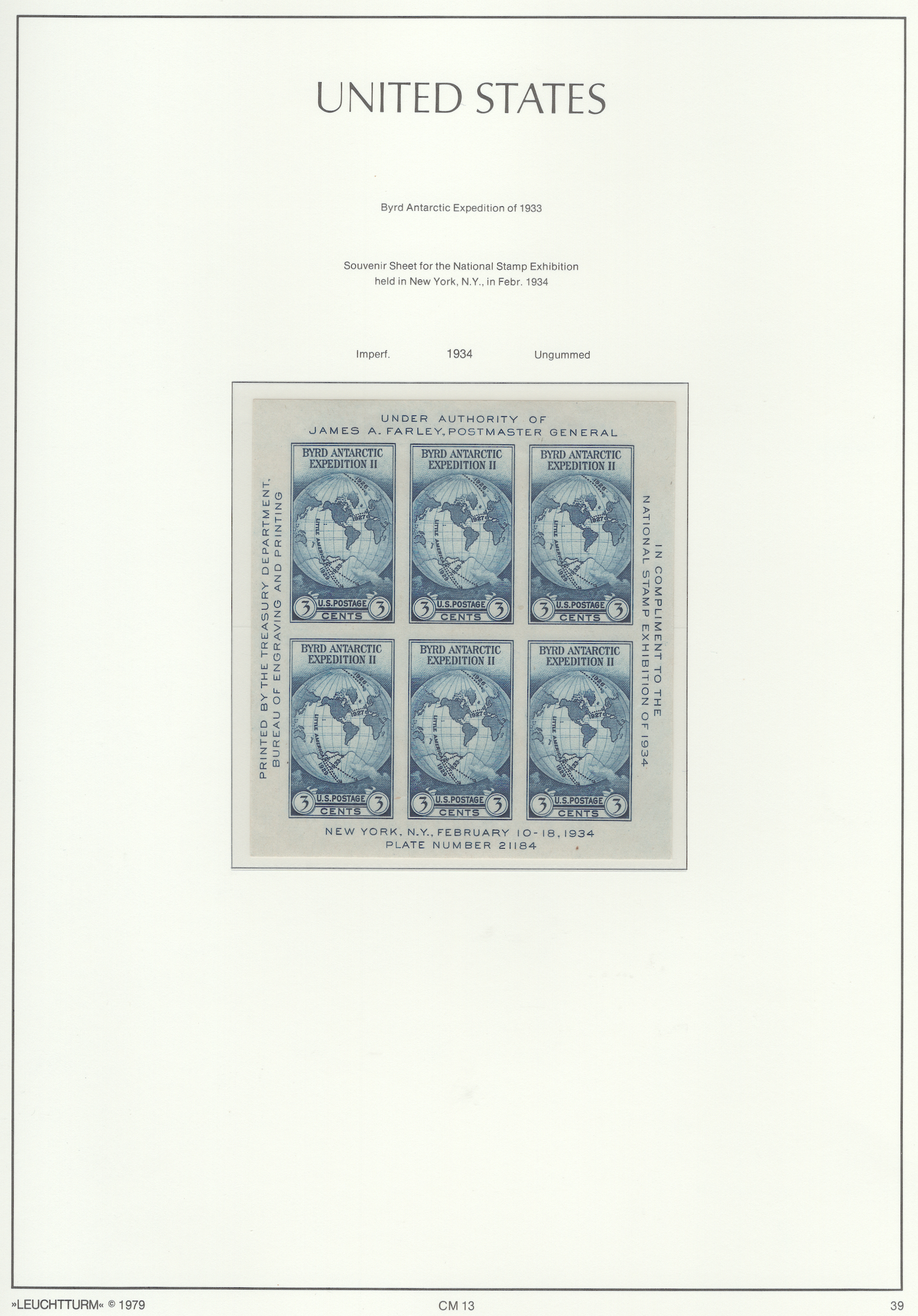
Richard Byrd was an aviator from the early part of the 20th Century. He started his career in the U.S. Navy where he met Franklin Roosevelt, who was Assistant Secretary of the Navy at the time. That acquaintence and others led him to better positions in the military. During World War I, he became a pilot and a naval commander. After the war, he continued with the Navy and was involved in flights and projects pushing the limits of aviation.
Between the wars, he made friends with Henry Ford and his son in particular, Edsel Ford. The Fords and the Rockefellers funded a flight he took to the North Pole. He was successful and became a celebrated hero in the U.S., although that achievement was later debunked.
In 1927, Byrd and his crew attempted to develop and fly a plane non-stop across the Atlantic Ocean. They might have been the first had they not crashed. While recovering from their injuries and rebuilding their plane, Charles Lindbergh successfully made the flight. A month later, though, Byrd and his crew, carrying mail for the U.S. Post Office, flew across the Atlantic from New York to Paris. However, because of fog they were unable to land and diverted to Normandy where they crashed again while attempting to land on the beach where Allied Forces would invade German controlled Europe seventeen years later. He was still awarded medals by the Navy and others, and held up as a hero. He was good at working his brand, as we now say, despite the reality.
In 1928, Byrd led a U.S. Navy expedition to the Antarctica to establish a naval base, which would be called, Little America. They went with two ships and three airplanes. They explored the area on dog sleds and by airplane, including one flight over the South Pole. One of the crew was a 19-year-old Boy Scout meant to promote the expedition to young men back in the U.S. In 1929, because of his successs and popularity, Byrd made a Rear Admiral.
In 1933, Byrd led a second expedition to the Antarctica. It was his second of five. During this expedition they establish more bases and installed a radio tower for CBS Radio. They communicated by short-wave radio to Buenos Aires, Argentina. Those transmissions were relayed back to New York where CBS broadcasted to the U.S. public, The Adventures of Admiral Byrd program on Sunday nights with about twenty-million people listening.
The Pixar Animation film, Up had a villain by the name of Charles Muntz who was similar to Byrd in that he flew many first flights and was a hero to young people during the same era of aviation. He was also not as good as his brand led the public to believe.
My step-father, Andrew Gambos was part of the fourth expedition in 1947. That expedition had an armada of thirteen ships and about four-thousand people. Andrew was a young 17-year old sailor – he lied about his age when he joined – on a ship that was part of an armada led by Byrd to map part of the Antartica. For him, Andrew must have thought himself lucky to join an expedition led by Byrd, a boyhood hero. Unforunately for him, he was seasick most of the voyage. When they returned to the U.S. at the port of New Orleans, he was discharged from the Navy.
Note
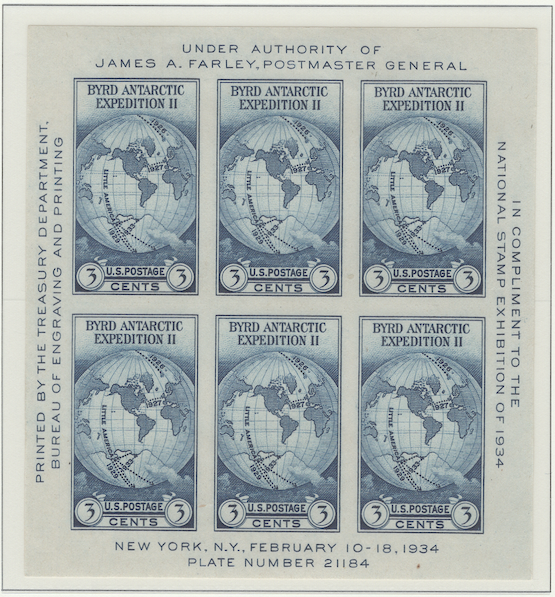
The sheet of blue stamps on this album page was issued to commemorate the third expedition in 1933. It was made at the direction of then President Franklin Roosevelt and the Postmaster General, James Farley – both of whom were stamp collectors, and Roosevelt was a friend of Byrd.
This page could hold a few more stamps. There’s another Byrd stamp or two a few pages back on the James Oglethorpe page. They could have been included here to fill in thhe page. I’m not going to design my own pages: Leuchtturm does a much better job than me.
Contains 1 spots: own 1 – 1 unused, 0 used.
Page is finished.
Album or Web Page Last changed Mar 13, 2025
Stamp Details
The table below lists information about the stamps shown on this page of Lighthouse’s stamp album. For more details about a particular stamp, click on its description. That will take you to the related web page of Colnect.
spot |
own |
catalog |
subject |
description |
comment |
Souvenir Sheet
✓ |
735 |
Adm. Byrd Expedition |
18¢ (feb 1934) |
Footnotes
Spot refers to the postion of the stamp on the album page (e.g., 3.2 indicates row 3, position 2).
Amt. is an abbreviation for the face amount of the stamp.
Own indicates the stamp status: ✓ for unused; ✗ for used or canceled; ⭑ signifies I ordered one; ; ✨ indicates it was bought recently; ✠ means an auction bid is pending; and ◎ is used, and it costs too much for unused.
To search by catalog number, go to the search box and enter it in the catalog number box. However, it’s a bit broken; I need to fix it.
