Syracuse Definitives
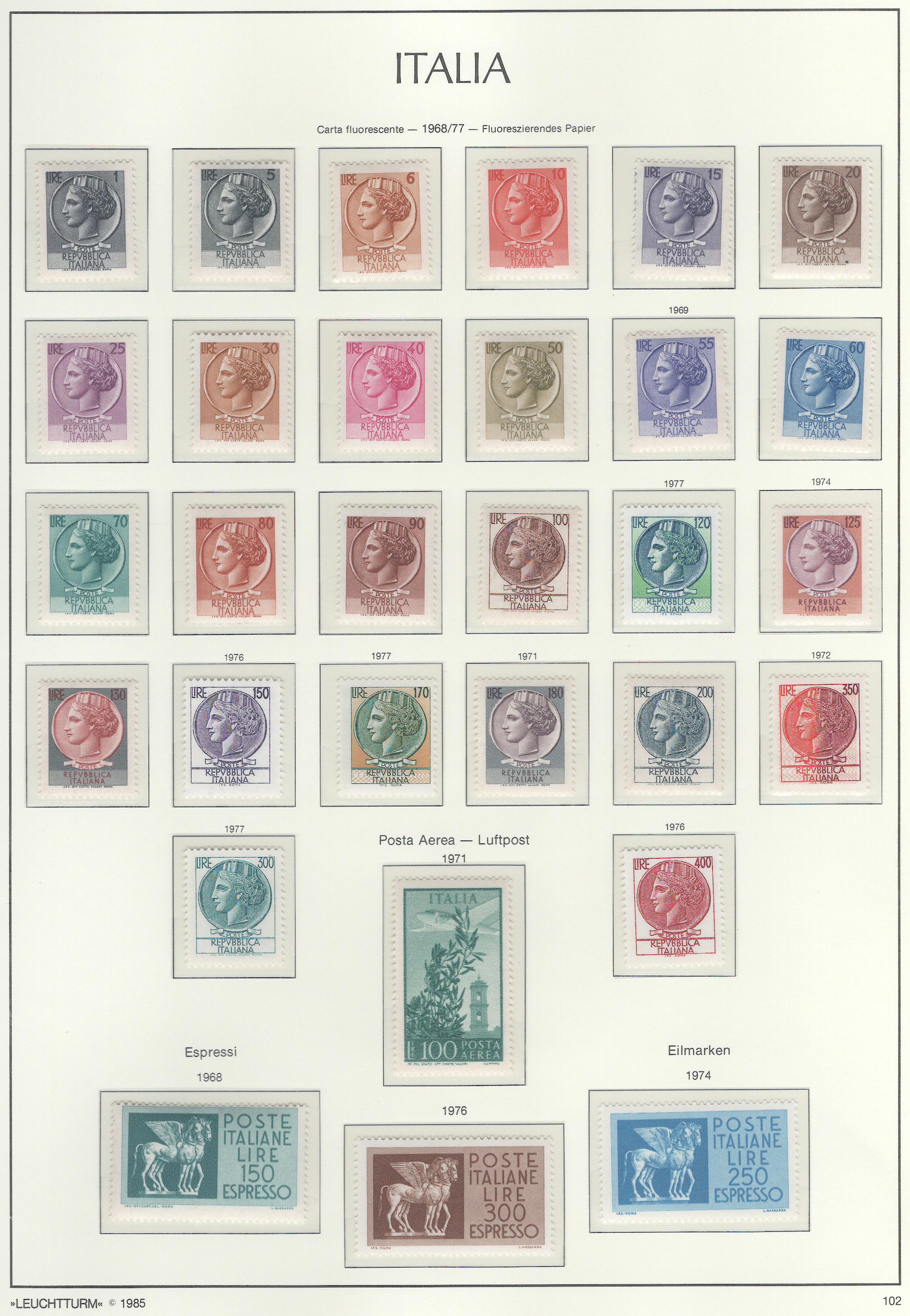
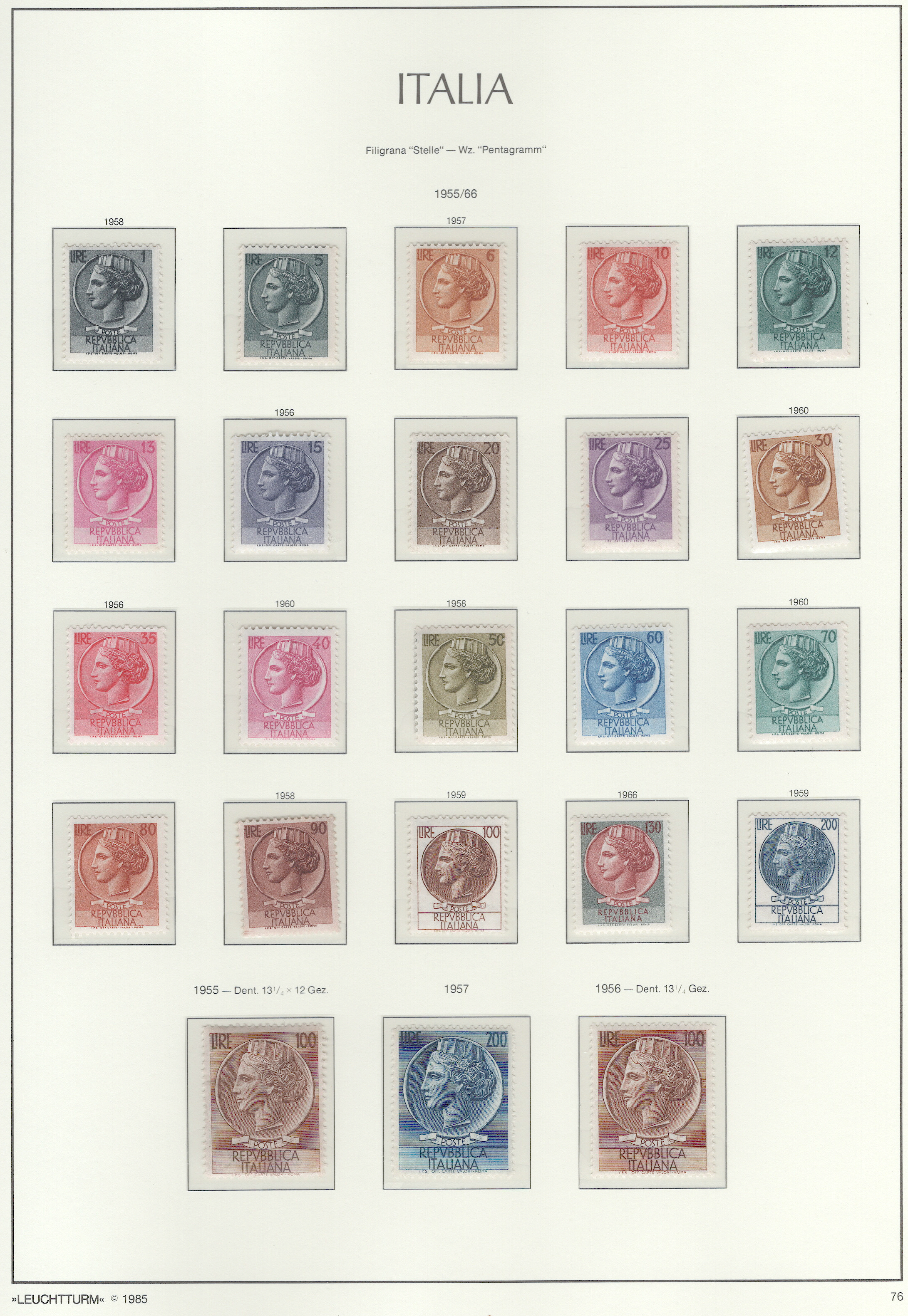
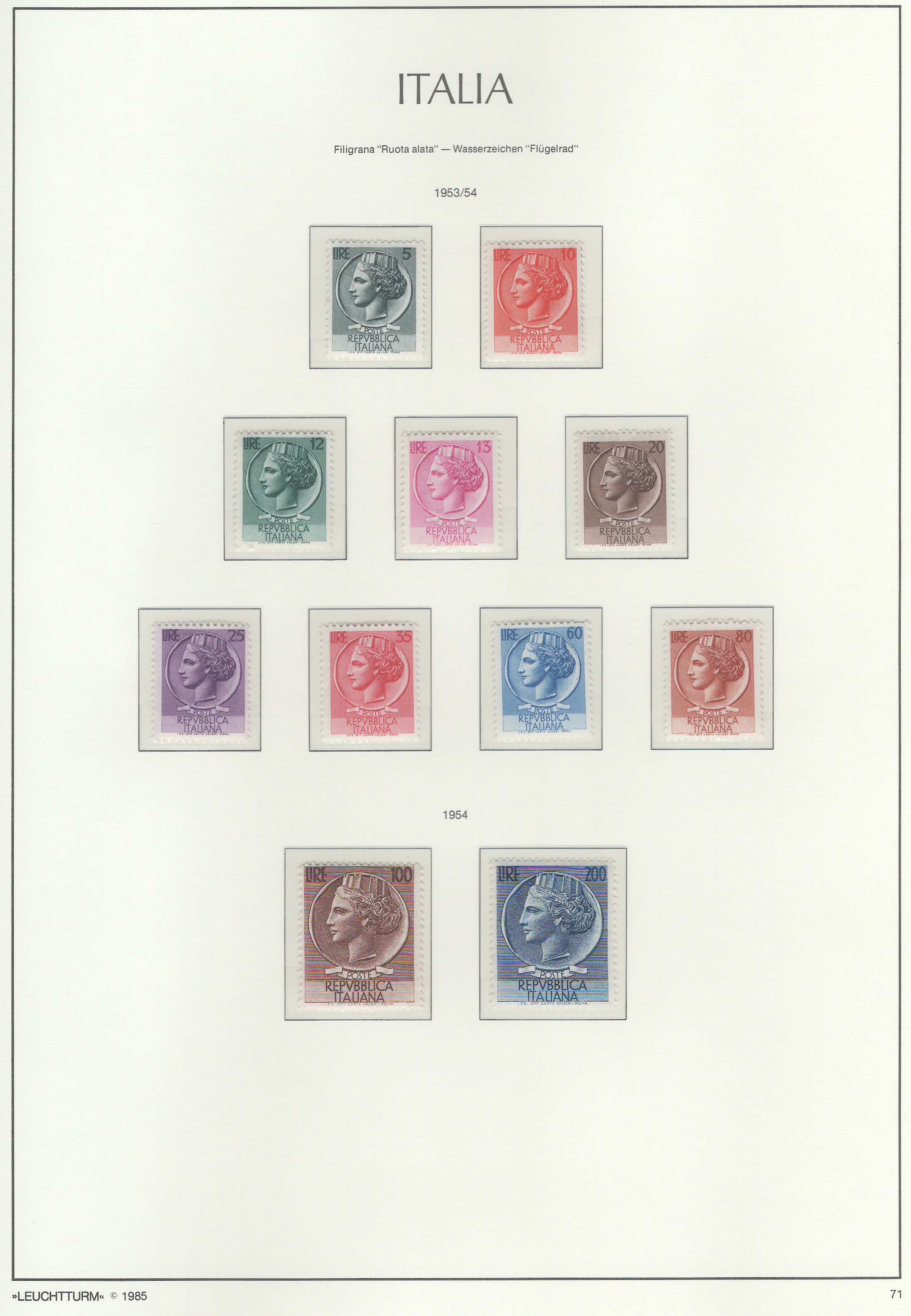
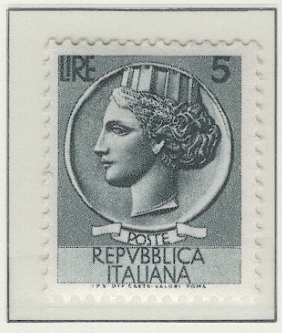
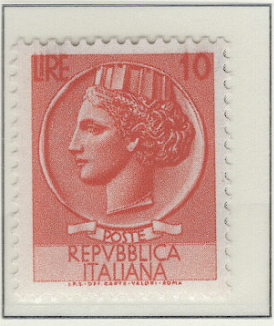
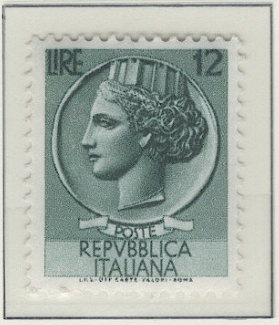
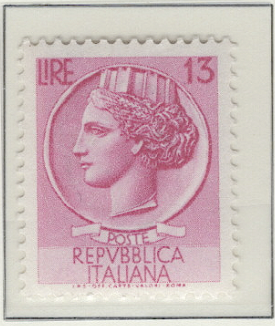
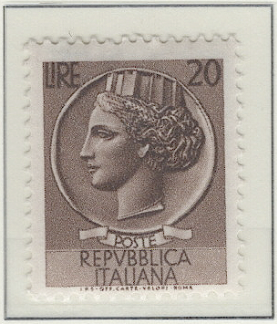
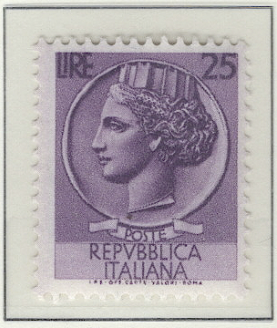
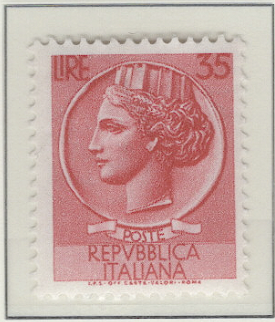
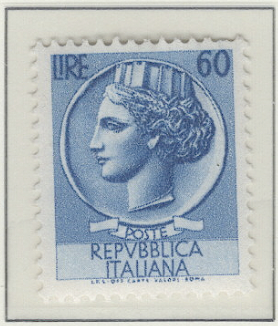
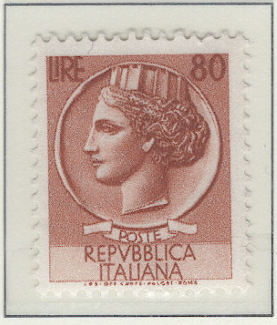
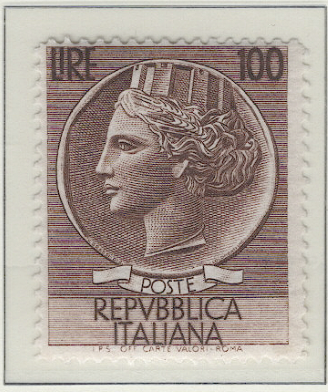
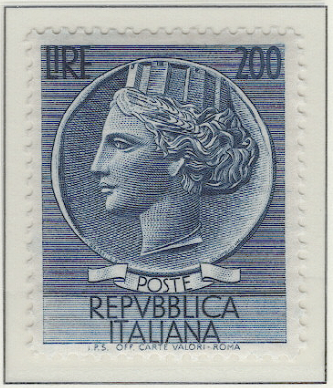
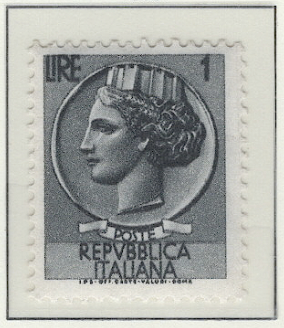
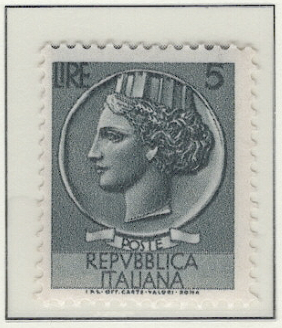
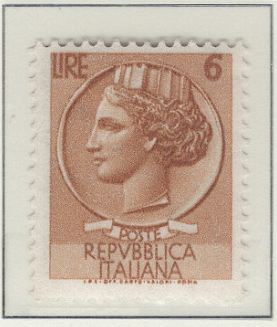
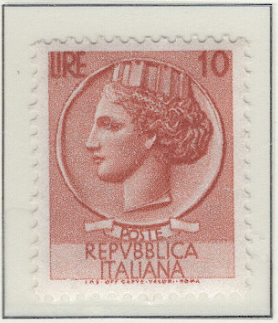
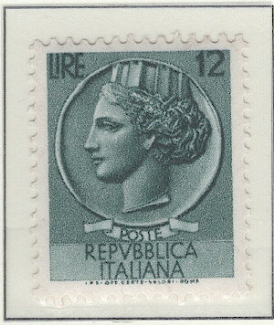
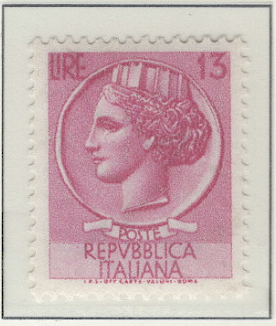
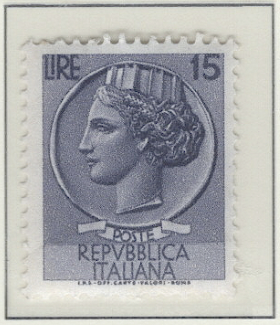
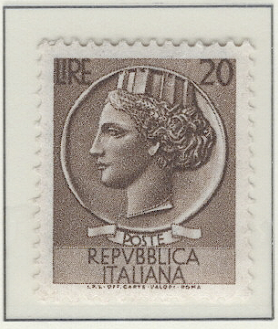
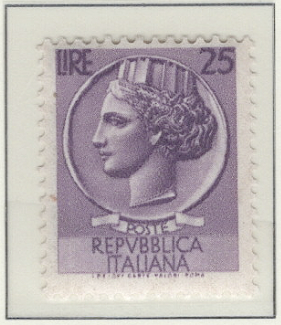
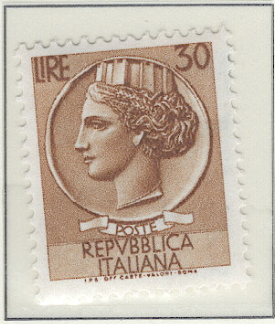
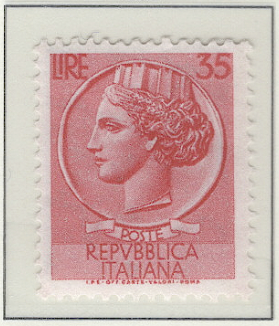
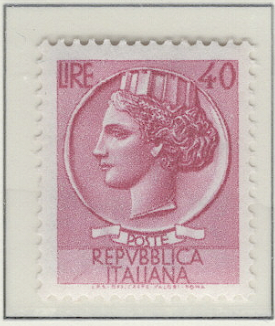
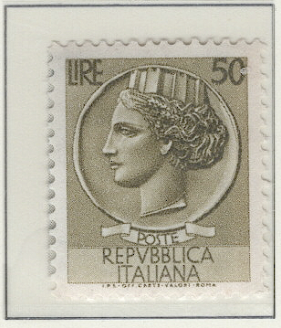
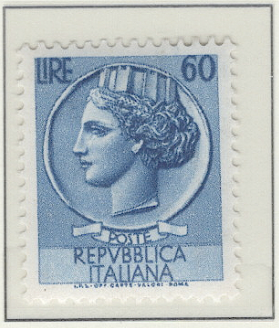
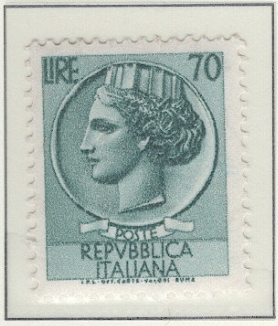
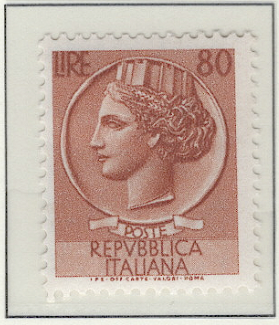
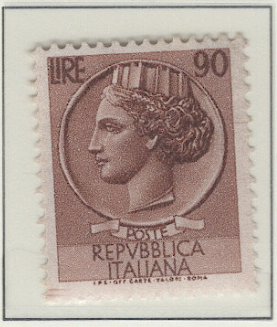
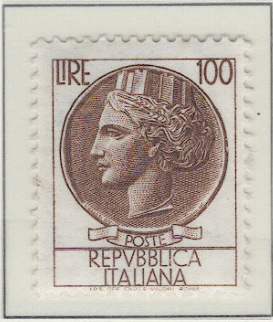
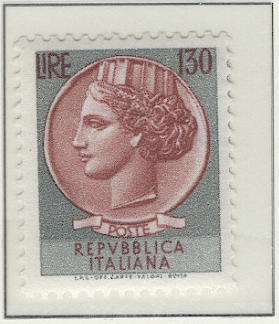
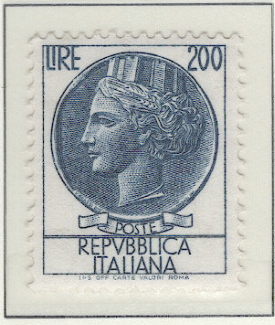
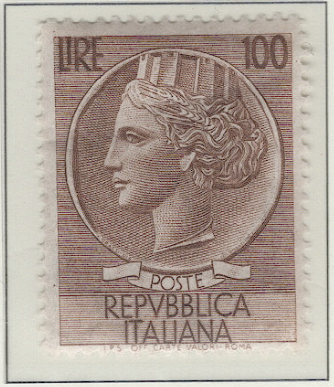
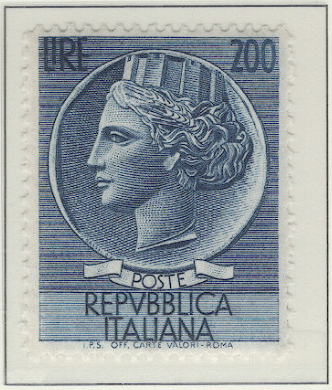
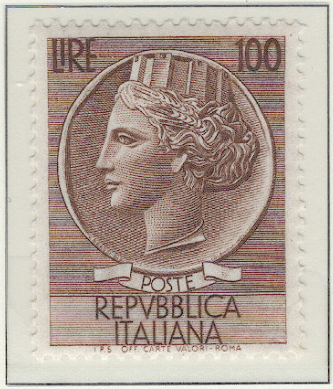
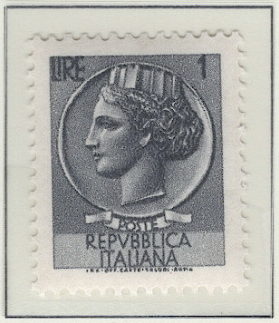
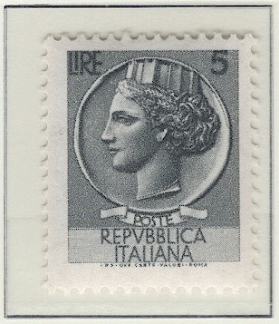
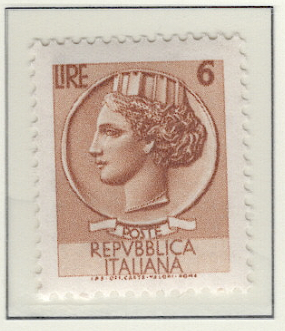
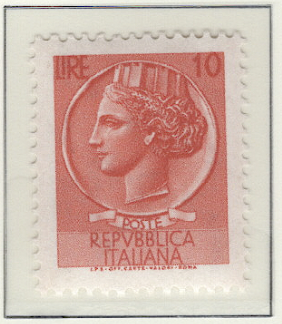
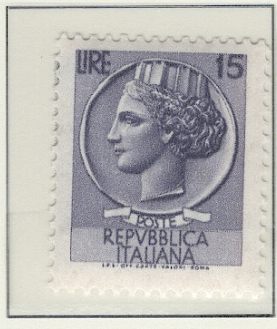
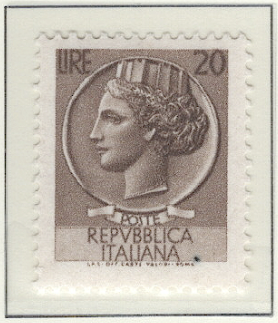
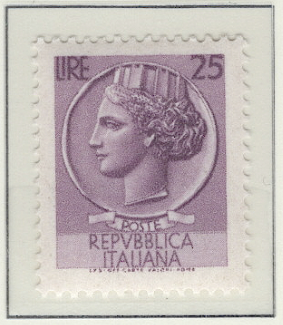
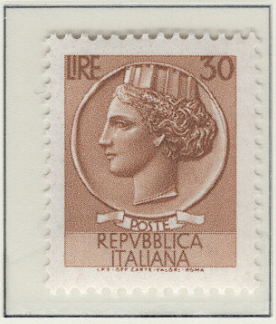
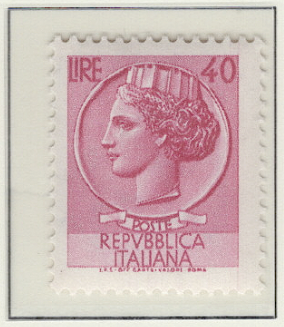
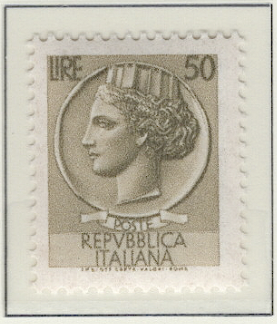
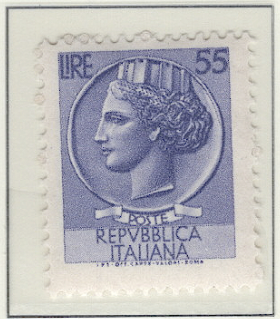
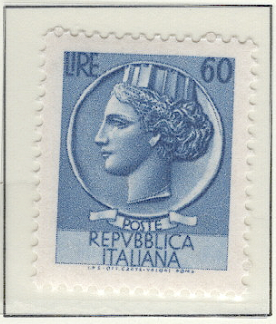
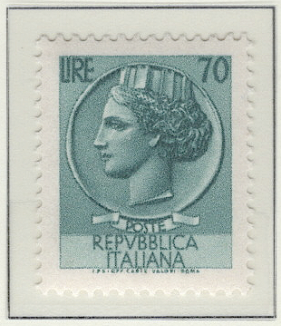
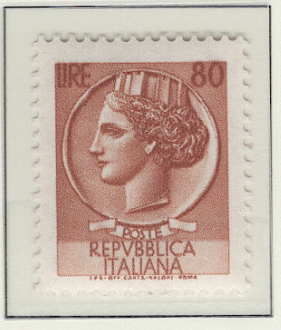
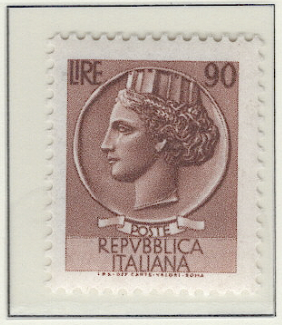
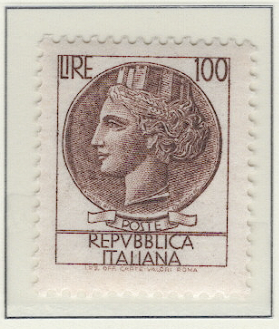
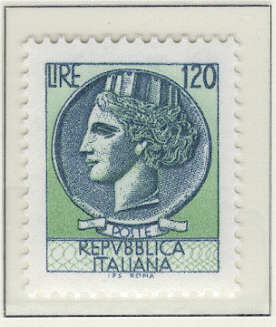
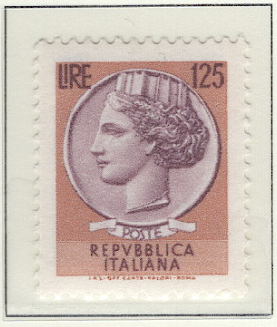
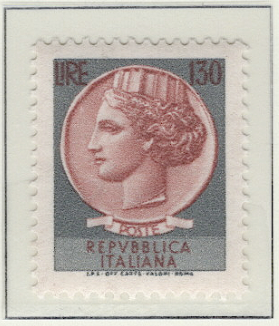
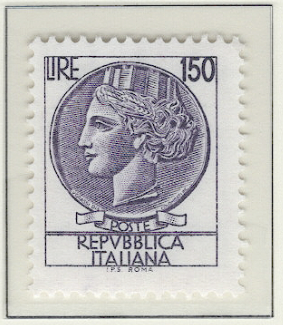
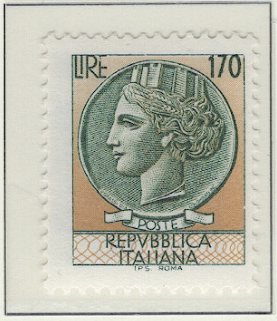
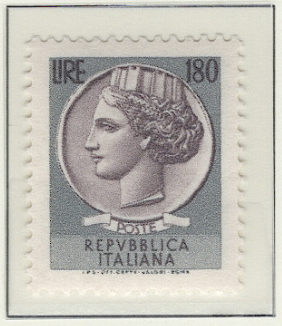
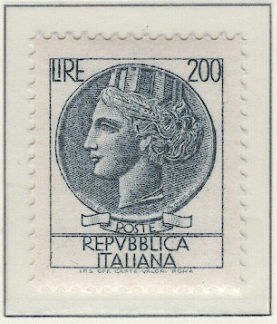
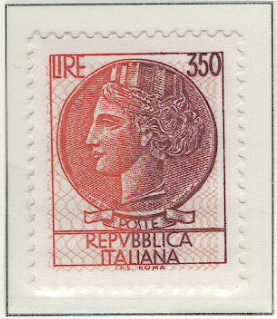
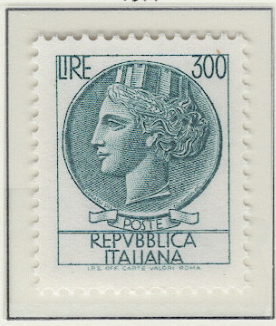
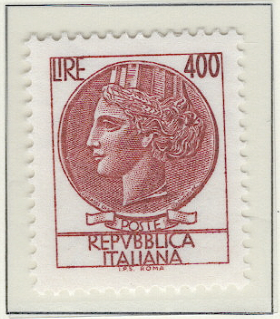
This series of stamps has a rendition of an ancient coin from Siracusa in Sicily. It was minted during the reign of Agathocles, the king of Sicily during the Fourth Century B.C.E. It was a silver coin, a decadrachm, worth four drachmas at the time. The female image is of a mythological character, a nymph named, Arethusa.
I’m not sure what’s the significance of her or that particular coin for Italy. It may be that there weren’t many females on ancient coins, just Arethusa and her goddess, Artemis. Arethusa was supposedly from an underwater world, but came to the surface – she was a nymph among us. Incidentally, my grandmother’s name was Ninfa, which is Sicilian for nymph.
The crown that Arethusa is wearing is a crown of turrets, towers of a fortress. It’s known as Italia Turrita. The towers may represented the walled cities of which Italy is composed – not necessarily united under one nation, but brought together in spirit of the peninsula and its islands. It’s a symbol that appears on many stamps, and previously for hundreds of years on coins, in paintings and on medals of honor and family crests.
Note
These pages are complete. These are definitives that Italy used for about ten years. I remember these stamps the most on postcards and letters my mother would receive from family in Sicily. It brings back memories of those times, like the U.S. five-cent (Washington) and six-cent (Franklin Roosevelt) stamps of my youth – and the old letters in shoeboxes and drawers with the 4-cent (Lincoln) stamp. Had my cousins not used these Italian definitives, I probably wouldn’t like them. But since they used these and the castle stamps, I still feel good when I see them.
The stamp of this series that’s most familiar to me from my boyhood is the one-hundred lira stamp, the one on the second album page in the middle of the fourth row – the one with the white background and copper colored coin. That seems like plenty to have spent by my family in Sicily to mail us a letter or Christmas card. They were middle class, but they didn’t have much money in those days.
Although it may seem like an excessive number of stamps of several denominations, I liked the assortment of colors for this design. I used to hope that my cousins would use a few smaller amounts instead of the one higher value one they would use. I think it was the 100 Lira (row 3, stamp 4). But that seems a lot for a letter to the U.S. I’ll have to research it to see which one they probably used.
spot |
own |
catalog |
subject |
description |
comment |
Turreted Italia - Definitives
✓ |
710 |
5₤ (jun 1953) |
|||
✓ |
711 |
10₤ (jun 1953) |
|||
✓ |
712 |
12₤ (jun 1953) |
|||
✓ |
766 |
13₤ (jul 1955) |
|||
✓ |
714 |
20₤ (jun 1953) |
|||
✓ |
715 |
25₤ (jun 1953) |
|||
✓ |
716 |
35₤ (jun 1953) |
|||
✓ |
717 |
60₤ (jun 1953) |
|||
✓ |
718 |
80₤ (jun 1953) |
|||
✓ |
747 |
100₤ (dec 1954) |
|||
✓ |
748 |
200₤ (dec 1954) |
spot |
own |
catalog |
subject |
description |
comment |
Turreted Italia - Definitives
✓ |
761 |
1₤ (jan 1958) |
|||
✓ |
762 |
5₤ (mar 1955) |
|||
✓ |
763 |
6₤ (may 1957) |
|||
✓ |
764 |
10₤ (mar 1955) |
|||
✓ |
765 |
12₤ (jun 1955) |
|||
✓ |
713 |
13₤ (feb 1954) |
|||
✓ |
767 |
15₤ (may 1956) |
|||
✓ |
768 |
20₤ (mar 1955) |
|||
✓ |
769 |
25₤ (mar 1955) |
|||
✓ |
770 |
30₤ (jul 1960) |
|||
✓ |
771 |
35₤ (nov 1955) |
|||
✓ |
772 |
40₤ (jul 1960) |
|||
✓ |
773 |
50₤ (jan 1958) |
|||
✓ |
774 |
60₤ (jul 1955) |
|||
✓ |
775 |
70₤ (jul 1960) |
|||
✓ |
776 |
80₤ (apr 1955) |
|||
✓ |
777 |
90₤ (jan 1958) |
|||
✓ |
873 |
100₤ (aug 1959) |
|||
✓ |
1018 |
130₤ (mar 1966) |
|||
✓ |
874 |
200₤ (aug 1959) |
Large Turreted Italia - Definitives
✓ |
747 |
100₤ (jan 1955) |
|||
✓ |
816 |
200₤ (jun 1957) |
|||
✓ |
785 |
100₤ (jan 1956) |
spot |
own |
catalog |
subject |
description |
comment |
Turreted Italia - Definitives
✓ |
1067 |
1₤ (may 1968) |
|||
✓ |
1068 |
5₤ (feb 1968) |
|||
✓ |
1069 |
6₤ (may 1968) |
|||
✓ |
1070 |
10₤ (feb 1968) |
|||
✓ |
1071 |
15₤ (feb 1968) |
|||
✓ |
1072 |
20₤ (feb 1968) |
|||
✓ |
1073 |
25₤ (feb 1968) |
|||
✓ |
1074 |
30₤ (feb 1968) |
|||
✓ |
1075 |
40₤ (may 1968) |
|||
✓ |
1076 |
50₤ (feb 1968) |
|||
✓ |
1077 |
55₤ (may 1969) |
|||
✓ |
1078 |
60₤ (may 1968) |
|||
✓ |
1079 |
70₤ (may 1968) |
|||
✓ |
1080 |
80₤ (may 1968) |
|||
✓ |
1081 |
90₤ (feb 1968) |
|||
✓ |
1083 |
100₤ (mar 1968) |
|||
✓ |
1395 |
120₤ (nov 1977) |
|||
✓ |
1081A |
125₤ (feb 1974) |
|||
✓ |
1082 |
130₤ (mar 1968) |
|||
✓ |
1083A |
150₤ (mar 1976) |
|||
✓ |
1396 |
170₤ (nov 1977) |
|||
✓ |
1082A |
180₤ (nov 1971) |
|||
✓ |
1084 |
200₤ (may 1968) |
|||
✓ |
1084A |
300₤ (jul 1972) |
|||
✓ |
1397 |
350₤ (nov 1977) |
|||
✓ |
1084B |
400₤ (mar 1976) |
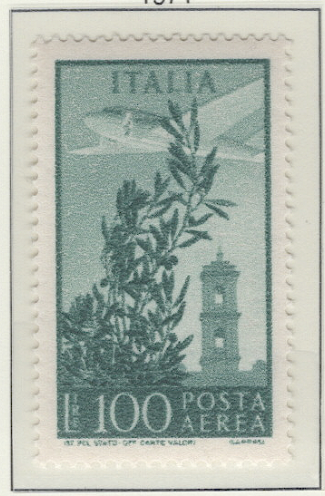
Air Mail
✓ |
A159 |
100₤ (nov 1971) |
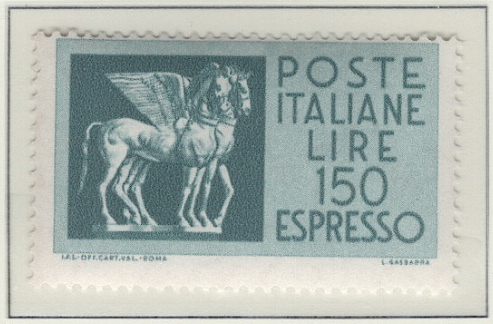
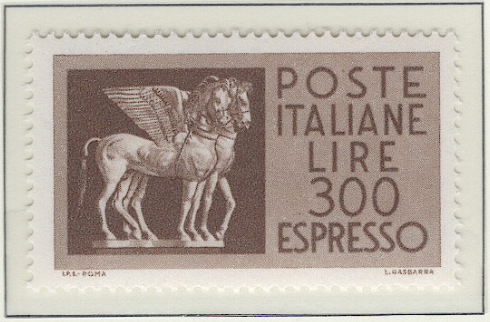
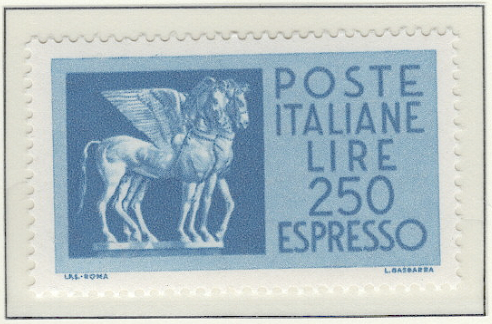
Express Mail
✓ |
E36 |
150₤ (mar 1968) |
|||
✓ |
E38 |
300₤ (apr 1976) |
|||
✓ |
E37 |
250₤ (jul 1974) |
Footnotes
Spot refers to the postion of the stamp on the album page (e.g., 3.2 indicates row 3, position 2).
Amt. is an abbreviation for the face amount of the stamp.
Own indicates the stamp status: ✓ for unused; ✗ for used or canceled; ⭑ signifies I ordered one; ; ✨ indicates it was bought recently; ✠ means an auction bid is pending; and ◎ is used, and it costs too much for unused.
To search by catalog number, go to the search box and enter it in the catalog number box. However, it’s a bit broken; I need to fix it.































































